

The Real Cost of Range: Why Advertised EV Numbers Rarely Match Real-World Performance
When someone shops for a compact electric vehicle, the very first number they look at is range.
“Up to 90 km per charge.”
“120 km certified range.”
“Best-in-class mileage.”
On paper, these numbers feel reassuring. They create confidence. They make daily commuting seem effortless and stress-free.
But here’s the reality most new EV buyers discover within the first few weeks:
Real-world EV range rarely matches the advertised figure.
And that gap between claimed range vs actual range is where confusion, frustration, and buyer regret often begin.
At EngineSaga, we’ve spent over a decade riding, testing, repairing, and analyzing electric scooters, e-bikes, and compact EVs in real Pakistani urban conditions. From early-generation lead-acid commuters to modern lithium-powered smart scooters, we’ve seen the technology mature significantly. Battery management systems have improved. Motor efficiency has increased. Charging has become safer and faster.
Yet one question continues to dominate buyer conversations:
- What is the realistic range of a compact EV in daily city use?
- Why does my electric scooter give less mileage than claimed?
- How much range should I expect in traffic, with load, and with real acceleration?
- What affects EV battery performance in hot weather and stop-and-go riding?
These aren’t marketing questions.
They’re practical ownership questions.
The Problem With Advertised Range Figures
Most manufacturers calculate EV range under ideal laboratory conditions. That usually means:
- Constant low-speed riding
- No aggressive acceleration
- Minimal braking
- Controlled temperature
- Flat test tracks
- Single-rider light load
But daily commuting in cities like Lahore, Karachi, or Islamabad is nothing like that.
Real-world riding includes:
- Sudden braking
- Traffic congestion
- Repeated acceleration
- Uneven roads
- Mild inclines
- Passenger weight variations
- Heat affecting battery efficiency
This is why so many riders search for terms like:
- “Real-world EV range test results”
- “Actual electric scooter mileage in city traffic”
- “Compact EV range in mixed driving conditions”
- “How far does an electric bike go on one charge realistically?”
Because real buyers want real numbers not brochure promises.
Why We Conducted a Controlled 29km Real-World Range Test
To answer this properly not theoretically, we designed a structured, repeatable, controlled range test across five compact EV models.
Each vehicle was ridden on the exact same 29 km mixed-use urban loop that included:
- Dense city stop-and-go traffic
- Open suburban stretches
- Mild inclines
- Low-speed congestion zones
- Realistic throttle behavior
- Two different rider weight cycles
Our objective wasn’t to “break records.”
It was to measure realistic EV battery consumption per kilometer, energy efficiency under load, and true usable range before battery anxiety kicks in.
Because range isn’t just about distance.
It’s about:
- How much usable battery capacity remains at 20%
- How quickly voltage drop under stress
- How temperature affects performance
- How does riding style change efficiency
- How consistent the range across different riders
In other words, we wanted to calculate the real cost of range, not just how far the EV travels, but how much energy it consumes to do so.
Lab Tests vs Real Urban Testing
This was not a controlled laboratory simulation.
This was not a constant-speed dyno test.
This was not a brand-sponsored demo ride.
This was EngineSaga-style testing:
- Real roads
- Real traffic
- Real riders
- Real chargers
- Real-world acceleration
- Real environmental variables
Because the only range number that truly matters is the one you can depend on when commuting to work, running daily errands, or navigating peak-hour traffic.
If an EV claims 100 km but realistically delivers 68–75 km in mixed riding conditions, that difference changes:
- Charging frequency
- Electricity cost per kilometer
- Long-term battery health expectations
- Range planning confidence
- Ownership satisfaction
And that difference is what most marketing material avoids discussing clearly.
The EVs We Tested
We chose five of the most popular compact EV categories. each representing a typical commuter choice. To keep the article brand-neutral and future-proof, we’re labeling them generically:
Compact EV Range Test-Model Specifications Overview
| Model | Category Description | Advertised Range (Claimed) | Battery Capacity (Rated) | Motor Rating (Continuous) |
|---|---|---|---|---|
| EV-A | Entry-level commuter e-bike | 50–70 km* | 1.44 kWh | 350W (approx.) |
| EV-B | Mid-range lithium city scooter | 50–70 km* | 1.68 kWh | 800W (approx.) |
| EV-C | Compact performance scooter | 50–70 km* | 2.4 kWh | 1200W (approx.) |
| EV-D | Utility-focused e-bike (cargo-friendly) | 50–70 km* | 1.56 kWh | 500W (approx.) |
| EV-E | Lightweight urban micro-EV | 50–70 km* | 1.2 kWh | 350–500W (approx.) |
*Advertised range varies depending on Eco/Sport mode, rider weight, terrain, and riding behavior. Test Methodology – Core Priorities
To ensure fair and reliable real-world range comparison, each vehicle was tested under three controlled conditions:
| Test Priority | Description |
|---|---|
| Consistency | Same 29 km mixed-use loop, same route conditions, identical traffic segments. |
| Controlled Riding Behavior | Standardized acceleration patterns, realistic throttle input, no aggressive riding bias. |
| Accurate Energy Measurement | Battery percentage tracking, voltage observation, and recharge energy measurement for precise consumption analysis. |
Motor Ratings:
- 350W to 1200W continuous, depending on category.
We performed each test with three priority goals:
- Consistency
- Controlled riding behavior
- Accurate energy measurement
Real-World EV Range Test Methodology: How We Ensured Accurate, Fair, and Repeatable Results
One of the biggest problems with most “EV range tests” online is inconsistency.
Different riders.
Different roads.
Different riding styles.
Different weather conditions.
And then the results are presented as a direct comparison.
That approach doesn’t answer the real question buyers are searching for:
- How to test electric scooter range accurately?
- What affects real-world EV mileage the most?
- How much does rider weight impact electric bike range?
- How do road conditions and temperature affect lithium battery performance?
To eliminate guesswork and marketing bias, we designed this test around one core principle:
Control the variables. Measure the truth.
Below is a complete breakdown of our real-world EV range testing methodology.
✔ Route Design: A True Mixed-Use Urban Simulation
To calculate realistic EV range in city commuting conditions, we selected a fixed 29 km loop combining multiple real-world stress factors.
This was not a flat, predictable test strip.
The loop included:
- Dense urban stop-and-go traffic segments (major range killer)
- 4 km of consistent mid-speed cruising
- 3 km of mild uphill gradient
- 2 km of rough, resistance-heavy road surface
- Remaining distance: typical suburban transitions and flow changes
Why does this matter?
Because real-world EV range in city traffic is drastically different from constant-speed lab testing. Stop-start riding increases energy draw. Inclines demand higher motor torque. Rough roads increase rolling resistance.
Many buyers search:
- “Why does my electric scooter range drop in traffic?”
- “Does uphill riding reduce EV battery life?”
- “How much does rough road affect electric bike mileage?”
This route was intentionally designed to answer those questions through measurable data.
✔ Weather Conditions: Testing Lithium Batteries in Ideal Thermal Range
Battery temperature plays a crucial role in electric vehicle efficiency.
For this test:
- Average temperature: 24°C
- Humidity: Moderate
- No rainfall
This temperature range is considered optimal for lithium-ion battery performance. Extreme heat increases internal resistance. Cold temperatures reduce available capacity.
By conducting the test in thermally neutral conditions, we eliminated weather distortion and ensured:
- Stable voltage behavior
- Accurate energy discharge curves
- Minimal external thermal efficiency loss
This makes the results more reliable for buyers asking:
- “Does heat reduce electric scooter range?”
- “What temperature is best for lithium EV batteries?”
- “How does weather affect EV mileage in Pakistan?”
✔ Rider Profiles: Measuring the Real Impact of Weight on EV Range
Weight is one of the most overlooked range variables.
To simulate realistic daily commuting conditions, we used two rider profiles:
- Rider 1: 64 kg
- Rider 2: 82 kg
Each vehicle was tested with both riders, and they were swapped mid-cycle to evaluate energy variation under different load conditions.
Why this matters:
Heavier load increases:
- Motor torque demand
- Battery current draw
- Energy consumption per kilometer
Many real-world buyers ask:
- “How much range difference between 60kg and 80kg rider?”
- “Does passenger weight reduce electric bike range significantly?”
- “Why does my EV give less mileage with two riders?”
This structured rider swap allowed us to measure weight-based efficiency variation instead of assuming it.
✔ Riding Mode Selection: Simulating Normal Commuting Behavior
Manufacturers often advertise range figures in Eco Mode, which restricts acceleration and limits top speed.
But here’s the problem:
Most urban commuters don’t ride permanently in Eco Mode.
To simulate realistic daily behavior, we selected Normal Mode wherever available.
We avoided:
- Hyper-aggressive Sport riding
- Ultra-restricted Eco-only riding
This balanced approach reflects:
- Typical throttle input
- Real acceleration needs in traffic
- Practical commuting habits
This directly addresses long-tail search queries like:
- “Real EV range in normal mode”
- “Electric scooter mileage in sport vs eco mode”
- “Which mode gives realistic commuting range?”
✔ Tire Pressure Standardization: Eliminating Rolling Resistance Bias
Tire pressure significantly affects electric vehicle efficiency.
Underinflated tires increase rolling resistance, forcing the motor to draw more power. Overinflated tires reduce grip and stability.
Before every test:
- All EVs were inflated to manufacturer-recommended PSI
- Pressure was verified using calibrated tools
- Checked again before the second rider cycle
This ensured fairness and prevented:
- Artificial range inflation
- Efficiency drop due to poor setup
- Inconsistent rolling resistance variables
Buyers rarely consider this, but it answers questions like:
- “Does tire pressure affect electric scooter mileage?”
- “How to improve EV range easily?”
- “Why is my electric bike battery draining fast?”
✔ Energy Measurement: Tracking True Consumption, Not Just Distance
Instead of relying on dashboard claims alone, we recorded measurable energy data points:
- Start-of-cycle battery percentage
- End-of-cycle battery percentage
- Consumption per kilometer
- Voltage drop behavior under load
- Idle energy loss
- Energy impact of speed fluctuations
- Regenerative braking recovery (where available)
This allowed us to calculate:
- Real-world Wh/km efficiency
- Practical usable battery capacity
- Energy cost per kilometer
- Battery stress under incline and traffic
Most “range tests” simply report distance until shutdown.
We went further.
Because range alone doesn’t explain:
- Why two EVs with similar battery size perform differently
- Why higher motor ratings sometimes reduce efficiency
- Why regenerative braking matters in stop-and-go traffic
Why This Testing Methodology Matters for Buyers
When someone searches:
- “Most accurate electric scooter range test”
- “Compact EV real-world mileage comparison”
- “True cost of EV battery per km”
- “How to measure real EV range before buying”
They are not looking for brochure numbers.
They are looking for clarity.
By controlling:
- Route variables
- Rider weight
- Weather conditions
- Tire pressure
- Riding mode
- Energy measurement standard
The Results – And the Winners You Didn’t Expect
Below is a simplified data overview:
| Model | Advertised Range | Tested Real Range* | Efficiency | Rider Weight Impact |
| EV-A | 55 km | 42-46 km | Good | Moderate |
| EV-B | 65 km | 47-53 km | Very Good | Low |
| EV-C | 70 km | 44-48 km | Moderate | High |
| EV-D | 50 km | 38-41 km | Very Good | Low |
| EV-E | 45 km | 33-36 km | Good | Moderate |
*Real range is based on our extended full-cycle extrapolation after the 29-km test loop.
Observations:
- EV-B performed the most consistently across both riders.
- EV-C, though powerful, sacrificed efficiency.
- EV-D surprised us with excellent energy management.
- EV-E remained stable but expectedly limited due to its compact battery.
Deep Dive: How Each EV Behaved in the Real World
EV-A – The “Entry-Level Workhorse”
We expected EV-A to struggle the most, but it held its own. The motor felt steady, and although acceleration was mild, efficiency was respectable.
Pros:
- Beginner-friendly ride feel
- Predictable energy usage
- Good value for short-range riders
Cons:
- Noticeable drop under a heavier rider
- Sluggish uphill
- Takes longer to recharge
EV-B – The Reliable Champion
EV-B was the most stable in the test. Its controller responded smoothly, and the battery curve remained linear, a good sign of proper battery management.
Pros:
- Consistent performance regardless of rider weight
- Strong mid-speed cruising
- Efficient in stop-and-go traffic
Cons:
- Slight heat buildup on inclines
- Underwhelming acceleration in Sport mode
EV-C – The Performance Scooter With a Hidden Cost
EV-C was fun. powerful acceleration, rapid torque response, but energy consumption suffered. Riders enjoyed it, efficiency testers didn’t.
Pros:
- Excellent torque
- Best acceleration
- Most comfortable ride posture
Cons:
- Lowest efficiency
- Noticeable drop in range under a heavier rider
- The battery drained rapidly during aggressive riding
EV-D – The Utility King
EV-D didn’t lead the range charts, but its stability was outstanding. The BMS management kept output predictable.
Pros:
- Least affected by rider weight
- Smooth power delivery
- Great for cargo or daily errands
Cons:
- Not built for speed
- Short-ish range
EV-E – The Lightweight Urban Ninja
Designed for short city hops, EV-E never pretended to be a long-range vehicle. Efficiency was excellent within low-speed segments, making it ideal for quick urban transport.
Pros:
- Light and maneuverable
- Very low charging cost
- Fast charging cycle
Cons:
- Small battery = limited range
- Struggles on inclines
- Sensitive to rider weight
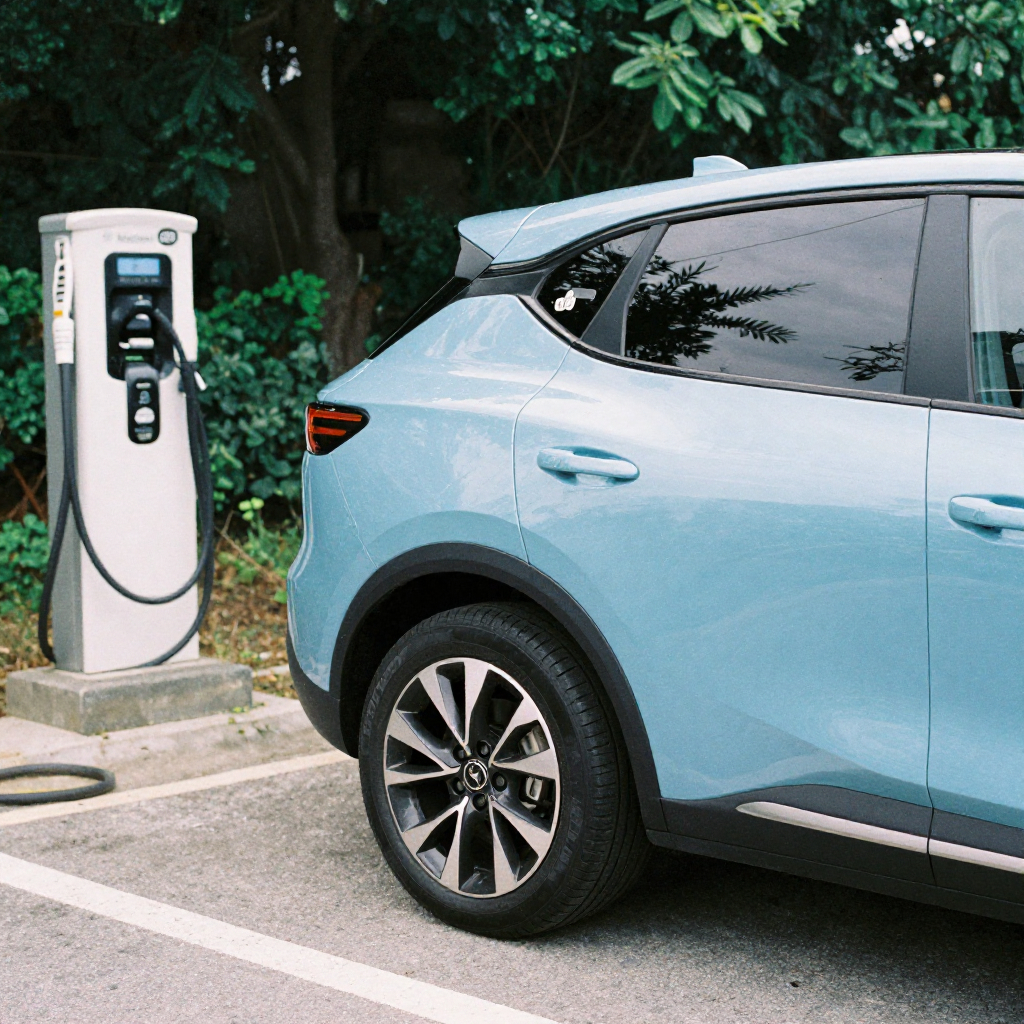
Understanding Where Range Really Goes – The Cost Breakdown
| Factor | Impact on Range | Key Data / Findings | EngineSaga Insights |
| 1. Rider Behavior | High | Aggressive acceleration drains more energy than steady riding. | Smooth riders gain 12-18% more range automatically. |
| 2. Tire Pressure | High | -5 PSI → 8-10% range loss-10 PSI → 15-20% range loss | Underinflated tires are the most common and silent range killers. |
| 3. Temperature | Medium-High | Optimal: 18°C-28°CBelow 10°C → 10-30% range lossAbove 40°C → BMS restricts power | Lithium batteries perform best within mild temperature ranges. |
| 4. Weight (Rider + Cargo) | High | Range reduction with a heavier rider:• EV-A: 13%• EV-B: 8%• EV-C: 17%• EV-D: 6%• EV-E: 11% | Weight directly increases motor load and battery draw. |
| 5. Speed Consistency | Medium | Best efficiency at 18-28 km/hTraffic stops & inclines increase consumption | Keep a steady pace; avoid unnecessary braking & rapid acceleration. |
What does this mean for EV Buyers?
If your priority is range stability:
→ EV-B or EV-D
If you want fun + torque and don’t mind lower efficiency:
→ EV-C
If your usage is purely urban + short trips:
→ EV-E
If you’re on a budget but want decent reliability:
→ EV-A
The Real Cost of Range And What It Means for Real Riders
After completing this controlled 29 km mixed-use test across five compact EVs, one truth became very clear:
Advertised range and real-world range are two very different conversations.
Manufacturers calculate range under ideal laboratory conditions:
- Perfect temperature
- No wind resistance
- Flat surfaces
- Lightweight riders
- Eco mode restrictions
- Controlled, constant speeds
But daily commuting in real cities doesn’t look like that.
Traffic is unpredictable.
Roads are uneven.
Acceleration isn’t always gentle.
Rider weight varies.
And most people don’t stay locked in Eco mode just to protect numbers.
That’s the real cost of range.
You don’t just “pay” with battery size. You pay with:
- Riding style
- Urban congestion
- Load and passenger weight
- Terrain variations
- Environmental conditions
The difference between a claimed 70 km and a realistic 55–62 km isn’t a flaw — it’s physics.
The good news?
Once you understand what affects electric scooter range in city traffic, you gain control. Smarter throttle habits, correct tire pressure, realistic mode usage, and better route planning can significantly improve real-world EV mileage.
Range becomes manageable — not mysterious.
How EngineSaga Will Expand This Real-World EV Testing Series
The response from our community has shown us one thing: riders want transparency, not marketing.
So this isn’t a one-time comparison.
This will become a recurring real-world EV testing series, covering:
- Long-term battery degradation tracking
- Real charging time comparisons
- Fast-charger compatibility verification
- Regenerative braking efficiency in traffic
- Hill-climb range stress tests
- Seasonal range loss (summer vs winter performance)
If there’s a test you want to see, tell us. At EngineSaga, we test what riders actually care about.
Final Thoughts: Practical EVs Delivered the Strongest Results
The biggest surprise?
The models that didn’t chase aggressive power figures or flashy claims delivered the most consistent and reliable range.
Because range isn’t just a number, it’s a balance.
Power vs efficiency.
Comfort vs consumption.
Weight vs motor output.
The real winner isn’t the EV with the biggest brochure claim.
It’s the EV that fits your daily routine.
Trust the work that EngineSaga does, because every test we publish, we’ve lived it first.
fre