
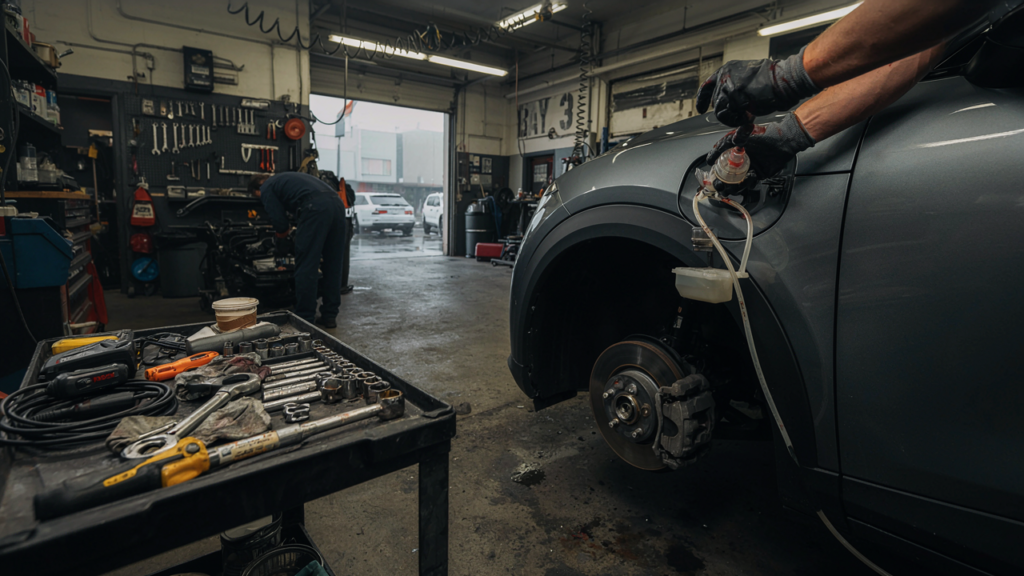
Electric car brake service is an important part of maintaining an electric vehicle, even though EVs often need brake pad replacements less frequently than gasoline-powered cars. Thanks to regenerative braking, electric cars can reduce friction-brake use, potentially extend component life, and lower some long-term maintenance expenses. However, regular inspections remain essential for safe and reliable driving.
At Engine Saga, we focus on the practical details that matter during everyday ownership. Brake maintenance is a good example: electric vehicles have several advantages, but understanding their limits helps drivers avoid unexpected repair bills and safety problems.
Whether you already own an EV, are considering switching from a gas car, or are researching the real cost of electric vehicle ownership, knowing how brake service works can help you make better decisions.
In this guide, we explore five important benefits of proper electric car brake service, explain how regenerative braking affects maintenance, and share practical ways to keep your braking system in good condition.
Why Is Brake Service Important for Electric Cars?
Electric vehicles use a combination of regenerative braking and conventional friction brakes. Regenerative braking uses the electric motor to slow the vehicle and recover some kinetic energy, sending it back to the battery when operating conditions allow.
Traditional friction brakes use pads and rotors to slow the wheels. Because regenerative braking handles some everyday deceleration, these components may experience less wear than those in a comparable gasoline car.
However, EVs still rely on their physical brakes for strong stopping power, emergency braking, and situations where regeneration is limited. Brake fluid, calipers, hoses, and other components also require attention.
The goal of electric car brake service is not simply to replace worn pads. It is to make sure the entire system remains safe, responsive, and reliable.
Benefit 1: Longer Brake Pad Life
One of the biggest advantages of electric car brake service is that EV owners may need to replace their brake pads less frequently.
How regenerative braking reduces wear
In a conventional gasoline car, friction brakes handle much of the work whenever the driver presses the brake pedal. The pads press against the rotors, creating friction that converts the vehicle’s movement into heat.
An electric car can use its motor to provide part of that braking force. When the driver lifts off the accelerator or applies the brakes gently, the vehicle may recover some energy instead of relying entirely on friction.
This can reduce the rate at which brake pads wear.
For example, a driver who regularly travels through city traffic and anticipates traffic lights may use regenerative braking for much of their gradual deceleration. A driver who brakes aggressively or frequently travels on demanding downhill roads may use the friction brakes more often.
Why inspections still matter
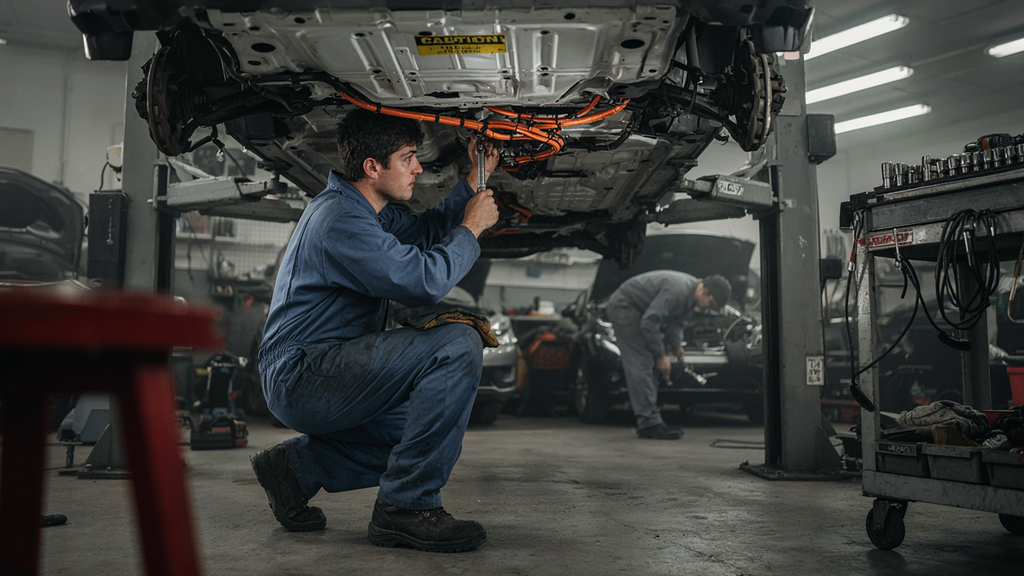
Longer pad life does not mean the pads will last forever. Driving habits, vehicle weight, road conditions, brake design, and climate all influence wear.
During an inspection, a technician can check pad thickness, uneven wear, and the condition of related components. Replacing pads when required helps maintain safe stopping performance.
Practical takeaway: Regenerative braking can reduce brake pad wear, but scheduled inspections should follow your vehicle manufacturer’s recommendations.
Benefit 2: Potentially Lower Long-Term Maintenance Costs
Brake service can contribute to lower running costs because electric cars often place less demand on their friction-braking components.
Fewer frequent pad replacements
Brake pads are wear items. Every replacement involves parts and labour, and the cost can increase if the rotors or other components also need attention.
Because EVs often use regenerative braking during normal driving, some owners can go longer between pad replacements. Over several years, that may reduce the frequency of routine brake-related spending.
However, the savings depend on the vehicle and how it is driven. An EV used for heavy loads, steep descents, or demanding driving may experience different maintenance needs from one used for gentle urban commuting.
Why the full maintenance picture matters
Electric cars may also avoid some routine engine-related services, such as conventional engine oil and oil-filter changes. Nevertheless, they still have maintenance requirements involving tires, suspension components, cabin filters, brake fluid, and other systems.
A neglected EV brake system can become expensive if corrosion damages rotors or calipers seize because moving components have not been inspected and serviced when needed.
The smartest way to manage costs is to compare the vehicle’s complete service schedule, parts prices, labour rates, and warranty conditions.
Practical takeaway: Longer brake component life can help reduce ownership costs, but preventive maintenance is still important to avoid larger repairs.
Benefit 3: More Consistent Braking and Improved Safety
Proper brake service supports one of the most important requirements of vehicle ownership: reliable stopping performance.
Regenerative braking can make an EV feel different from a gasoline car, especially when the driver uses a strong one-pedal driving setting. However, the physical braking system remains essential.
Keeping the friction brakes ready

Brake pads, rotors, calipers, and hydraulic components must remain in good working condition. Inspections can reveal worn pads, damaged hoses, leaking fluid, restricted caliper movement, or corrosion that could affect performance.
This is especially important because reduced friction-brake use can allow some problems, such as rotor corrosion or sticking hardware, to develop without obvious early symptoms.
A technician can check whether the brakes operate correctly and whether any components need cleaning, servicing, or replacement.
Recognizing warning signs
Drivers should arrange an inspection if they notice:
- Grinding, persistent squealing, or unusual brake noises.
- Vibration through the brake pedal or steering wheel.
- The vehicle pulling to one side during braking.
- A soft pedal or an unexpected change in pedal feel.
- Reduced stopping performance or a brake warning light.
- Visible brake fluid leaks.
These symptoms can have different causes, so a qualified technician should diagnose the problem rather than assuming it is simply worn brake pads.
If braking performance suddenly deteriorates, stop as soon as it is safe and arrange professional assistance.
Practical takeaway: Regular brake service helps identify problems early and supports reliable braking when you need it most.
Benefit 4: Better Protection Against Corrosion and Component Damage
An unusual feature of EV brake maintenance is that components can experience less friction wear but still develop corrosion.
Why electric car rotors can rust
Brake rotors are commonly made from iron-based materials that can develop surface rust when exposed to moisture. Light rust after rain or a period of parking can be normal and may disappear during ordinary braking.
Problems arise when corrosion becomes severe, creates uneven surfaces, or affects braking performance.
Because regenerative braking can reduce friction-brake use, the pads may not contact the rotors as frequently as they would in some gasoline cars. This can allow corrosion to remain for longer.
Calipers and moving parts need attention too
Brake calipers and their moving hardware can be affected by moisture, dirt, road salt, and age. Sticking guide pins or calipers may contribute to uneven braking, abnormal wear, or overheating.
During appropriate brake service, a technician can inspect the hardware and determine whether cleaning, lubrication using specified products, or replacement is needed.
Not every vehicle requires the same procedure, so owners should follow manufacturer guidance rather than attempting to service components without the correct knowledge and equipment.
Practical takeaway: Brake inspections help detect corrosion and mechanical problems before they develop into more serious repairs.
Benefit 5: Greater Confidence in Long-Term EV Ownership
Electric car brake service can make ownership more predictable by helping drivers understand the condition of an important safety system.
Better maintenance planning
A documented service history helps owners track inspections, brake fluid changes, pad measurements, rotor condition, and any repairs.
This makes it easier to plan future maintenance instead of waiting for a problem to become noticeable. It also helps when preparing for long journeys or evaluating the condition of a used electric car.
More informed used-EV purchases
When buying a used EV, do not assume that low mileage guarantees excellent brakes. A vehicle that has spent long periods parked outdoors may have corrosion, while an EV driven in mountainous areas may have experienced substantial braking demands.
Ask for service records and arrange a professional inspection. The technician should examine the pads, rotors, calipers, hydraulic system, and any relevant warning messages.
A clear maintenance history cannot guarantee that every component is perfect, but it gives you better information before committing to a purchase.
Confidence without unnecessary spending
Good maintenance is not about replacing components before they are needed. It is about identifying wear, following the correct service intervals, and addressing faults before they compromise safety.
That approach helps owners avoid both unnecessary replacement costs and the risks of neglecting essential components.
Practical takeaway: Consistent records and manufacturer-recommended inspections make EV ownership easier to manage over the long term.
How Often Should Electric Car Brakes Be Serviced?
There is no single inspection interval that applies to every electric car. Manufacturers specify different maintenance schedules, and driving conditions can affect how frequently a vehicle needs attention.
Start with the owner’s manual and follow the recommended intervals for brake inspections and brake fluid replacement. Some models may require additional checks under particular driving conditions.
During service, ask the technician to examine:
- Brake pad thickness and wear patterns.
- Rotor surfaces, rust, scoring, and corrosion.
- Caliper movement and associated hardware.
- Brake fluid condition and replacement requirements.
- Brake hoses, hydraulic lines, and possible leaks.
- Warning lights and changes in braking performance.
If you frequently drive in wet or humid weather, park outdoors for long periods, travel on steep roads, or carry heavy loads, ask whether your driving conditions justify additional inspections.
Never assume that an EV’s regenerative braking system removes the need for scheduled brake maintenance.
Practical Tips for Keeping EV Brakes in Good Condition
A few sensible habits can help protect your brakes without adding unnecessary maintenance expenses.
Use regenerative braking appropriately. Anticipate traffic and slow down smoothly when conditions allow. Always use the brake pedal when needed, and never rely on regeneration alone for an emergency stop.
Follow the manufacturer’s schedule. Check the correct intervals for brake inspections and fluid replacement. Avoid applying a maintenance schedule from a different vehicle model.
Pay attention after wet weather or long storage. Some surface rust can be normal, but persistent grinding, severe vibration, or reduced braking performance needs professional assessment.
Check the brakes before demanding journeys. If the vehicle has been sitting unused or you plan to travel through mountainous terrain, confirm that the braking system is in suitable condition.
Use qualified technicians. Some EVs require model-specific procedures or electronic service modes. Choose a service provider familiar with your vehicle, especially when work involves integrated electronic systems.
Final Verdict: Are EV Brake Service Benefits Worth It?
Yes. Proper electric car brake service can help owners benefit from longer brake pad life, potentially lower maintenance costs, reliable stopping performance, reduced risk of corrosion-related damage, and better long-term maintenance planning.
The biggest advantage comes from regenerative braking, which reduces the amount of work performed by conventional friction brakes during many everyday driving situations.
Still, less wear does not mean no maintenance. Brake fluid can deteriorate, rotors can corrode, and calipers or other components can develop problems. Following the manufacturer’s service schedule remains essential.
At Engine Saga, our advice is straightforward: enjoy the maintenance advantages of electric driving, but never overlook the system responsible for bringing your vehicle safely to a stop.
The bottom line: Electric cars can reduce some brake-related maintenance needs, but regular inspections are what help turn that advantage into dependable, long-term ownership.
Frequently Asked Questions(FAQs)
1. What are the main benefits of electric car brake service?
Electric car brake service helps maintain safe stopping performance, detect corrosion, monitor pad and rotor condition, and identify hydraulic problems. Because regenerative braking often reduces friction-brake wear, good maintenance can also help owners manage long-term repair costs.
2. Do electric cars need brake pad replacements less frequently than gas cars?
Often, yes. Regenerative braking allows electric motors to handle some deceleration, reducing friction-brake use. However, pad life depends on vehicle design, driving habits, terrain, weather, and maintenance history, so replacement intervals vary considerably.
3. Can regenerative braking prevent all electric car brake problems?
No. Regenerative braking reduces reliance on conventional friction brakes, but it cannot prevent every issue. Brake rotors can corrode, calipers can stick, and brake fluid can absorb moisture, making inspections and scheduled maintenance essential.
4. How much does electric car brake service cost?
Costs vary by vehicle, location, labour rates, parts availability, and the work required. An inspection may reveal that no replacement is necessary, while corroded rotors, damaged calipers, or worn pads can increase the repair bill.
5. Should I inspect the brakes before buying a used electric car?
Yes. Arrange a professional inspection even if the EV has low mileage. Ask the technician to examine pad thickness, rotor corrosion, caliper movement, brake fluid, hydraulic components, and maintenance records before you make a purchase decision.
You might also like the following…
- 5 Proven Benefits of Electric Car Brake Service
 Electric car brake service is an important part of maintaining an electric vehicle, even though EVs often need brake pad replacements less frequently than gasoline-powered cars. Thanks to regenerative braking, electric cars can reduce friction-brake… Read more: 5 Proven Benefits of Electric Car Brake Service
 - 10 Essential Tips to Inspect Before a Long EV Road Trip Safely
 Planning a long electric vehicle road trip involves more than charging the battery to 100% and entering a destination into your navigation system. Before leaving home, it is worth checking your tires, brakes, charging equipment,… Read more: 10 Essential Tips to Inspect Before a Long EV Road Trip Safely
 - How to Avoid Wasting Money on Trendy EV Add-Ons
 How to Avoid Wasting Money on Trendy EV Add-Ons is becoming an important question for EV owners. Once you buy an electric vehicle, it is surprisingly easy to keep spending money on products that promise… Read more: How to Avoid Wasting Money on Trendy EV Add-Ons