
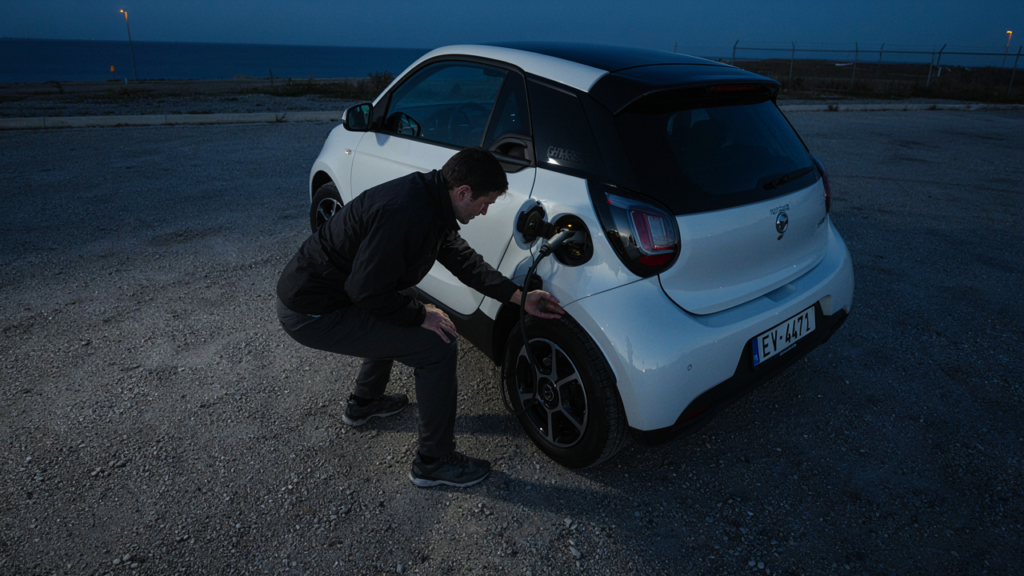
Planning a long electric vehicle road trip involves more than charging the battery to 100% and entering a destination into your navigation system. Before leaving home, it is worth checking your tires, brakes, charging equipment, battery range, weather conditions, and planned charging stops. A few simple inspections can help prevent unexpected delays and make the journey much more comfortable.
At Engine Saga, we believe the best road trips begin with preparation rather than guesswork.
An EV can be an excellent vehicle for long-distance travel, but highway speeds, changing temperatures, elevation, traffic, and charging availability can affect how smoothly your journey goes.
Whether you are driving a compact electric car, an electric crossover, or another battery-powered vehicle, this guide explains what to inspect before a long EV road trip, what to pack, and how to prepare for situations that could otherwise turn an enjoyable drive into a stressful experience.
1. Check Your EV Battery and Available Range
The first thing to inspect before a long EV road trip is your battery’s charge level and expected driving range.
Start by checking your current state of charge and deciding how much energy you need for the first leg of your journey. If you have home charging, charging before departure can give you a convenient starting point.
However, do not rely entirely on the maximum range displayed on your dashboard. That estimate may change according to recent driving efficiency, temperature, speed, elevation, and climate-control use.
For example, an EV that regularly travels long distances around town might use more electricity during sustained highway driving. Strong headwinds, steep climbs, cold weather, and heavy air-conditioning use can also affect consumption.
Before departure:
- Check your battery’s state of charge.
- Review your vehicle’s estimated range.
- Consider your usual highway efficiency rather than only the advertised range.
- Confirm that the battery has no unusual warning messages.
- Follow the manufacturer’s charging recommendations.
You do not necessarily need to charge every EV to 100% before every journey. Follow your vehicle manufacturer’s guidance, including any recommendations for long trips or particular battery types.
2. Inspect Tire Pressure and Tread
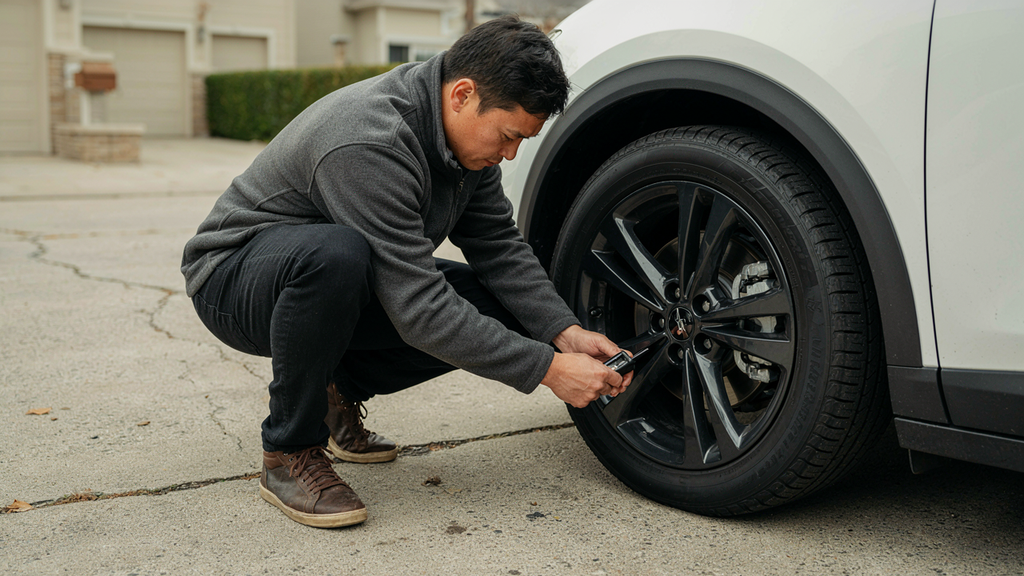
Tires deserve particular attention before a long drive. They affect braking, handling, comfort, energy efficiency, and overall road safety.
Electric vehicles can be relatively heavy because of their battery packs, so suitable tires and correct inflation are important.
Check the pressure of all four tires when they are cold. Use the recommended pressure shown on the driver’s door placard or in the owner’s manual, rather than the maximum pressure printed on the tire sidewall.
Look for:
- Uneven tread wear.
- Cuts, cracks, bulges, or embedded objects.
- Visible damage around the sidewalls.
- Unusual wear that could indicate alignment problems.
- A tire-pressure warning on the dashboard.
Also check whether your vehicle has a spare tire, repair kit, or tire inflator, and understand how to use the equipment provided.
The National Highway Traffic Safety Administration recommends inspecting tires before long trips and checking pressure when tires are cold. If you notice serious damage or insufficient tread, have the issue addressed before departure. NHTSA tire safety guidance.
3. Test the Brakes and Check for Warning Lights
Regenerative braking helps many EVs recover some energy when slowing down, but it does not eliminate the need for properly functioning conventional brakes.
Before setting off, pay attention to how your brakes feel during normal, low-speed driving. Listen for unusual grinding or scraping sounds and notice any vibration, pulling, or changes in pedal response.
Check the dashboard for brake-system, ABS, tire-pressure, battery, or other warning indicators.
Some EVs use their friction brakes less frequently than conventional vehicles, depending on driving conditions and regenerative-braking settings. Brake components still need inspection according to the manufacturer’s maintenance schedule.
Do not ignore an unfamiliar warning simply because the vehicle continues to drive.
If a brake warning is serious, braking performance feels abnormal, or a critical battery or powertrain warning appears, arrange a professional inspection before beginning a long journey. Never assume that restarting the vehicle will resolve the underlying problem.
4. Plan Your Charging Stops Before Leaving
Charging planning is one of the biggest differences between an EV road trip and a conventional gasoline-car journey.
Start by mapping the route and identifying charging stations near the points where you expect to need energy. Check the connector type, charging speed, access requirements, and whether the station supports your vehicle.
Do not assume that every station shown in an app will be operational when you arrive.
Before departure:
- Identify primary charging stops.
- Find an alternative station near important stops.
- Check recent availability information where possible.
- Confirm opening hours and access restrictions.
- Check payment methods and any account requirements.
- Consider nearby food, restrooms, and safe waiting areas.
The U.S. Department of Energy’s Alternative Fuels Data Center recommends planning charging stops for longer EV journeys and checking station availability when possible. Its EV consumer guidance is a useful starting point for U.S. travel.
For longer routes, avoid planning every charging stop around the vehicle’s maximum theoretical range. Leave a practical buffer for detours, traffic, weather, and unexpected station problems.
5. Inspect Your Charging Cable and Accessories
If you carry a portable charging cable or other charging accessories, inspect them before leaving.
Check the cable and connectors for visible damage, cracked housings, bent contacts, fraying, or signs of overheating. Make sure the equipment is compatible with your vehicle and intended charging source.
Carry only equipment you understand how to use safely.
If you plan to charge at your destination, contact the hotel, accommodation, or host beforehand to confirm the availability and type of charging facilities. A listing that says “EV charging available” may not provide the charging speed or connector you expect.
Never use damaged charging equipment, improvised electrical connections, or unsuitable extension leads. Follow the manufacturer’s instructions and local electrical safety requirements.
It is also worth keeping your charging account details and payment options accessible so that a forgotten password does not become an unnecessary problem during a stop.
6. Check the Weather and Road Conditions

Weather can influence both driving safety and EV energy consumption.
Cold temperatures may reduce available range, while cabin heating can require additional electricity. In hot conditions, air conditioning may increase consumption. Heavy rain, strong winds, and snow can also affect driving efficiency and road safety.
Before leaving, check the forecast for your departure point, destination, and the areas between them.
Pay attention to:
- Severe weather warnings.
- Heavy rain or flooding.
- Snow and ice where relevant.
- Strong winds.
- Road closures and construction.
- Expected traffic delays.
If your EV offers battery or cabin preconditioning, learn how it works. In cold conditions, preconditioning while connected to a charger may help prepare the vehicle while drawing energy from the external supply, depending on the vehicle and setup.
Do not let range concerns pressure you into driving through dangerous conditions. Delaying departure or choosing a safer route is better than trying to maintain a schedule at any cost.
7. Check Lights, Wipers, and Visibility
Clear visibility is essential on long journeys, especially when weather changes or you drive after dark.
Inspect the windshield for significant cracks or damage that could affect visibility. Clean the glass inside and out, and check that the washer-fluid reservoir is filled with suitable fluid.
Test the windshield wipers and look for streaking, skipping, or damaged rubber. Replace worn blades before the trip.
Also check that the following work correctly:
- Headlights and high beams.
- Brake lights.
- Turn signals.
- Hazard warning lights.
- Rear lights.
- Mirrors and camera views, where fitted.
Make sure your windows, mirrors, and camera lenses are clean before departure. If your EV uses driver-assistance systems that depend on cameras or sensors, keep the relevant areas clear and follow the vehicle’s cleaning instructions.
These small checks are easy to overlook when you are focused on charging and route planning, but they can make a significant difference in poor visibility.
8. Review Your EV’s Software and Navigation
Modern EVs rely heavily on software for navigation, battery information, charging, and driver assistance.
Before leaving, make sure the navigation system is working and that you understand how it displays charging stops and estimated battery levels at your destination.
Check whether your vehicle’s route planner accounts for charging stops and road conditions. If it offers charger availability or battery preconditioning features, learn how to use them before you are on the highway.
It can also help to check for pending software updates. Avoid starting a major update immediately before departure if it could take the vehicle out of service or require a reliable internet connection. Follow the manufacturer’s instructions and allow sufficient time for any update you choose to install.
Download offline maps if your navigation app supports them, and keep a second route-planning option available on your phone.
Do not experiment with unfamiliar settings while driving. Adjust navigation and charging preferences while safely parked.
9. Check Cabin Comfort and Essential Fluids
EVs still require routine checks beyond the battery.
Depending on the model, the vehicle may have coolant circuits, brake fluid, windshield-washer fluid, and other serviceable components. Follow the owner’s manual for inspection intervals and any checks that owners can safely perform.
Do not open high-voltage components or attempt to service battery-cooling systems yourself.
Before departure, test the heating and air conditioning. Make sure the cabin stays comfortable and that the windshield defogging system works properly.
If your trip includes passengers, pets, or children, confirm that seat belts, child restraints, and climate-control arrangements are suitable for the journey.
A comfortable cabin is not just a luxury. Proper visibility, sensible temperature management, and regular breaks can help make long-distance driving less tiring.
10. Pack an Emergency Kit and Roadside Essentials
Even a well-maintained EV can experience a flat tire, damaged wheel, roadside breakdown, or unexpected delay.
Pack a basic emergency kit suited to your route and climate. Useful items include:
- First-aid kit.
- Drinking water and nonperishable snacks.
- Flashlight and spare batteries.
- Phone charging cable and power bank.
- Reflective warning equipment where legal and appropriate.
- Tire-pressure gauge.
- Manufacturer-approved tire repair equipment, if supplied.
- Warm clothing or rain gear.
- Basic personal medications.
- Emergency contact information.
Check whether your vehicle has roadside assistance and save the relevant contact details before leaving.
If your EV has no spare tire, understand the limitations of its repair kit and whether roadside assistance is required for certain tire failures. Do not assume that a sealant kit can repair every puncture.
For a serious breakdown, move to a safe location if possible and follow local emergency guidance.
11. Check Your Cargo, Load, and Tire Repair Options
Before packing, remove unnecessary items from the vehicle.
Extra cargo adds weight, and excessive loads can affect handling, tire performance, and energy consumption. Check the vehicle’s permitted load limits and avoid obstructing windows, mirrors, airbags, or emergency equipment.
Secure suitcases and loose objects so they cannot move around during sudden braking.
If you are carrying bicycles, roof equipment, or other external cargo, remember that added aerodynamic drag can reduce highway range. Confirm that racks and accessories are installed correctly and comply with the vehicle manufacturer’s requirements.
Finally, check what to do if a tire fails. Some EVs use tire repair kits instead of spare wheels, while others may have different arrangements. Know your vehicle’s setup before you need it.
12. Make a Final Pre-Departure Walkaround
Once the main inspections are complete, spend a few minutes walking around the vehicle.
Look for fresh fluid leaks, visible tire damage, loose exterior panels, unsecured charging ports, and anything unusual that was not present before.
Confirm that:
- All doors and the charging port are properly closed.
- Your route and first charging stop are set.
- Your phone is charged.
- Charging and emergency equipment are secured.
- Passengers are buckled up.
- Mirrors and seats are adjusted.
- No unresolved safety warnings remain.
If something does not look or feel right, stop and investigate before leaving.
A quick walkaround is not a substitute for professional maintenance, but it can help you notice obvious issues before they become harder to deal with on the road.
EV Road Trip Inspection Checklist
Use this quick checklist before departure:
| Inspection | What to Confirm |
| Battery | Sufficient charge for the first leg |
| Tires | Correct cold pressure, tread, and no visible damage |
| Brakes | Normal operation and no serious warnings |
| Charging route | Primary and backup stations identified |
| Charging equipment | Compatible and undamaged |
| Weather | Forecast and road conditions reviewed |
| Lights and wipers | Working correctly |
| Navigation | Route and charging information ready |
| Cabin | Heating, cooling, and defogging working |
| Emergency kit | Essential supplies and assistance details packed |
| Cargo | Within load limits and safely secured |
Final Thoughts
Knowing what to inspect before a long EV road trip helps you prepare for the things that matter most: a healthy battery, safe tires, reliable charging stops, good visibility, and essential roadside equipment.
The best preparation is not complicated. Check the vehicle, plan the route, understand your charging options, review the weather, and leave enough time to handle unexpected delays.
At Engine Saga, we believe a successful EV road trip is not about squeezing every possible mile from the battery. It is about making informed decisions, staying flexible, and reaching your destination safely.
Take a little time to prepare before departure, and you can spend less of the journey worrying about the vehicle and more time enjoying the road.
Frequently Asked Questions(FAQs)
1. What should I check first before a long EV road trip?
Start with battery charge, tire condition, and charging-route planning. These three checks help establish whether your EV can begin the journey safely and whether you have a realistic plan for reaching charging stops along the route.
2. Should I charge my electric vehicle to 100% before a road trip?
A full charge can be useful before a long journey, but the best approach depends on your vehicle’s battery chemistry and manufacturer recommendations. Follow the owner’s manual and consider your first driving leg rather than assuming every EV must always charge to 100%.
3. How do I plan charging stops for a long EV road trip?
Use your vehicle’s route planner or a reliable charging map to identify compatible stations, check availability, and choose backup locations. Allow a practical range buffer because weather, speed, elevation, and station outages can affect your plans.
4. Does cold or hot weather affect EV road-trip range?
Yes. Cold weather can reduce battery efficiency and increase cabin-heating demand, while hot weather may increase air-conditioning use. Wind, rain, and road conditions can also affect consumption, so adjust charging plans to the forecast and your driving conditions.
5. What emergency equipment should I carry in an EV?
Carry water, a first-aid kit, a flashlight, a phone charger, suitable warning equipment, and the tire-repair tools specified for your vehicle. Save roadside-assistance details and understand how to respond if your EV cannot continue safely.
You might also like the following…
- 5 Proven Benefits of Electric Car Brake Service
 Electric car brake service is an important part of maintaining an electric vehicle, even though EVs often need brake pad replacements less frequently than gasoline-powered cars. Thanks to regenerative braking, electric cars can reduce friction-brake… Read more: 5 Proven Benefits of Electric Car Brake Service
 - 10 Essential Tips to Inspect Before a Long EV Road Trip Safely
 Planning a long electric vehicle road trip involves more than charging the battery to 100% and entering a destination into your navigation system. Before leaving home, it is worth checking your tires, brakes, charging equipment,… Read more: 10 Essential Tips to Inspect Before a Long EV Road Trip Safely
 - How to Avoid Wasting Money on Trendy EV Add-Ons
 How to Avoid Wasting Money on Trendy EV Add-Ons is becoming an important question for EV owners. Once you buy an electric vehicle, it is surprisingly easy to keep spending money on products that promise… Read more: How to Avoid Wasting Money on Trendy EV Add-Ons
Pingback: 5 Proven Benefits of Electric Car Brake Service