
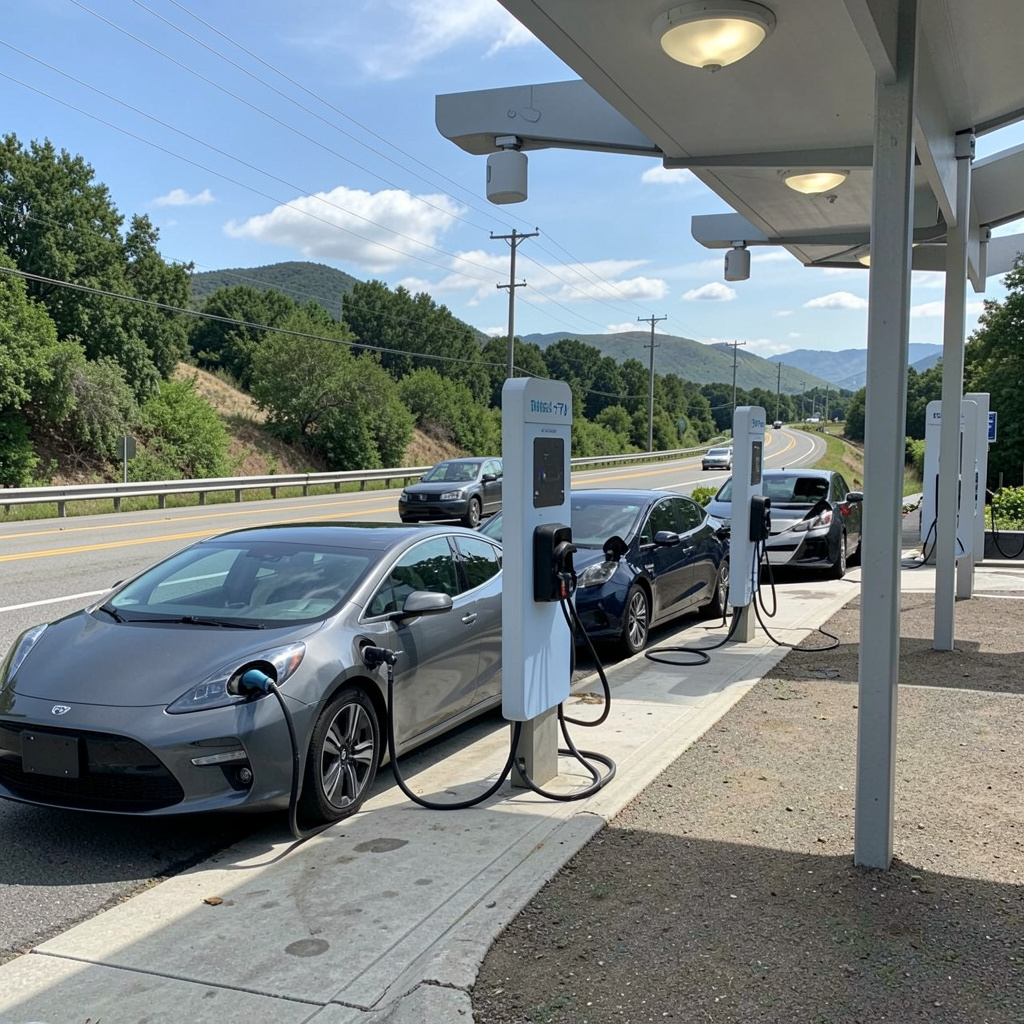
Finding a dependable charger is one of the biggest day-to-day skills in EV ownership. In the U.S., the good news is that the public charging map is expanding, and the U.S. Department of Energy’s Alternative Fuels Data Center (AFDC) Station Locator helps drivers find charging stations nationwide.
The locator can search public and private stations, and the AFDC station page notes that it defaults to showing publicly accessible stations…
But “nearby” is not the same as “reliable.” A charger can be on the map and still be occupied, broken, blocked, slow, or inconvenient for your route. That is why the smartest EV drivers do not rely on a single app, a single station, or a single assumption.
They build a simple routine for checking location, connector type, payment method, hours, reviews, and uptime history before they plug in…
What “reliable” really means in public EV charging
A reliable charger is not just one that exists. It is one that works when you arrive, supports your vehicle, and fits your schedule. Under federal NEVI standards, chargers on those funded corridors must meet an average annual uptime above 97%, and price information must be clearly explained and accessible.
That matters because it shows the direction the U.S. charging network is moving: toward more predictable, better-documented public EV charging.
Still, those rules do not magically eliminate real-world issues at every station. Reliability also depends on maintenance, reporting, user experience, site design, and how quickly an operator responds when something goes wrong. The DOE and NREL both emphasize that operations and maintenance are a core part of successful charging infrastructure, and newer federal programs are also aimed at repairing or replacing nonoperational equipment.
Start with the official station locator
The best starting point is the AFDC Station Locator. It is the most straightforward official tool for finding public EV charging in the U.S., and DOE recommends using it ahead of time to plan trips or on the go through the mobile app.
The DOE also advises drivers to note which charging networks operate the stations, because different networks handle authentication and payment differently.
That one detail saves a lot of frustration. A charger can be physically available but still require an account, app, card, or membership that you did not prepare for. Before leaving, check whether the station is Level 2 or DC fast charging, and make sure the plug standard matches your vehicle.
If your EV uses a different connector or needs an adapter, you want to know that before you are low on battery.
Use driver reviews to spot the difference between “listed” and “usable”
Official data tells you what exists. Driver reviews tell you what actually works today. Crowdsourced apps such as PlugShare add practical context with station ratings, user notes, photos, and availability feedback, which is useful because the same charger can be excellent one week and frustrating the next.
The PlugShare listings also highlight filtering by charging speed, connector type, amenities, and real driver reliability ratings.
That is especially valuable in busy metro areas where charging stations may be shared by many drivers. Look for recent check-ins, comments about broken stalls, and notes about whether the charger is in a garage, behind a gate, or easy to access after business hours.
In practice, recent human feedback often predicts your experience better than a generic map pin. This is an inference based on the role of crowd-sourced station reviews and station status details in charging apps.
Check these five reliability signals before you drive there
For public EV charging, five signals matter most…
- First, confirm the connector type. If the plug does not match your vehicle, the station is useless to you.
- Second, check the charging speed. A DC fast charge can be essential on road trips, while a Level 2 station may be fine for shopping, work, or an overnight stop.
- Third, inspect hours of operation, because some chargers are effectively public only during business hours.
- Fourth, review payment methods, because some stations require specific apps or accounts.
- Fifth, scan for recent user reports or status updates so you know whether the station has been working today, not last month.
A clean, open Level 2 charger near a hotel may be perfect for one person and useless for someone who needs a high-power top-up in ten minutes.
Don’t trust distance alone; trust route logic
The closest charger is not always the best charger. A station can be near you but hard to reach because of traffic, parking rules, building access, or a confusing lot layout.
When planning public EV charging, think in terms of route logic rather than just map proximity. Choose stations that sit naturally on your daily route, near places you already stop, or along highways where charging time can be paired with food, restrooms, or errands.
That approach also reduces range anxiety. Instead of treating charging like an emergency, you start treating it like part of the drive. A prepared driver is much less likely to arrive with a nearly empty battery and too many unknowns.
Look for uptime patterns, not just uptime claims
If a charging network advertises reliability, that is useful, but it is not enough. Real reliability shows up in patterns: Does the site frequently have one dead stall? Do users report payment failures? Does the charger routinely take too long to start? Does the network respond quickly when something breaks?
Uptime standards exist for a reason, and federal policy now expects high annual availability on NEVI-funded stations. Still, a smart EV driver checks real-world behavior too.
Think of uptime as a baseline, not a guarantee. Federal and state standards can improve the network over time, but the day you travel is the day that matters to you. That is why recent driver feedback, clear station information, and backup options should be part of every charging plan.
Build a backup plan every time
Reliable public EV charging is not about finding a single perfect station. It is about having a backup if the first station is full, unavailable, or out of service. A practical charging plan should include at least two nearby options, ideally from different networks or in different parts of the same corridor.
DOE’s own guidance encourages planning ahead and noting which charging networks operate the stations. That backup mindset becomes even more important on long trips. Some routes may look well covered on a map but still feel thin once you account for traffic, weather, charger speed, or site congestion.
The wider U.S. network is expanding, but growth and convenience are not the same thing. NREL’s infrastructure trend reports show rapid change, which is a good sign, but also a reminder that the network is still evolving.
The most practical rule: charge before you need to
The safest public charging habit is to avoid arriving desperate. Try to plug in while you still have choices. That means using public EV charging when your battery is comfortably low enough to make the stop useful, but not so low that you are forced to accept the first station you see. When drivers wait too long, they often end up choosing convenience over reliability.
This is where routine beats panic. Once you know your car’s real-world consumption, you can schedule charging around habits instead of emotions. Over time, that turns public charging from a stressful guess into a predictable part of your mobility routine. That is the difference between “finding a charger” and actually using one well.
A simple checklist for reliable public EV charging
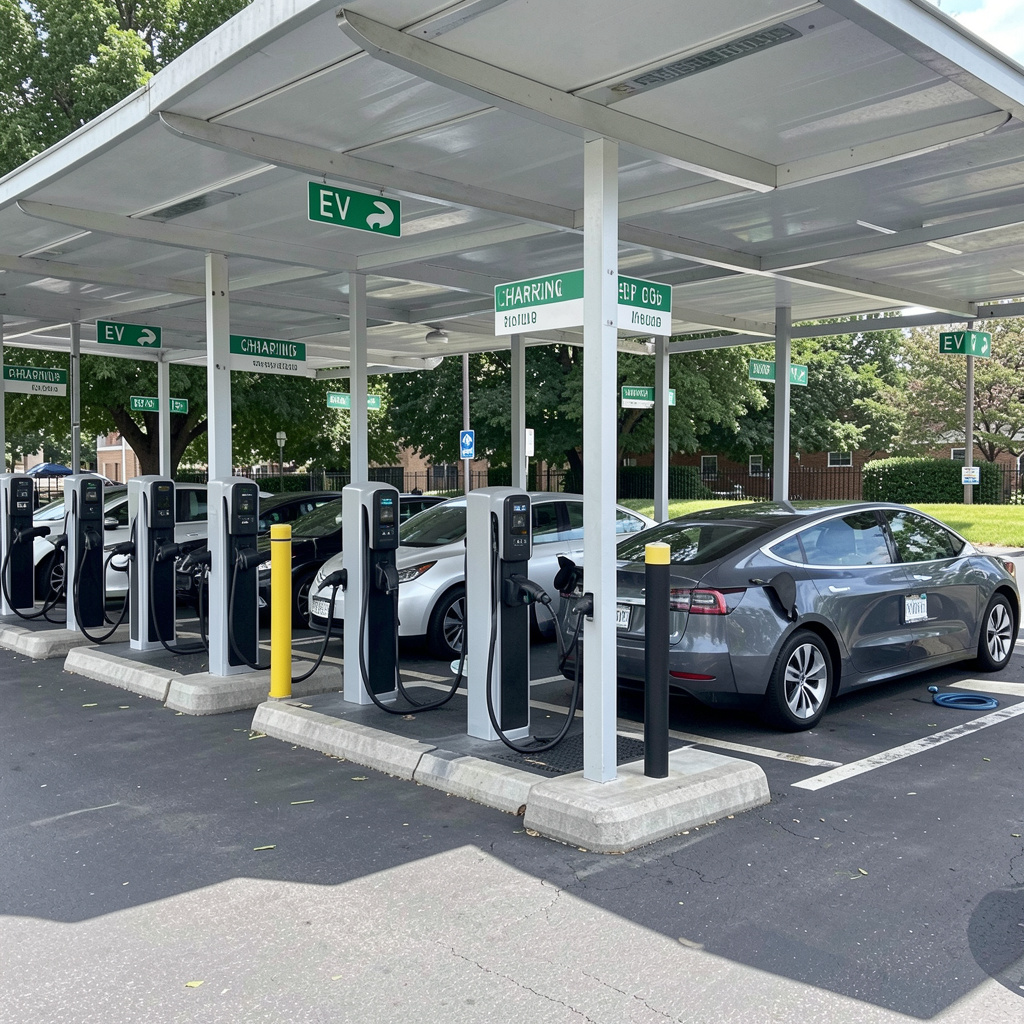
Before you leave, ask five questions. Is the connector right for my EV? Is the speed suitable for my stop? Is the station open when I will arrive? Does the payment method work for me? Have recent users reported issues?
If the answer to any of these is unclear, choose another station or prepare a backup. This checklist is built directly from the station details and planning guidance that DOE recommends drivers review.
That kind of discipline may sound small, but it is exactly what makes public EV charging feel easier over time. The drivers who stress the least are usually the ones who prepare the most.
Final thoughts by Engine Saga
Reliable public EV charging in the U.S. is no longer about hunting for a single rare plug. It is about using the right tools, reading the right signals, and building a habit of checking the details that matter.
The AFDC Station Locator gives you the official starting point, charging apps add lived experience, and federal uptime standards are pushing the network toward a more dependable future.
For everyday EV drivers, the winning formula is simple: plan ahead, verify the station, keep a backup option, and trust real-world data more than hope.
That is how public EV charging becomes less of a gamble and more of a routine…
FAQs – People Also Ask
1. What is the best way to find reliable public EV charging stations in the U.S.?
The most reliable starting point is the U.S. Department of Energy’s AFDC Station Locator, because it shows publicly accessible stations and supports trip planning. After that, compare the connector type, hours, payment options, and recent driver reviews before choosing a charger.
2. How do I know if a public EV charger will actually work when I arrive?
Check recent user check-ins, comments, station photos, and network status in a charging app, then confirm the station’s hours and payment method. A charger that is listed online may still be occupied, offline, or temporarily unavailable when you arrive.
3. Why do some public EV chargers feel more dependable than others?
Dependability depends on maintenance, uptime, site design, payment systems, and how well the operator manages the station. Federal NEVI standards now require average annual uptime above 97% for funded stations, but real-world experience can still vary by location and network.
4. Should I rely on one charging app or use more than one?
Using more than one source is smarter. The official AFDC locator is a strong base, while driver-review apps add real-world details that maps often miss. Cross-checking station data reduces the chance of arriving at a charger that looks available but is not practical.
5. What is the biggest mistake EV drivers make with public charging?
The biggest mistake is treating the nearest charger as the best charger. A more reliable choice is usually the one with the right connector, working payment system, good access, recent positive user reports, and a backup nearby in case something changes.
You might also like the following…
- 5 Proven Benefits of Electric Car Brake Service
 Electric car brake service is an important part of maintaining an electric vehicle, even though EVs often need brake pad replacements less frequently than gasoline-powered cars. Thanks to regenerative braking, electric cars can reduce friction-brake… Read more: 5 Proven Benefits of Electric Car Brake Service
 - 10 Essential Tips to Inspect Before a Long EV Road Trip Safely
 Planning a long electric vehicle road trip involves more than charging the battery to 100% and entering a destination into your navigation system. Before leaving home, it is worth checking your tires, brakes, charging equipment,… Read more: 10 Essential Tips to Inspect Before a Long EV Road Trip Safely
 - How to Avoid Wasting Money on Trendy EV Add-Ons
 How to Avoid Wasting Money on Trendy EV Add-Ons is becoming an important question for EV owners. Once you buy an electric vehicle, it is surprisingly easy to keep spending money on products that promise… Read more: How to Avoid Wasting Money on Trendy EV Add-Ons