

DC Fast Charging vs Level 2 Charging is one of the most important comparisons every EV owner should understand before planning a road trip.
Whether you’re preparing for a weekend escape, a long-distance highway journey, or a multi-day adventure, your charging strategy can significantly impact travel time, convenience, battery management, and overall driving experience.
At Engine Saga, after years of testing electric vehicles in real-world conditions, we’ve learned that choosing between DC Fast Charging and Level 2 Charging isn’t simply about charging speed.
It’s about understanding where each charging method performs best and how it affects your journey from start to finish.
Many new EV owners assume that the fastest charger is always the best option. In reality, the answer depends on your route, charging availability, battery size, travel schedule, and long-term battery health considerations.
In this guide, we’ll break down the real-world differences between DC Fast Charging and Level 2 Charging, helping you determine which option makes the most sense for your next EV road trip
Among EV owners, one question comes up repeatedly:
Should you rely on DC fast charging or Level 2 charging during road trips?
The answer isn’t as simple as choosing the faster option.
After years of testing electric vehicles across urban routes, highways, and long-distance travel scenarios, we’ve learned that both charging methods serve different purposes.
The smartest road-trippers don’t choose one or the other they understand when each makes sense...
Let’s explore the real-world differences between DC fast charging and Level 2 charging, how each impacts travel efficiency, battery management, trip planning, and overall road-trip comfort.
Understanding the Two Charging Types
Before comparing them, it’s important to understand what these charging methods actually do.
What Is DC Fast Charging?
DC fast charging delivers direct current directly to the battery, bypassing the vehicle’s onboard charger.
This allows significantly higher charging speeds compared to traditional charging methods.
In many modern EVs, DC fast chargers can add substantial driving range during relatively short stops.
Common locations include:
- Interstate corridors
- Highway service areas
- Dedicated charging plazas
- Shopping centers
- Travel hubs
DC fast charging is designed primarily for travel rather than everyday charging.
What Is Level 2 Charging?
Level 2 charging uses alternating current and relies on the vehicle’s onboard charging system to convert electricity for battery use.
Level 2 chargers are much slower than DC fast chargers but are widely available.
Common locations include:
- Hotels
- Restaurants
- Office buildings
- Parking garages
- Residential properties
- Tourist destinations
While slower, Level 2 charging often works well when the vehicle is parked for several hours...
The Biggest Difference: Time
When discussing road trips, time is usually the first factor drivers consider.
DC Fast Charging
Benefits:
- Shorter charging stops
- Better for long-distance travel
- Easier route planning
- Reduces downtime
A charging session may fit naturally into:
- Coffee breaks
- Meal stops
- Restroom visits
Instead of waiting hours, drivers often resume travel relatively quickly.
Level 2 Charging
Benefits:
- Works while you are already stopped
- Ideal for overnight charging
- Convenient at destinations
The downside is obvious:
Charging takes much longer.
For a traveler trying to cover hundreds of miles in a day, relying exclusively on Level 2 charging can significantly extend travel time.
DC Fast Charging vs Level 2 Charging: A Real-World EV Road Trip Scenario
Imagine a 600-mile journey.
Road Trip Using Primarily DC Fast Charging
Typical experience:
- Drive several hours
- Stop for a meal
- Charge while eating
- Continue traveling
The charging process becomes integrated into natural travel breaks.
The overall pace remains similar to traditional road-tripping.
Road Trip Using Primarily Level 2 Charging
Typical experience:
- Drive until battery is low
- Find a Level 2 charger
- Wait several hours
Unless charging occurs overnight or during planned activities, Level 2 charging may significantly slow progress.
This isn’t necessarily bad.
It simply creates a different style of travel.
Which Charging Method Is More Convenient?
Convenience depends entirely on travel goals.
DC Fast Charging Wins When:
- Time matters
- Distances are long
- Multiple states are involved
- Travel schedules are tight
- Charging stops need to be brief
Road-trippers who want maximum mobility usually prefer fast charging networks.
Level 2 Charging Wins When:
- Staying overnight
- Visiting attractions
- Exploring cities
- Spending several hours at a destination
In these situations, slower charging happens in the background.
You aren’t waiting for the charger.
The charger is working while you enjoy the trip.
Battery Health Considerations
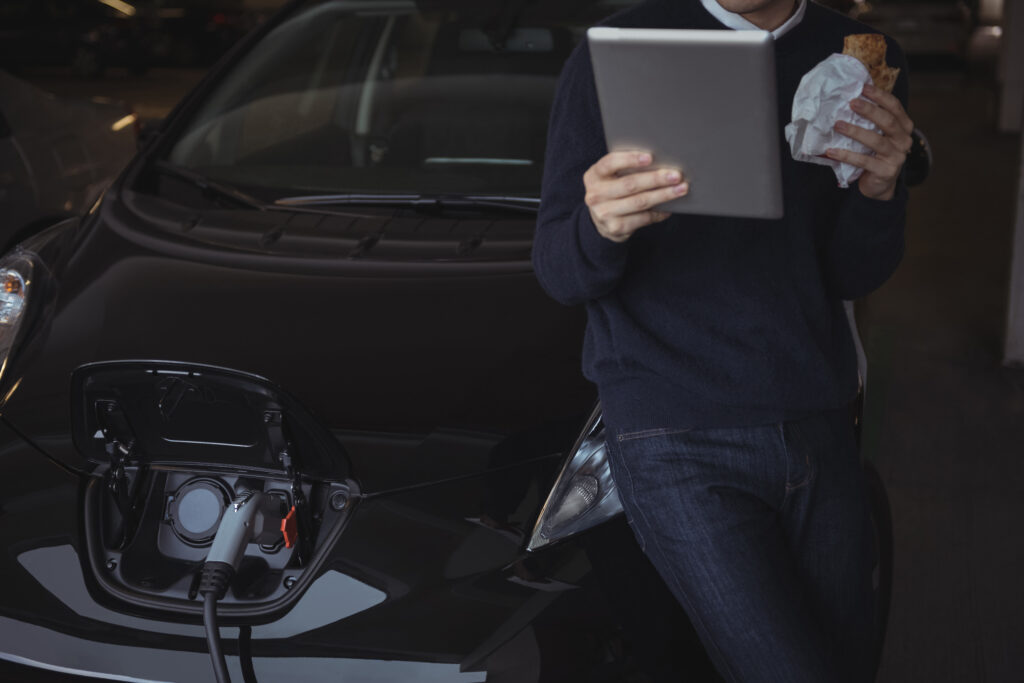
One of the biggest EV myths is that road-trip fast charging automatically damages batteries.
Reality is more nuanced.
What Actually Matters
Battery health depends on:
- Heat management
- Charging frequency
- Temperature conditions
- Long-term charging habits
Not simply one fast charging session.
Modern EV battery management systems are designed to handle occasional road-trip fast charging.
For most owners:
A few DC fast charging sessions during travel have minimal long-term impact.
Level 2 Charging and Battery Health
Level 2 charging is generally gentler because charging occurs at lower power levels.
Benefits include:
- Reduced heat generation
- Lower battery stress
- Consistent energy delivery
For daily charging routines, Level 2 often becomes the preferred option.
Cost Differences on Road Trips
Charging speed and cost often go hand in hand.
DC Fast Charging Costs
Fast charging networks typically charge premium rates because:
- Equipment is expensive
- Infrastructure costs are higher
- Maintenance requirements are greater
Convenience comes with a price.
Level 2 Charging Costs
Level 2 charging can often be:
- Less expensive
- Included with hotel stays
- Available at businesses
- Offered as an amenity
Some destinations even provide complimentary charging for guests.
Over a long trip, this can reduce overall travel costs.
Planning Flexibility
Charging strategy affects route flexibility.
Fast Charging Routes
Benefits:
- More predictable travel times
- Easier long-distance planning
- Greater confidence in unfamiliar areas
Drivers can focus on reaching destinations rather than finding lengthy charging opportunities.
Level 2-Based Routes
Benefits:
- More relaxed pace
- Encourages destination-based travel
- Works well for scenic journeys
Some travelers intentionally plan trips around attractions, restaurants, and overnight stays that provide charging.
Weather Considerations
Weather influences charging decisions more than many new EV owners realize.
Cold Weather
Cold temperatures may:
- Reduce charging speeds
- Increase energy consumption
- Extend travel charging requirements
In winter conditions, DC fast charging often becomes more valuable because it helps recover range quickly.
Hot Weather
High temperatures may:
- Increase cooling system use
- Affect charging efficiency
Modern EVs manage these conditions well, but weather remains an important planning factor.
Availability Across the United States
Charging infrastructure continues expanding rapidly.
DC Fast Charging Growth
Highway corridors now feature increasing numbers of:
- Fast charging stations
- Multi-stall charging hubs
- Dedicated EV travel centers
This growth is making road trips easier each year.
Level 2 Charging Growth
Level 2 chargers are even more widespread.
They can be found at:
- Hotels
- Resorts
- Museums
- Downtown districts
- Public parking facilities
Because installation costs are lower, Level 2 networks continue growing steadily.
Common Mistakes Road-Trippers Make
Mistake #1: Relying Exclusively on Fast Charging
Many drivers overlook useful destination charging opportunities.
A hotel charger can eliminate the need for an extra charging stop the next morning.
Mistake #2: Ignoring Charging Speeds
Not all chargers deliver the same performance.
Understanding charger capabilities improves planning accuracy.
Mistake #3: Arriving Nearly Empty
Maintaining a reasonable energy buffer reduces stress and increases flexibility.
Mistake #4: Failing to Have Backup Options
Always identify alternative charging locations along the route.
Unexpected situations happen.
Prepared travelers adapt more easily.
The Best Strategy: Use Both
The most successful EV road trips rarely depend entirely on one charging method.
Instead:
Use DC Fast Charging For
- Highway travel
- Long-distance movement
- Mid-trip energy replenishment
- Tight schedules
Use Level 2 Charging For
- Hotels
- Restaurants
- Attractions
- Overnight stays
This combination maximizes convenience while minimizing wasted time.
What We Have Learned at Engine Saga
After years of EV travel testing, one lesson consistently stands out:
Road-trip charging isn’t about speed alone.
It’s about matching the charging method to the travel situation.
Fast charging helps maintain momentum.
Level 2 charging helps maintain efficiency.
Drivers who understand both options usually enjoy smoother trips, lower stress levels, and better overall travel flexibility.
The question isn’t whether DC fast charging is better than Level 2 charging.
The real question is:
When should each be used?
The answer depends on your destination, schedule, driving style, and travel goals.
The best road-trip strategy embraces both.
Frequently Asked Questions (FAQs)
1. Is DC fast charging necessary for long-distance EV road trips?
While not always mandatory, DC fast charging significantly reduces travel time on long-distance routes. It allows drivers to recharge during normal breaks rather than waiting several hours, making cross-country and multi-state journeys much more practical.
2. Does Level 2 charging make sense during road trips?
Yes. Level 2 charging is extremely useful when the vehicle is parked for extended periods. Charging overnight at hotels or while visiting attractions can add meaningful range without requiring dedicated charging stops during the trip.
3. Does frequent DC fast charging damage EV batteries?
Modern EVs are designed to accommodate occasional fast charging. Battery health is influenced more by long-term charging habits, temperature management, and overall usage patterns than by a few road-trip fast charging sessions.
4. Which charging method is usually cheaper while traveling?
Level 2 charging is often less expensive and may even be included at hotels, workplaces, or destinations. DC fast charging typically costs more due to infrastructure and operational expenses, though it provides much greater convenience.
5. What is the ideal charging strategy for EV road trips?
Most experienced EV travelers combine both charging methods. DC fast charging keeps the journey moving efficiently, while Level 2 charging takes advantage of overnight stays and longer stops, creating a balanced and practical travel plan.
You might also like the following…
- 5 Proven Benefits of Electric Car Brake Service
 Electric car brake service is an important part of maintaining an electric vehicle, even though EVs often need brake pad replacements less frequently than gasoline-powered cars. Thanks to regenerative braking, electric cars can reduce friction-brake… Read more: 5 Proven Benefits of Electric Car Brake Service
 - 10 Essential Tips to Inspect Before a Long EV Road Trip Safely
 Planning a long electric vehicle road trip involves more than charging the battery to 100% and entering a destination into your navigation system. Before leaving home, it is worth checking your tires, brakes, charging equipment,… Read more: 10 Essential Tips to Inspect Before a Long EV Road Trip Safely
 - How to Avoid Wasting Money on Trendy EV Add-Ons
 How to Avoid Wasting Money on Trendy EV Add-Ons is becoming an important question for EV owners. Once you buy an electric vehicle, it is surprisingly easy to keep spending money on products that promise… Read more: How to Avoid Wasting Money on Trendy EV Add-Ons