

Are EV Tax Credits Still Worth Tracking? Absolutely but EV buyers need to understand what kind of incentive they are tracking and whether it is actually available for their purchase.
Tax credits have become an important part of the EV buying conversation. For years, federal incentives helped reduce the effective cost of qualifying electric vehicles, while state, local, utility, and charging incentives created additional opportunities in some markets.
The complicated part is that EV incentives are not permanent, universal discounts.
Eligibility can depend on the purchase date, vehicle, battery, income, location, transaction structure, and specific program rules. Some incentives can expire, change, or be replaced by another program.
That is why we recommend treating EV tax credits as something to verify, not something to automatically include in your buying budget.
At Engine Saga, we look at EV ownership from a practical perspective. If an incentive is available and you qualify, it can matter. But the vehicle still needs to make sense without relying on an uncertain future benefit.
Why EV Tax Credits Can Be Difficult to Follow
The biggest problem with EV incentives is that there is rarely one simple rule that applies to every driver.
Different programs can have different:
- Eligibility requirements
- Income limits
- Vehicle price limits
- Purchase or lease requirements
- Geographic restrictions
- Deadlines
- Application procedures
- Income-tax treatment
- Manufacturer requirements
- Installation requirements
A program that worked for one EV buyer last year may not apply to someone purchasing a different vehicle today.
This is why old articles, dealership advertisements, social media posts, and search results can sometimes create confusion.
Always check the current program documentation before treating an incentive as part of your expected savings.
Federal, State, Local, and Utility Incentives Are Different
When people say “EV tax credit,” they often mean a federal program.
But that is only one part of the larger incentive landscape.
Depending on where you live, you may encounter programs offered by:
- State governments
- Local governments
- Electric utilities
- Municipal programs
- Air-quality agencies
- Transportation authorities
- Workplace charging programs
- Community organizations
These programs can have completely different requirements.
For example, one utility might offer an incentive related to home charging equipment, while a state program could focus on vehicle purchases or income-qualified households.
The important lesson is simple:
Do not assume that the expiration of one EV incentive means every EV incentive has disappeared.
Check the programs available in your specific location.
Tax Credit vs. Rebate: Know the Difference
A tax credit and a rebate can both reduce your effective cost, but they are not necessarily the same thing.
A tax credit generally reduces the amount of tax you owe under the rules of the applicable tax provision.
A rebate may provide money through a program administrator, utility, dealership, manufacturer, or government agency.
There can also be differences in timing.
One incentive may be reflected during a transaction, while another may require an application or documentation.
Before including an incentive in your budget, find out:
- Who provides it?
- When do you receive it?
- Is it refundable or nonrefundable?
- What income requirements apply?
- What vehicle requirements apply?
- Does the dealer or installer handle the paperwork?
- What documents must you keep?
These details can be more important than the advertised dollar amount.
Why the Purchase Date Matters
EV incentive rules often include specific dates.
That means two people purchasing similar vehicles can potentially face different eligibility rules simply because their transactions occurred at different times.
Do not rely on a statement such as “this EV qualifies for a $X credit.”
Instead, confirm:
- The program’s current status
- The vehicle’s eligibility
- The buyer’s eligibility
- The transaction date
- The required documentation
- Any applicable income or price limits
A vehicle that qualified under an older version of a program does not automatically qualify under today’s rules.
The Vehicle May Need to Meet Specific Requirements
Even when an incentive exists, the vehicle may have to meet particular conditions.
Depending on the program, those conditions could involve:
- Vehicle type
- Purchase price
- Battery specifications
- Manufacturing requirements
- Final assembly
- Battery sourcing
- New versus used status
- Commercial versus personal use
This is why a generic “EV tax credit” search is not enough.
You need to identify the exact vehicle, model year, transaction type, and incentive program before calculating your expected savings.
Used EV Buyers Should Check Incentives Too
People sometimes focus entirely on incentives for new electric vehicles.
That can cause used-EV shoppers to overlook programs designed specifically for previously owned vehicles or income-qualified buyers.
However, used-vehicle incentive rules can be very different from new-vehicle rules.
Requirements may involve:
- Vehicle age
- Purchase price
- Buyer income
- Previous ownership
- Dealer requirements
- Purchase date
- Vehicle eligibility
- Whether the buyer has used a similar credit before
If you are considering a used EV, check the program requirements for that specific transaction rather than assuming the rules for new EVs apply.
Leasing Can Create Another Layer of Complexity
Leasing an EV can make incentive discussions more complicated because the vehicle transaction and the person using the vehicle are structured differently from a traditional purchase.
A manufacturer, lessor, dealer, or other party may handle an incentive differently depending on the program.
That means you should not compare a lease payment and purchase price without asking how incentives are being reflected.
Look carefully at the lease agreement and ask:
- Is an incentive included in the advertised payment?
- Who receives the incentive?
- Is it reflected as a capitalized-cost reduction?
- What happens if eligibility changes?
- Is the incentive guaranteed?
- What fees remain after the incentive?
A lower advertised payment does not automatically mean you are receiving a particular tax benefit directly.
Home Charging Incentives Are Worth Watching
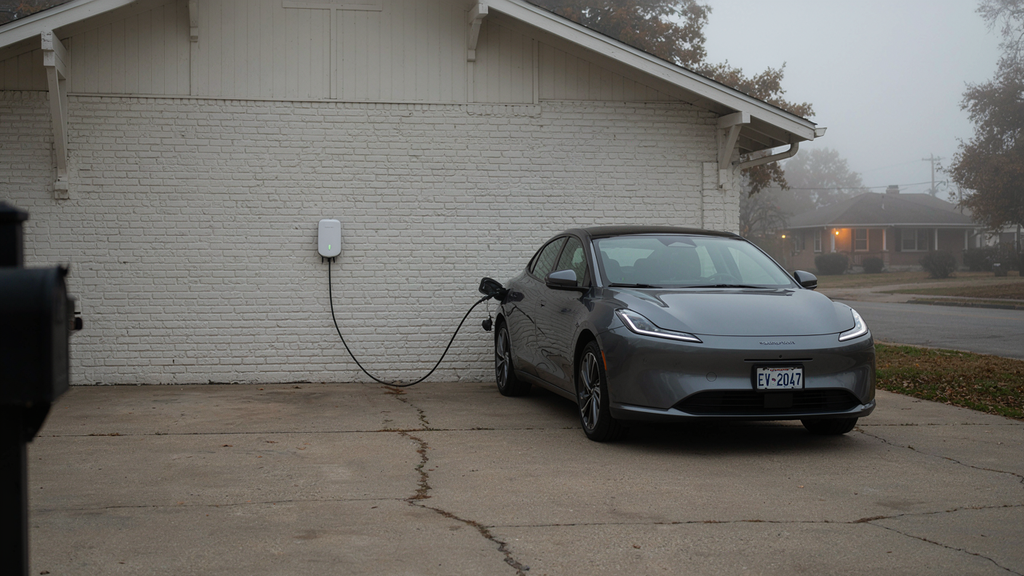
For many EV owners, the most useful incentive may not involve the vehicle itself.
Home charging can require electrical work, equipment, installation, or upgrades.
Depending on the current programs in your location, assistance may be available through government agencies, utilities, or other organizations.
Before installing a charger, check whether the program requires:
- Specific equipment
- Approved installers
- Income eligibility
- A particular property type
- Installation by a certain deadline
- Pre-approval
- Documentation or receipts
Do this research before the installation whenever possible.
Some programs have requirements that are difficult or impossible to satisfy after the work is already completed.
Utility Programs Can Be Especially Interesting
Your electricity provider may offer programs related to EV charging.
These can sometimes involve charging schedules, special electricity rates, rebates, or other incentives.
The exact structure varies considerably between utilities.
For example, a utility may encourage charging during certain hours when electricity demand is lower.
If you already own an EV, checking your utility’s current EV program can be worthwhile even if you are not shopping for another vehicle.
Don’t Let a Tax Credit Choose Your EV
This is one of the most important points in our view.
An incentive should be part of the buying calculation not the entire reason for buying a particular EV.
Start with the vehicle itself.
Ask:
- Does the range fit my daily driving?
- Is home charging practical?
- Does the vehicle have the features I actually need?
- Is the cargo space sufficient?
- Does the charging system fit my travel habits?
- Are insurance and maintenance reasonable?
- Does the warranty fit my ownership plans?
- Is the vehicle comfortable?
- Can I afford it without depending on a future incentive?
Once those questions are answered, incentives can be considered as another financial factor.
This approach helps prevent a temporary program from pushing you toward a vehicle that does not fit your needs.
Calculate the Real Cost Instead of the Advertised Price

Suppose an EV is advertised at a particular price and a promotional message mentions an incentive.
Do not immediately subtract the advertised amount from the purchase price.
Build the calculation yourself.
Consider:
Vehicle price + taxes + fees + financing costs − confirmed incentives = effective purchase cost
For a longer-term ownership calculation, also consider:
- Insurance
- Charging
- Tires
- Maintenance
- Registration
- Depreciation
- Home charging equipment
- Financing interest
This gives you a more realistic view of affordability.
What If an Incentive Expires?
Do not panic simply because a tax credit or rebate ends.
The EV market can continue changing after an incentive disappears.
Manufacturers may change pricing, offer financing promotions, introduce new models, or adjust equipment.
State and utility programs can also have different timelines.
The important thing is to separate two questions:
“Is this particular incentive available?”
and
“Is this EV still financially practical without it?”
Those are not the same question.
Build an EV Incentive Checklist
Before buying, we recommend creating a simple checklist.
Step 1: Identify your location
Start with your state, city, county, and utility provider where applicable.
Step 2: Identify the vehicle
Record the exact model, model year, trim, and purchase or lease structure.
Step 3: Check federal programs
Use current official government information rather than old articles or dealer advertisements.
Step 4: Check state programs
Look for current state incentives and their eligibility rules.
Step 5: Check utility incentives
Look at your electricity provider’s EV and home-charging programs.
Step 6: Confirm eligibility
Do not assume that because a program exists, you personally qualify.
Step 7: Save documentation
Keep contracts, receipts, eligibility documents, installation records, and other relevant paperwork.
Step 8: Calculate the purchase without the incentive
This is an excellent reality check.
If the vehicle still fits your budget without the incentive, the incentive if you qualify can be treated as an additional financial benefit rather than something your entire decision depends on.
Common EV Tax Credit Mistakes
A few mistakes appear repeatedly.
Using outdated information
Search results can remain online long after a program changes.
Assuming every EV qualifies
Eligibility can depend on the exact vehicle and transaction.
Confusing a rebate with a tax credit
They can work differently and have different requirements.
Ignoring income limits
Some programs have income-based eligibility.
Forgetting purchase deadlines
An incentive may apply only to transactions completed during a specific period.
Relying entirely on dealership advertising
Dealer information can be useful, but verify the program through the relevant official source.
Forgetting charging incentives
Vehicle incentives get most of the attention, while home-charging programs can also affect ownership costs.
A Simple Way to Think About EV Incentives
We like to divide incentives into three categories:
| Category | What to Check |
| Vehicle incentives | Vehicle eligibility, buyer eligibility, purchase or lease structure |
| Charging incentives | Equipment, installation, property, utility, deadline |
| Local programs | Location, income, program funding, application process |
This makes incentive research much easier.
Instead of asking, “How much tax credit do I get?”
ask:
“Which current programs apply to this exact EV purchase and charging setup?”
That question leads to much more useful information.
Why Tracking Incentives Still Makes Sense
Even when a major federal incentive ends, EV incentives remain worth tracking because policies and programs can change at different levels.
A state may introduce a new program. A utility may launch a charging rebate. A local agency may offer assistance for qualifying residents.
The value of tracking incentives is therefore not simply about finding a discount.
It is about knowing the rules before you make a financial commitment.
That knowledge can help you avoid budgeting around money you cannot actually receive.
Final Thoughts
So, are EV tax credits still worth tracking? Yes, but today’s EV buyer needs a more careful approach than simply searching for the biggest advertised credit.
Federal EV incentives have changed, and individual programs can have firm eligibility requirements and expiration dates. At the same time, state, local, and utility programs may operate under separate rules.
The smartest habit is to verify everything using current official information.
Research the vehicle. Check your eligibility. Look at state and utility programs. Investigate home-charging incentives. Confirm deadlines. Keep your documentation.
Most importantly, calculate whether the EV makes financial sense before counting an incentive.
A tax credit can change the numbers, but it should never hide the numbers.
Frequently Asked Questions(FAQs)
1. Are EV tax credits still available in the United States?
EV incentives depend on the specific program, date, vehicle, and location. Federal consumer clean-vehicle credits have undergone major changes, while state, local, and utility programs may have separate rules and availability.
2. How can I find out if an EV qualifies for an incentive?
Start with the official government or program administrator website and search using the exact vehicle, model year, transaction type, and your location. Then verify buyer income, price, timing, and documentation requirements before relying on the incentive.
3. Can used EV buyers receive tax incentives?
Some incentive programs can apply specifically to previously owned electric vehicles, but eligibility depends on the current law and program rules. Used-EV shoppers should verify vehicle age, price, income, purchase date, and other requirements
4. Are EV charging incentives separate from vehicle tax credits?
They can be. Vehicle incentives and charging incentives may operate under different programs with different eligibility rules and deadlines. Homeowners and renters should check applicable federal, state, local, and utility programs before installing charging equipment.
5. Should I buy an EV only because I can receive a tax credit?
A tax incentive is only one part of the ownership calculation. Range, charging access, insurance, financing, maintenance, depreciation, practicality, and the vehicle’s purchase price should also fit your situation before an incentive is considered.
You might also like the following…
- 5 Proven Benefits of Electric Car Brake Service
 Electric car brake service is an important part of maintaining an electric vehicle, even though EVs often need brake pad replacements less frequently than gasoline-powered cars. Thanks to regenerative braking, electric cars can reduce friction-brake… Read more: 5 Proven Benefits of Electric Car Brake Service
 - 10 Essential Tips to Inspect Before a Long EV Road Trip Safely
 Planning a long electric vehicle road trip involves more than charging the battery to 100% and entering a destination into your navigation system. Before leaving home, it is worth checking your tires, brakes, charging equipment,… Read more: 10 Essential Tips to Inspect Before a Long EV Road Trip Safely
 - How to Avoid Wasting Money on Trendy EV Add-Ons
 How to Avoid Wasting Money on Trendy EV Add-Ons is becoming an important question for EV owners. Once you buy an electric vehicle, it is surprisingly easy to keep spending money on products that promise… Read more: How to Avoid Wasting Money on Trendy EV Add-Ons