
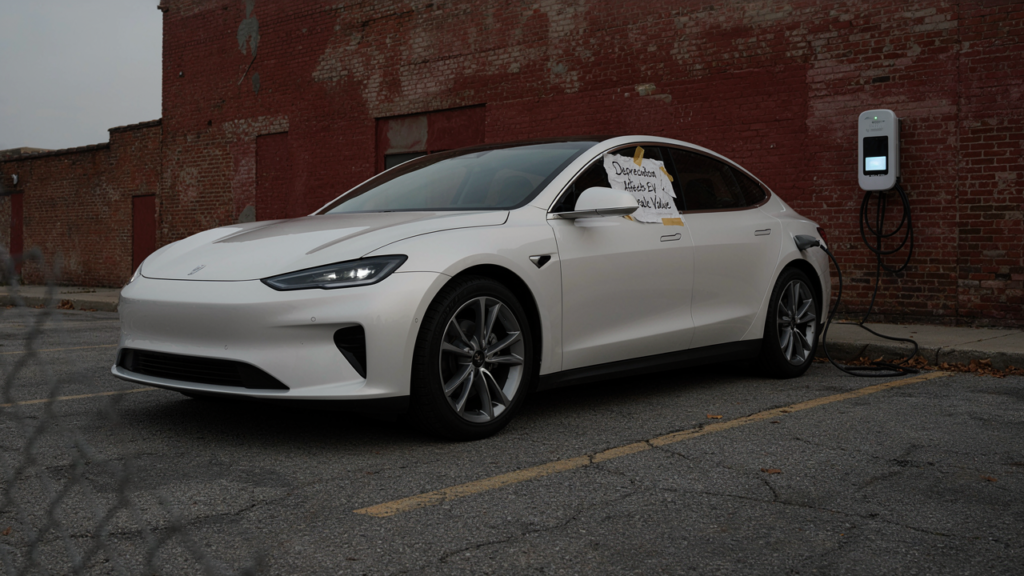
How Depreciation Affects EV Resale Value is an important question for anyone thinking about buying an electric vehicle and keeping it for several years. The purchase price is only part of the ownership equation. What the vehicle is worth when you eventually sell or trade it can have a major effect on your real cost of ownership.
From our experience with EVs, resale value is rarely determined by one thing. Battery condition, mileage, model reputation, charging capability, vehicle age, software support, exterior condition, maintenance history, market demand, and the arrival of newer models can all influence what buyers are willing to pay.
Depreciation is also not unique to electric vehicles. Every vehicle loses value over time. What makes EV depreciation particularly interesting is that the technology is developing quickly, which can change how buyers view older models.
That does not mean every EV follows the same depreciation pattern. Some hold their value better than others, while certain models can experience sharper value changes when newer technology arrives.
Understanding what drives those changes can help you make a more informed purchase and take better care of the EV you already own.
What Is EV Depreciation?
Depreciation is the difference between what you originally paid for a vehicle and what it is worth later.
For example, imagine an EV purchased for $40,000 that is worth $26,000 several years later. The $14,000 difference represents depreciation before considering financing, insurance, taxes, charging, maintenance, or other ownership costs.
Depreciation usually begins as soon as a new vehicle becomes a used vehicle. The rate is not necessarily the same every year.
A vehicle may lose value relatively quickly during its early ownership period and then experience slower depreciation later. However, market conditions and vehicle-specific factors can change that pattern.
For EVs, there is another important consideration: technology.
A newer model may offer greater range, faster charging, improved software, better efficiency, or additional features. If those improvements make an older vehicle less attractive to used-car shoppers, its resale value can be affected.
Why EV Depreciation Can Be Different
Electric vehicles have several characteristics that make depreciation worth watching closely.
Battery technology continues to evolve, and manufacturers regularly introduce improvements in range, charging speed, efficiency, thermal management, and software.
This creates an interesting situation for used EV buyers.
A three-year-old EV may still be mechanically useful and have plenty of battery life remaining, but a newer model could offer substantially better charging convenience or range.
Used buyers naturally compare the two.
That comparison can influence the price of the older vehicle even when it remains reliable.
However, technology alone does not determine resale value. A well-supported EV with a healthy battery, good condition, desirable features, and strong market demand can remain attractive for years.
Battery Health Has a Major Role
When discussing EV resale value, battery condition deserves particular attention.
The battery is one of the most important components of an electric vehicle, so used buyers naturally want confidence that it is performing properly.
Battery degradation does not automatically mean an EV has reached the end of its useful life. Modern EV batteries are designed for long-term use, and actual degradation varies according to battery chemistry, thermal management, charging behavior, climate, mileage, and vehicle design.
Still, a used buyer may be more interested in an EV with a well-documented ownership history and healthy real-world range.
This is why sensible charging habits can indirectly protect resale value.
Avoiding unnecessary abuse, following manufacturer charging recommendations, maintaining appropriate battery conditions, and keeping service records can help demonstrate responsible ownership.
Mileage Still Matters
EVs do not escape the traditional relationship between mileage and vehicle value.
A high-mileage EV may still have plenty of useful life remaining, but buyers often compare mileage when deciding between similar used vehicles.
Consider two otherwise similar EVs:
| Factor | EV A | EV B |
| Age | 4 years | 4 years |
| Mileage | 30,000 miles | 75,000 miles |
| Condition | Good | Good |
| Battery health | Strong | Strong |
| Service history | Complete | Limited |
A buyer may view EV A as less risky because it has lower mileage and clearer history.
Mileage does not tell the entire story, but it remains an important part of the resale equation.
Range Can Influence Used EV Demand
Range is one of the first specifications many used EV shoppers compare.
Older EVs may have shorter original ranges than newer models. If today’s market offers significantly more range at similar prices, an older EV may face additional pressure in the used market.
But range should be viewed in context.
A vehicle with 220 miles of practical range may still be perfectly suitable for someone who drives 30 miles per day and charges at home.
This is where buyer needs matter.
An EV does not need the longest range available to retain value. It needs to provide a useful combination of range, charging convenience, efficiency, price, condition, and reliability for its target market.
Fast Charging Capability Can Affect Resale Appeal

Charging speed has become increasingly important as EV adoption grows.
Used buyers may look at:
- Maximum DC fast-charging capability
- Charging curve
- Battery preconditioning
- Charging-port compatibility
- Level 2 charging capability
- Availability of charging equipment
- Software features related to charging
An older EV with limited fast-charging capability may be less attractive to frequent road-trippers than a newer model with faster charging.
On the other hand, drivers who mostly charge at home may place less importance on maximum DC charging speed.
This is another reason resale value depends on the intended buyer.
Software Support Can Matter More Than Expected
Modern EVs depend heavily on software.
Navigation, charging management, driver-assistance features, infotainment, energy monitoring, smartphone integration, and vehicle settings can all depend on software.
If an older EV continues receiving useful software support, it can remain more competitive in the used market.
Buyers may also consider whether the vehicle’s technology feels outdated.
A clean, functional interior with responsive software and commonly expected connectivity features can make an older EV easier to sell.
Condition Protects the Value You Have Left
Depreciation is unavoidable, but poor condition can accelerate the loss in practical resale value.
Exterior damage, neglected tires, worn interior surfaces, damaged wheels, poor paint condition, cracked displays, unpleasant odors, and missing accessories can make a used EV less appealing.
Small maintenance decisions matter.
Keeping the interior clean and repairing minor problems before they become major issues can help preserve the vehicle’s overall presentation.
The same principle applies to tires.
EVs can place significant demands on tires because of vehicle weight and immediate torque. Uneven wear can become an obvious negative during a resale inspection.
Service Records Build Buyer Confidence
Documentation can make a difference when selling an EV.
Keep records for:
- Scheduled maintenance
- Tire replacement
- Alignment work
- Brake service
- Software-related service
- Battery-related inspections
- Cooling-system maintenance
- Warranty work
- Major repairs
A buyer may be more comfortable with an EV when its ownership history is easy to understand.
Good records do not guarantee a higher selling price, but they can reduce uncertainty.
And uncertainty is something used-car buyers generally try to avoid.
EV Warranty Coverage Can Support Resale Appeal
Remaining warranty coverage may influence a used buyer’s confidence.
Depending on the manufacturer and market, battery and electric drivetrain components may have specific warranty coverage.
A used EV with meaningful remaining coverage can be easier for a buyer to understand than an older vehicle with little or no factory protection.
Always verify the actual warranty terms for the specific vehicle because coverage varies by manufacturer, model, year, mileage, and location.
New EV Price Cuts Can Affect Used Values
This is one factor owners cannot control.
If a manufacturer reduces the price of a new EV, offers significant incentives, or introduces a substantially improved replacement model, the used version may become harder to price competitively.
Imagine a used EV being offered for $30,000 while a new version becomes available with improved range and a substantial incentive package.
The used vehicle may need to become more affordable to remain attractive.
This does not necessarily reflect a problem with the used EV itself. It is simply a consequence of changing market conditions.
Popular Features Can Help an Older EV Stay Relevant
Not every feature becomes obsolete quickly.
Some features remain valuable because they solve everyday problems:
- Efficient energy consumption
- Useful real-world range
- Reliable fast charging
- Comfortable seating
- Good cargo space
- Strong smartphone integration
- Useful driver-assistance systems
- Convenient charging compatibility
- Heated seats or steering wheel
- Practical interior design
When buying an EV, think beyond the launch-year specifications.
Ask whether the vehicle’s core features will still be useful several years from now.
How Ownership Habits Can Protect Resale Value
You cannot completely prevent depreciation, but you can avoid unnecessary value loss.
Our practical approach is straightforward:
Keep the battery healthy
Follow manufacturer charging guidance and avoid treating every drive like a performance test.
Maintain the tires
Correct pressure, regular inspections, rotation where appropriate, and proper alignment can prevent unnecessary wear.
Protect the interior
Use practical mats and organizers without turning the cabin into a collection of bulky accessories.
Repair minor damage
A small windshield chip, scratched wheel, damaged trim piece, or worn accessory can become more noticeable when the vehicle is eventually inspected.
Keep documentation
Save invoices, maintenance records, warranty documents, and relevant service information.
Avoid unnecessary modifications
Personalization may make an EV more enjoyable for you, but highly customized modifications can reduce the number of buyers interested in the vehicle later.
Should You Worry About Depreciation Before Buying an EV?
Yes but it should be part of the buying decision rather than the only factor.
Instead of asking, “Will this EV depreciate?” ask:
“What will make this EV desirable as a used vehicle several years from now?”
Look at battery warranty, practical range, charging capability, reliability history, software support, replacement costs, condition, service availability, and demand for the model.
A lower purchase price does not automatically mean lower long-term cost if the vehicle loses value quickly.
Likewise, a more expensive EV can sometimes make financial sense if it remains desirable and retains a larger portion of its value.
The important thing is to consider the entire ownership period.
How to Estimate Future EV Resale Value

You cannot know the exact future resale price, but you can build a reasonable estimate.
Start by researching comparable used vehicles.
Look at:
- Current prices for similar used models.
- Mileage differences.
- Battery and warranty coverage.
- Trim and equipment.
- Condition.
- Local demand.
- New-model pricing.
- Charging capability.
- Vehicle age.
- Recent market trends.
Avoid relying on a single online listing.
One unusually high or low listing does not necessarily represent the actual market value.
Instead, compare multiple similar vehicles and look for patterns.
EV Depreciation and Total Cost of Ownership
Resale value becomes particularly important when calculating total cost of ownership.
Consider a simplified example:
Purchase price – eventual resale value = depreciation cost
That number can then be considered alongside:
- Financing costs
- Insurance
- Charging
- Maintenance
- Tires
- Registration
- Repairs
- Accessories
This gives you a more realistic picture than focusing only on the monthly payment.
For EV buyers planning to keep a vehicle for many years, depreciation may become less important than for someone who changes vehicles every two or three years.
Final Thoughts
Understanding how depreciation affects EV resale value helps put the entire ownership experience into perspective.
An EV loses value over time, just like other vehicles, but its resale performance can also be influenced by battery condition, range, charging capability, software support, mileage, condition, warranty coverage, market demand, and the pace of new EV technology.
Owners cannot control every factor. New models will arrive, prices can change, and buyer preferences can shift.
What you can control is how you choose the vehicle and how you maintain it.
Buy with the long term in mind. Keep the battery and tires in good condition, maintain the interior, document service work, avoid unnecessary modifications, and pay attention to the features that will remain useful as the EV market develops.
Depreciation is unavoidable. Unnecessary value loss is not.
Frequently Asked Questions(FAQs)
1. What causes an EV to lose resale value the fastest?
EV resale value can be affected by several factors, including rapid technology improvements, high mileage, battery condition, limited range, weak charging capability, poor condition, changing new-car prices, and reduced demand for older models.
2. Does battery degradation reduce an EV’s resale value?
Battery condition can influence resale value because buyers want confidence in remaining range and long-term usability. However, normal battery degradation does not automatically make an EV undesirable, especially when the battery remains healthy and warranty coverage is available.
3. Do electric cars depreciate more than gas cars?
Depreciation varies considerably by vehicle, market, model year, incentives, pricing changes, and demand. EVs can experience additional depreciation pressure when newer models deliver substantial improvements in range, charging, or technology, but depreciation is not identical across all EVs.
4. How can I protect my EV’s resale value?
Maintain the battery according to manufacturer recommendations, keep mileage reasonable when practical, maintain tires and alignment, repair cosmetic damage, preserve the interior, keep service records, and avoid modifications that could make the vehicle less appealing to future buyers
5. Does EV range affect resale value?
Range can influence used-buyer demand because shoppers often compare driving distance between similar models. However, the importance of range depends on the vehicle’s price, charging access, efficiency, battery condition, and the typical needs of its potential buyers.
You might also like the following…
- 5 Proven Benefits of Electric Car Brake Service
 Electric car brake service is an important part of maintaining an electric vehicle, even though EVs often need brake pad replacements less frequently than gasoline-powered cars. Thanks to regenerative braking, electric cars can reduce friction-brake… Read more: 5 Proven Benefits of Electric Car Brake Service
 - 10 Essential Tips to Inspect Before a Long EV Road Trip Safely
 Planning a long electric vehicle road trip involves more than charging the battery to 100% and entering a destination into your navigation system. Before leaving home, it is worth checking your tires, brakes, charging equipment,… Read more: 10 Essential Tips to Inspect Before a Long EV Road Trip Safely
 - How to Avoid Wasting Money on Trendy EV Add-Ons
 How to Avoid Wasting Money on Trendy EV Add-Ons is becoming an important question for EV owners. Once you buy an electric vehicle, it is surprisingly easy to keep spending money on products that promise… Read more: How to Avoid Wasting Money on Trendy EV Add-Ons