

What Accessories Most Urban EV Owners Actually Use is a more practical question than simply asking which EV accessories are popular. City driving creates a very different set of daily problems than long-distance travel. Tight parking spaces, traffic, changing weather, limited storage, public charging, messy interiors, and frequent short trips all influence which accessories are genuinely useful.
Walk into an automotive store and you can quickly find hundreds of products marketed specifically to EV owners. Some are genuinely helpful. Others look impressive online but spend most of their lives sitting unused in a garage.
At Engine Saga, we prefer accessories that solve problems drivers actually encounter. After years of practical riding and real-world vehicle experience, we have learned that the best accessory is rarely the most expensive one.
It is usually the item you reach for repeatedly because it makes everyday driving easier.
For urban EV owners, convenience matters. A good accessory should save time, protect the vehicle, improve comfort, support charging, or make routine city driving less frustrating.
So, which accessories are actually worth having?
Why Urban EV Drivers Need Different Accessories
City driving creates its own collection of challenges.
You may park outdoors one day and inside a garage the next. You might spend an hour in stop-and-go traffic, squeeze into a narrow parking space, or rely on a public charger while shopping.
Your vehicle also has to deal with road dust, potholes, rain, heat, shopping bags, passengers, and frequent entry and exit.
That means urban EV accessories should focus on everyday practicality rather than extreme road-trip equipment.
The most useful categories usually include:
- Charging accessories
- Interior protection
- Storage and organization
- Phone and navigation equipment
- Visibility and safety tools
- Weather protection
- Cleaning supplies
- Emergency equipment
The right combination depends on your routine, but some accessories consistently earn their place.
1. A Reliable Portable EV Charging Cable
For drivers who have dependable home charging, a portable charging cable may not be used every day.
But when your normal charging location is unavailable, having a compatible backup can be extremely useful.
Urban drivers can encounter occupied charging stations, parking restrictions, unexpected route changes, or destinations without convenient charging equipment.
A portable charger gives you another option when circumstances change.
Before buying one, confirm compatibility with your EV and the electrical supply you intend to use. Charging equipment should be properly rated and from a reputable manufacturer.
This is one area where saving a few dollars by choosing questionable equipment is not worth the risk.
2. A Charging Cable Organizer
This sounds like a small accessory, but anyone who regularly handles a charging cable knows how quickly it can become annoying.
A simple cable bag or organizer keeps the charging equipment contained in the trunk or storage compartment.
Without an organizer, the cable can become tangled, collect dirt, or take up more space than necessary.
Urban drivers often use their cargo area for groceries, backpacks, work equipment, and other daily items. Keeping the charging cable neatly contained makes the space easier to use.
It is not a glamorous accessory, but practical ownership is full of small improvements like this.
3. All-Weather Floor Mats
If there is one accessory we would recommend to almost every urban EV owner, it is a good set of floor mats.
City vehicles deal with everything from rainwater and mud to dust, food spills, and dirty footwear.
All-weather mats with raised edges help contain moisture and debris rather than allowing it to spread across the carpet.
They are particularly useful during rainy seasons and winter conditions.
Look for mats designed specifically for your vehicle. A secure fit matters because a poorly fitted mat should never interfere with pedal operation.
4. A Trunk or Cargo Organizer
Urban drivers often carry more small items than they realize.
Charging cables, groceries, cleaning supplies, umbrellas, emergency equipment, bags, and personal belongings can quickly turn the cargo area into a storage pile.
A trunk organizer provides separate compartments and prevents smaller items from sliding around.
This is especially helpful in an EV because some vehicles have unusual storage layouts due to their battery and drivetrain packaging.
A collapsible organizer is often the most practical choice because you can fold it away when you need the full cargo area.
5. A Quality Phone Mount
Smartphone navigation is part of everyday urban driving for many people.
A secure phone mount keeps the device visible without requiring the driver to hold it.
This can be useful when navigating unfamiliar streets, locating charging stations, checking traffic, or following a route.
Choose a mount that does not block important vehicle controls or visibility.
The goal is not to turn the dashboard into a technology display. It is simply to keep navigation information accessible without creating a distraction.
6. USB-C Charging Accessories

Modern drivers carry multiple electronic devices.
Phones, wireless earbuds, tablets, dash cameras, and other equipment can all require charging.
A suitable USB-C charging adapter can make life easier, particularly for households where multiple people use the vehicle.
Before purchasing one, check the vehicle’s available ports and power requirements.
Avoid cheap adapters that become unusually hot or have questionable construction.
The best charging accessory is one that works reliably without becoming another problem to manage.
7. Seat-Back Organizers
For families and drivers who frequently carry passengers, seat-back organizers can be surprisingly useful.
They provide storage for small items without taking up much cabin space.
They can hold:
- Charging cables
- Water bottles
- Tissues
- Small electronics
- Cleaning cloths
- Children’s items
- Road-trip supplies
For solo commuters, however, this accessory may not be necessary.
That is an important distinction when choosing EV accessories: useful does not mean universally necessary.
8. Sunshades for Hot Urban Parking
Urban EVs often spend considerable time parked outside.
A windshield sunshade can reduce heat buildup inside the cabin and protect the interior from prolonged direct sunlight.
This can be particularly helpful in hot climates where a parked vehicle can become uncomfortable within a short period.
A reflective windshield shade is simple to store and quick to deploy.
Combined with the vehicle’s pre-conditioning system, it can make returning to a parked EV much more comfortable.
9. Microfiber Cleaning Towels
EVs are not immune to dirt simply because they do not have an internal-combustion engine.
City driving exposes the exterior to dust, road spray, fingerprints, and environmental grime.
Inside the cabin, touchscreen displays and glossy surfaces can quickly collect fingerprints.
A few high-quality microfiber towels are inexpensive and useful for routine cleaning.
Keep separate towels for interior surfaces, glass, and exterior paint to reduce the chance of transferring dirt between surfaces.
10. Portable Tire Inflator
This is one of the accessories that can quietly become one of the most valuable items in an urban EV.
Tire pressure affects handling, efficiency, comfort, and tire wear.
A portable inflator allows you to correct low pressure without immediately searching for a service station.
It is particularly useful after a noticeable temperature change or when a tire-pressure warning appears.
However, an inflator should not be used to ignore a leak. If pressure continues falling, the tire needs proper inspection.
11. Tire Pressure Gauge
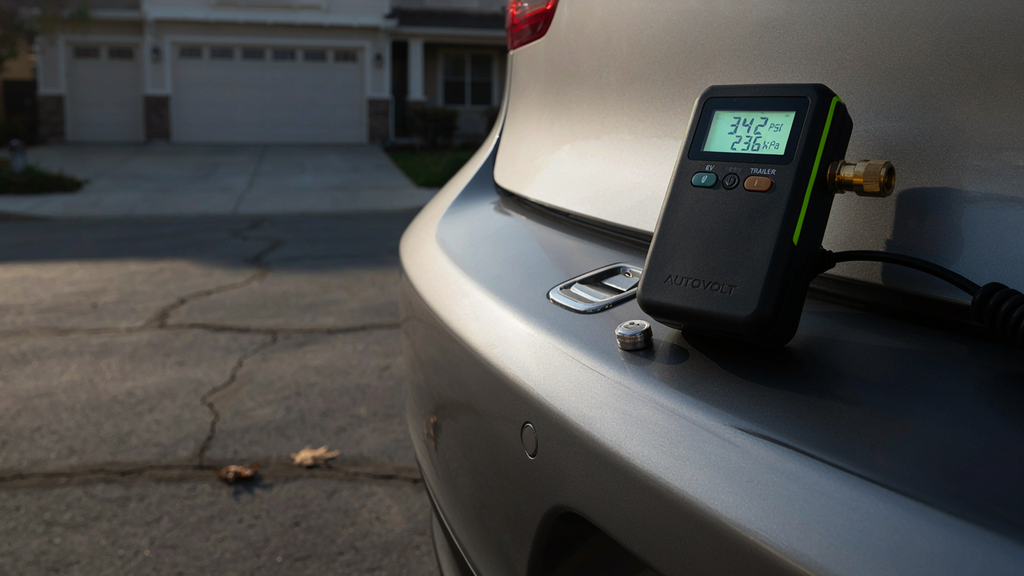
Some portable inflators include digital pressure readings, but a separate tire-pressure gauge can still be useful.
Checking tire pressure regularly helps maintain the manufacturer’s recommended setting.
This matters for EV owners because tires have a direct relationship with efficiency.
Underinflated tires increase rolling resistance, which can require additional energy to move the vehicle.
A simple pressure check can therefore support both tire longevity and efficient driving.
12. Dash Camera
Urban roads can be unpredictable.
Traffic congestion, sudden lane changes, parking incidents, and minor collisions are all possibilities.
A properly installed dash camera can provide useful visual evidence when an incident occurs.
Look for a model with reliable recording, sufficient storage, good image quality, and a suitable mounting position.
Installation should not obstruct the driver’s view.
For many city drivers, a dash camera is less about recording scenic drives and more about having documentation when something unexpected happens.
13. Emergency Roadside Kit
No driver wants to use an emergency kit.
That is exactly why it is easy to forget.
A compact kit can include:
- Flashlight
- Reflective warning equipment
- Basic first-aid supplies
- Gloves
- Tire-pressure gauge
- Emergency blanket
- Phone charging equipment
- Basic tools
Urban drivers may spend most of their time close to homes, workshops, and service stations, but unexpected situations can still happen.
A small kit takes up little space and can provide valuable peace of mind.
14. Compact Portable Power Bank
A high-capacity power bank can be useful if you spend a lot of time away from home.
Your smartphone may be essential for navigation, charging-station information, digital payments, communication, and roadside assistance.
A dead phone can turn a minor inconvenience into a much larger problem.
Keep the power bank charged and store it in a suitable location.
During extreme heat, avoid leaving batteries exposed to excessive temperatures for long periods.
15. Waterproof Cargo Mat
All-weather floor mats protect the passenger area, but the cargo area deserves attention too.
Groceries, sports equipment, wet umbrellas, muddy shoes, and other items can leave dirt and moisture behind.
A waterproof cargo liner can make cleanup significantly easier.
This is especially valuable for drivers who regularly transport shopping bags or outdoor equipment.
Again, fit matters. A cargo liner should not interfere with access to storage compartments or emergency equipment.
16. Mud Flaps for Difficult Urban Roads
Mud flaps are not necessary for every EV.
However, drivers who regularly encounter wet roads, loose gravel, mud, or poorly maintained streets may appreciate the additional protection.
They can reduce the amount of road spray and debris reaching the lower body panels.
Before installing them, make sure they are compatible with the vehicle and do not reduce ground clearance unnecessarily.
This is a good example of an accessory that makes sense because of driving conditions rather than because it is marketed as an EV essential.
17. Wireless Charging Pad
Some EVs already include wireless smartphone charging.
If yours does not, a compatible wireless charging solution can reduce cable clutter.
The main benefit is convenience.
Instead of connecting a cable every time you enter the vehicle, you can place your phone in a designated charging area.
However, wireless charging can generate additional heat and may charge more slowly than a wired connection. If your phone gets excessively warm, wired charging may be preferable.
18. Window and Glass Cleaning Kit
Urban driving creates plenty of windshield grime.
Road spray, dust, fingerprints, and environmental buildup can reduce visibility, particularly when sunlight hits the glass at an angle.
A basic automotive glass cleaner and microfiber cloth can help keep windows clear.
Do not overlook the inside of the windshield. Interior film can become surprisingly noticeable at night or when facing direct sunlight.
Clear glass is a safety feature, not just a cosmetic detail.
Which EV Accessories Do Urban Drivers Actually Need?
Not every driver needs the same equipment.
Here is a practical priority guide:
| Accessory | Everyday Use | Value for Urban Drivers |
| All-weather floor mats | Very High | Excellent |
| Phone mount | High | Excellent |
| Charging cable organizer | High | Excellent |
| Portable tire inflator | Medium-High | Excellent |
| Cargo organizer | High | Excellent |
| Sunshade | Seasonal | High |
| Dash camera | Medium | High |
| USB-C charger | High | High |
| Emergency kit | Occasional | High |
| Wireless charging pad | Medium | Medium |
| Mud flaps | Situation-dependent | Medium |
| Seat-back organizer | Situation-dependent | Medium |
This is why we recommend building an accessory kit gradually.
Start with the items you will use regularly. Add specialized equipment only when a specific need appears.
Accessories That Look Useful but May Not Be Necessary
The EV accessory market is full of products that promise dramatic improvements.
Some claims should be treated carefully.
For example, an accessory that claims to significantly increase driving range without changing the vehicle’s energy system deserves skepticism.
Similarly, you do not need five different organizers when one well-designed storage solution does the job.
A good buying rule is:
If you cannot explain what problem an accessory solves, you probably do not need it yet.
That simple approach can prevent a surprising amount of unnecessary spending.
How to Build an Urban EV Accessory Kit
Instead of buying everything at once, build your kit in stages.
Stage One: Daily Essentials
Start with:
- All-weather floor mats
- Phone mount
- Charging cable organizer
- USB charging adapter
- Basic cleaning cloths
These items solve problems you are likely to encounter regularly.
Stage Two: Vehicle Protection
Add:
- Cargo liner
- Sunshade
- Tire-pressure gauge
- Portable inflator
These accessories focus on maintaining the vehicle and improving everyday convenience.
Stage Three: Safety and Preparedness
Finally, consider:
- Dash camera
- Emergency kit
- Portable power bank
- Additional roadside equipment
Your local weather, driving distance, and parking conditions should determine what belongs in this category.
Do EV Accessories Affect Range?
Most basic accessories have little effect on range when they remain inside the vehicle.
However, external accessories can influence aerodynamics and weight.
Roof-mounted equipment, cargo carriers, and other external additions can increase aerodynamic drag and potentially increase energy consumption.
Even accessories that seem small can have an effect when used frequently at highway speeds.
For urban driving, the impact may be less noticeable than on long highway journeys, but efficiency-minded drivers should still consider it.
Quality Matters More Than Quantity
Urban EV ownership does not require a trunk full of gadgets.
A handful of durable accessories can be much more useful than dozens of inexpensive products.
Choose equipment that:
- Fits your specific vehicle
- Is easy to clean
- Does not interfere with safety systems
- Is durable enough for regular use
- Comes from a reputable manufacturer
- Solves a genuine problem
The best accessory is the one you continue using months after buying it.
Final Thoughts
What Accessories Most Urban EV Owners Actually Use comes down to practicality.
City drivers do not necessarily need specialized equipment for every possible situation. They need accessories that make charging easier, protect the interior, improve visibility, organize the cabin, support tire maintenance, and prepare the vehicle for everyday surprises.
All-weather floor mats, charging cable organizers, phone mounts, cargo organizers, tire inflators, sunshades, and basic emergency equipment are among the most practical starting points.
From there, your personal driving conditions should determine what comes next.
At Engine Saga, our approach is straightforward: do not buy an accessory because it looks impressive on a product page. Buy it because you have identified a problem it can solve.
That mindset keeps EV ownership simpler, more affordable, and more enjoyable.
After all, the best-equipped EV is not the one carrying the most gadgets. It is the one equipped for the way you actually drive
Frequently Asked Questions
1. What accessories do urban EV owners use most often?
Urban EV owners commonly use all-weather floor mats, phone mounts, charging cable organizers, cargo organizers, USB charging accessories, tire-pressure tools, and windshield sunshades because these products solve frequent everyday city-driving problems.
2. Are EV-specific accessories actually necessary?
Many EV-specific accessories are optional rather than essential. Useful equipment should address a genuine ownership need, such as charging organization, interior protection, tire maintenance, visibility, storage, or emergency preparedness.
3. What is the most useful accessory for an EV?
There is no universal winner, but all-weather floor mats, a reliable charging cable organizer, and a portable tire inflator provide excellent everyday value for many urban EV owners. Individual driving conditions should guide the final choice.
4. Do EV accessories improve driving range?
Most everyday accessories do not directly increase range. Proper tire-pressure equipment can support efficiency by helping maintain recommended pressure, while some external accessories can actually increase aerodynamic drag and energy consumption.
5. How should I choose accessories for an urban EV?
Start with your daily routine. Consider parking conditions, charging habits, weather, passenger needs, road quality, storage requirements, and safety concerns. Buy accessories that solve recurring problems rather than collecting unnecessary gadgets.
You might also like the following…
- 5 Proven Benefits of Electric Car Brake Service
 Electric car brake service is an important part of maintaining an electric vehicle, even though EVs often need brake pad replacements less frequently than gasoline-powered cars. Thanks to regenerative braking, electric cars can reduce friction-brake… Read more: 5 Proven Benefits of Electric Car Brake Service
 - 10 Essential Tips to Inspect Before a Long EV Road Trip Safely
 Planning a long electric vehicle road trip involves more than charging the battery to 100% and entering a destination into your navigation system. Before leaving home, it is worth checking your tires, brakes, charging equipment,… Read more: 10 Essential Tips to Inspect Before a Long EV Road Trip Safely
 - How to Avoid Wasting Money on Trendy EV Add-Ons
 How to Avoid Wasting Money on Trendy EV Add-Ons is becoming an important question for EV owners. Once you buy an electric vehicle, it is surprisingly easy to keep spending money on products that promise… Read more: How to Avoid Wasting Money on Trendy EV Add-Ons