
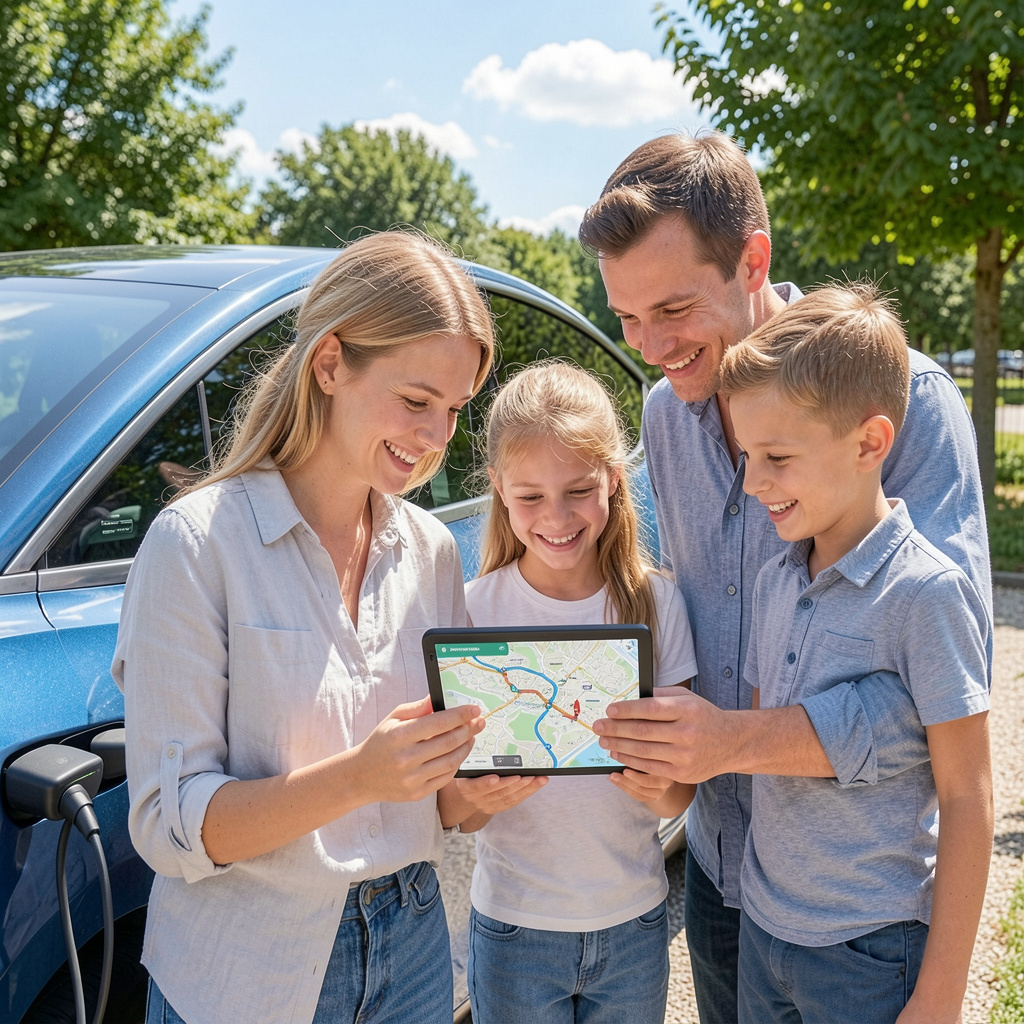
There was a time when the phrase “EV road trip” immediately triggered one concern:
What if I run out of battery before reaching the next charger?
That concern is understandable. Unlike traditional vehicles, electric vehicles require a different approach to long-distance travel. You can’t simply assume that a charging station will appear at every exit. You need a plan.
The good news?
Modern EV road trips are far easier than many people think.
At Engine Saga, we’ve spent years testing electric vehicles on highways, rural roads, urban corridors, and multi-state routes. One lesson consistently stands out:
Most range stress isn’t caused by battery limitations.
It’s caused by uncertainty.
Once drivers understand how to plan properly, range anxiety usually disappears and road trips become enjoyable, predictable, and surprisingly relaxing.
This guide explains exactly how to plan an EV road trip without range stress while maximizing convenience, efficiency, and confidence.
Understanding the Difference Between Range Anxiety and Range Awareness
| Aspect | Range Awareness | Range Anxiety |
| Definition | A practical understanding of your EV’s available range, charging options, and energy consumption. | An ongoing fear that the battery will run out before reaching a charger or destination. |
| Mindset | Calm, informed, and data-driven. | Stressful, emotional, and often based on worst-case assumptions. |
| Focus | Planning trips realistically and monitoring battery usage. | Constantly checking battery percentage and worrying about every mile driven. |
| Confidence Level | High confidence in the vehicle’s capabilities and charging infrastructure. | Low confidence in range estimates and charging availability. |
| Response to Battery Drop | Understands that range naturally changes based on driving conditions. | Assumes every drop in estimated range signals a problem. |
| Trip Planning | Uses navigation tools and charging apps to prepare for longer journeys. | Overplans routes and adds unnecessary charging stops. |
| Charging Behavior | Charges when needed and follows a sensible charging routine. | Frequently charges even when the battery still has sufficient range. |
| View of Range Estimates | Treats estimates as useful guidance rather than absolute numbers. | Expects estimates to remain constant regardless of conditions. |
| Knowledge of Charging Stations | Familiar with local and route-based charging locations. | Unsure about charging options and worries about finding chargers. |
| Reaction to Weather Changes | Understands that cold or hot temperatures can temporarily affect range. | Becomes overly concerned whenever weather impacts efficiency. |
| Driving Habits | Adjusts speed and driving style when necessary to maximize efficiency. | Changes driving behavior excessively out of fear of losing range. |
| Use of Vehicle Data | Relies on battery statistics, navigation systems, and energy consumption information. | Ignores available data and focuses only on battery percentage. |
| Long-Distance Travel | Sees road trips as manageable with proper planning. | Views long trips as risky and stressful. |
| Experience Level | Common among experienced EV owners and frequent travelers. | More common among new EV owners who are still learning. |
| Impact on Ownership Experience | Leads to a relaxed, enjoyable, and confident EV ownership experience. | Can reduce enjoyment and create unnecessary stress. |
| Decision Making | Makes informed choices based on real-world conditions and vehicle data. | Makes decisions based on fear rather than facts. |
| Relationship with Technology | Trusts the vehicle’s battery management and navigation systems. | Frequently questions the accuracy of the vehicle’s information. |
| Energy Management | Understands how speed, terrain, traffic, and climate affect efficiency. | Assumes range loss means something is wrong with the battery. |
| Real-World Example | A driver with 25% battery remaining confidently continues toward a charger 15 miles away. | A driver with 50% battery remaining worries about reaching a charger only 10 miles away. |
| Ultimate Goal | To develop confidence, knowledge, and realistic expectations about EV travel. | To eliminate uncertainty, often through excessive caution and unnecessary concern. |
Key Takeaway: Experienced EV owners operate from range awareness rather than range anxiety. The objective is not to ignore battery levels but to understand how range, charging infrastructure, driving habits, and environmental conditions work together in real-world driving situations.
Start With Realistic Range Expectations
One of the biggest mistakes first-time EV road trippers make is assuming the advertised range will perfectly match every journey.
Real-world range depends on several factors:
- Highway speeds
- Outside temperature
- Elevation changes
- Wind conditions
- Passenger load
- Cargo weight
Understanding this doesn’t create fear.
It creates realistic expectations.
A driver who expects some variation is rarely surprised.
A driver who expects laboratory conditions often becomes stressed.
Know Your EV Before You Leave
Long trips become easier when you’re familiar with your vehicle.
Before attempting a major journey, understand:
Your Average Efficiency
Learn how your EV performs in:
- City driving
- Highway driving
- Mixed conditions
Charging Speed
Every EV charges differently.
Knowing how quickly your vehicle can recharge helps create realistic travel schedules...
Battery Behavior
Understand:
- How range estimates adjust
- How weather affects consumption
- How your navigation system predicts energy usage
Confidence comes from familiarity.
Plan Charging Stops Before Departure
One of the simplest ways to eliminate range stress is to identify charging opportunities before leaving home.
Many new EV drivers rely entirely on spontaneous charging decisions.
That works sometimes.
Planning works almost always.
Consider:
- Primary charging stops
- Backup charging locations
- Hotel charging options
- Destination charging opportunities
Preparation reduces uncertainty.
Think Like a Traveler, Not a Battery Monitor
A common mistake among first-time EV road-trippers is treating every charging stop as a delay.
Experienced travelers think differently.
They integrate charging into natural travel activities.
Examples include:
- Meal breaks
- Coffee stops
- Sightseeing
- Hotel stays
- Restroom breaks
Instead of waiting for the battery, the battery charges while life happens.
This mindset transforms the experience.
Maintain a Comfortable Battery Buffer

Many experienced EV drivers avoid arriving at chargers with extremely low battery levels.
Why?
Because flexibility matters.
Maintaining a reasonable buffer provides:
- Backup options
- Reduced stress
- Better decision-making
- Greater route flexibility
You don’t need a huge reserve.
You simply need enough energy to adapt if plans change.
Understand Charging Networks
Not all charging stations are identical.
Different networks may vary in:
- Reliability
- Charging speed
- Coverage areas
- Pricing structures
- User experience
Before your trip:
- Download necessary apps
- Create accounts
- Familiarize yourself with payment methods
Small preparations prevent major frustrations.
Use Multiple Charging Resources
No single tool contains perfect information.
Experienced EV travelers often combine:
- Vehicle navigation systems
- Charging network apps
- Route planning tools
- Driver reviews
Multiple sources provide a more complete picture.
This approach increases confidence throughout the journey.
Weather Matters More Than Most Drivers Realize
Weather can influence both efficiency and charging performance.
Cold Weather Travel
Cold temperatures may:
- Increase energy consumption
- Reduce available range
- Slow charging performance
Winter road trips benefit from additional planning.
Hot Weather Travel
High temperatures can increase:
- Climate control usage
- Battery cooling activity
Modern EVs handle heat effectively, but weather still influences overall efficiency.
The solution isn’t fear.
It’s awareness.
Plan Around Charging Availability, Not Just Distance
Many drivers focus only on mileage.
Experienced travelers focus on charging accessibility.
Two routes with identical distances may offer very different charging experiences.
Questions to consider:
- How many chargers exist along the route?
- Are they spaced appropriately?
- Are there backup options nearby?
- Do charging locations fit your travel schedule?
Availability often matters more than distance.
Take Advantage of Overnight Charging
One of the greatest EV road-trip advantages is destination charging.
Hotels increasingly offer charging access.
This creates a simple benefit:
You sleep.
The vehicle charges.
The next day often begins with a nearly full battery.
Few travel conveniences are more valuable.
Avoid Charging to 100% at Every Stop
Many new EV drivers assume maximum battery percentage equals maximum security.
In reality:
Charging speed often slows significantly near full capacity.
For road trips, shorter and more strategic charging sessions are usually more efficient.
The goal isn’t necessarily a full battery.
The goal is reaching the next planned charging opportunity comfortably.
Understand Highway Efficiency
Highway driving typically consumes more energy than urban driving.
Why?
Aerodynamic resistance increases with speed.
Higher speeds usually mean:
- Faster energy consumption
- Reduced overall efficiency
This doesn’t mean driving slowly.
It simply means understanding the relationship between speed and range.
Learn to Trust Energy Predictions
Modern EVs have sophisticated route-planning systems.
These tools often consider:
- Elevation
- Speed
- Weather
- Traffic
- Charging locations
New owners sometimes distrust these systems.
Experienced owners learn when to rely on them.
The more familiar you become with your EV, the more confidence these predictions inspire.
Prepare for Rural Routes
Urban and interstate charging networks continue expanding rapidly.
Rural routes can require additional planning.
Before traveling through remote areas:
- Identify charging options in advance
- Confirm operating status
- Note backup locations
Preparation prevents unnecessary stress.
Build Time Into Your Schedule
One overlooked road-trip strategy involves scheduling flexibility.
When drivers create unrealistic timelines:
Every charging stop feels like an inconvenience.
When schedules allow reasonable travel breaks:
Charging becomes a natural part of the journey.
Road trips should feel enjoyable, not rushed.
Common EV Road Trip Mistakes
Mistake #1: Leaving With No Plan
Hope is not a charging strategy.
Basic planning dramatically improves confidence.
Mistake #2: Obsessing Over Battery Percentage
Constant monitoring increases stress without improving outcomes.
Focus on the overall plan instead.
Mistake #3: Ignoring Backup Chargers
Unexpected situations happen.
Backup options create peace of mind.
Mistake #4: Assuming Every Charger Is Identical
Charging speeds, reliability, and accessibility vary.
Research matters.
Mistake #5: Treating Charging Stops as Wasted Time
The most enjoyable EV road trips combine charging with meals, breaks, and activities.
The Mental Shift That Changes Everything
Most range anxiety disappears when drivers realize one important truth:
Road trips are not battery competitions.
They’re travel experiences.
The goal isn’t arriving with the highest remaining percentage.
The goal is reaching your destination comfortably and confidently.
Once drivers stop viewing charging as an obstacle and start viewing it as part of the journey, EV travel becomes significantly more enjoyable.
What We Have Learned at Engine Saga
After years of testing electric vehicles across various terrains and travel conditions, one pattern consistently emerges.
Drivers who experience the least range stress are rarely those with the largest batteries.
They’re the ones with the best preparation.
Successful EV road-trip planning comes down to:
- Understanding your vehicle
- Knowing your route
- Planning charging opportunities
- Maintaining flexibility
- Keeping realistic expectations
Technology continues improving every year.
Charging infrastructure continues expanding.
Range capabilities continue growing.
But the biggest factor in a stress-free EV road trip remains the same:
Confidence through preparation.
And once that confidence develops, many drivers discover something unexpected.
EV road trips aren’t difficult.
They’re simply different.
FAQs – People Also Ask
1. How far in advance should I plan charging stops for an EV road trip?
Ideally, charging locations should be identified before departure. Knowing primary and backup charging options reduces uncertainty and helps drivers adapt to traffic, weather changes, charger availability, or unexpected route adjustments without unnecessary stress
2. What battery percentage should I maintain during long-distance EV travel?
There is no universal number, but maintaining a comfortable reserve improves flexibility. Arriving with some remaining range allows access to backup charging locations and reduces pressure if the planned charger is occupied or unavailable.
3. Do EV road trips take significantly longer than gasoline road trips?
Travel times can be longer depending on route, charging speed, and vehicle capabilities. However, strategic charging during meal breaks, rest stops, and overnight stays often minimizes the perceived difference while making travel more comfortable.
4. How does weather affect EV road-trip planning?
Cold temperatures can increase energy consumption and influence charging performance, while extreme heat may increase cooling system demand. Understanding seasonal effects helps create more accurate travel expectations and charging strategies.
5. What is the biggest mistake first-time EV road-trippers make?
The most common mistake is focusing entirely on battery percentage instead of overall trip planning. Drivers who understand charging networks, route options, and backup locations usually experience far less stress and greater confidence.
You might also like the following…
- 5 Proven Benefits of Electric Car Brake Service
 Electric car brake service is an important part of maintaining an electric vehicle, even though EVs often need brake pad replacements less frequently than gasoline-powered cars. Thanks to regenerative braking, electric cars can reduce friction-brake… Read more: 5 Proven Benefits of Electric Car Brake Service
 - 10 Essential Tips to Inspect Before a Long EV Road Trip Safely
 Planning a long electric vehicle road trip involves more than charging the battery to 100% and entering a destination into your navigation system. Before leaving home, it is worth checking your tires, brakes, charging equipment,… Read more: 10 Essential Tips to Inspect Before a Long EV Road Trip Safely
 - How to Avoid Wasting Money on Trendy EV Add-Ons
 How to Avoid Wasting Money on Trendy EV Add-Ons is becoming an important question for EV owners. Once you buy an electric vehicle, it is surprisingly easy to keep spending money on products that promise… Read more: How to Avoid Wasting Money on Trendy EV Add-Ons