
Introduction
What maintenance do EVs still need? It’s one of the most common questions asked by drivers considering the switch from a petrol or diesel vehicle to an electric vehicle (EV).
Many people believe EVs are completely maintenance-free because they don’t require engine oil changes, spark plugs, timing belts, or exhaust system repairs.
While it’s true that electric vehicles need significantly less maintenance than conventional cars, they are certainly not maintenance-free.
At Engine Saga, our team has spent more than a decade evaluating vehicles, studying ownership trends, and listening to the experiences of everyday drivers.
One lesson has remained consistent throughout our hands-on experience:
an EV that receives regular preventive maintenance performs better, lasts longer, and delivers a more reliable ownership experience.
Modern EVs replace many traditional maintenance items with advanced electrical systems, battery management technologies, cooling systems, and software-driven components. These systems require less frequent attention, but they still deserve regular inspection and care.
In this comprehensive guide, we’ll explain what maintenance EVs still need, why it matters, and how following a simple maintenance routine can protect your investment while maximizing battery life, efficiency, safety, and long-term reliability.
Why EV Maintenance Is Different
One of the biggest advantages of owning an electric vehicle is mechanical simplicity.
A traditional internal combustion engine contains hundreds of moving parts that create friction, heat, and wear every time the engine runs. EVs eliminate many of these components entirely.
You no longer need to worry about:
- Engine oil changes
- Oil filters
- Spark plugs
- Fuel filters
- Timing belts
- Exhaust systems
- Catalytic converters
- Transmission fluid in conventional multi-gear gearboxes
However, replacing these systems with electric motors and high-voltage batteries introduces new maintenance priorities. Instead of focusing on combustion-related servicing, EV owners need to pay attention to battery health, cooling systems, brakes, tyres, suspension, software, and electrical components.
The result is lower maintenance not zero maintenance.
What Maintenance Do EVs Still Need?
Although EVs require fewer scheduled services, several systems still need regular inspection and occasional replacement.
Let’s explore each one in detail.
1. Battery Health Monitoring
The battery is the heart of every electric vehicle.
Unlike traditional engines, EV batteries don’t require physical servicing every few months, but they do benefit from consistent monitoring.
Battery health depends on several factors:
- Charging habits
- Temperature exposure
- Driving style
- Software management
- Battery cooling efficiency
Modern Battery Management Systems (BMS) automatically monitor voltage, temperature, and charging performance, but owners should still:
- Follow recommended charging limits
- Avoid frequent deep discharges
- Reduce unnecessary fast charging
- Install software updates that improve battery management
Protecting battery health today helps preserve driving range and resale value tomorrow.
2. Brake System Inspection
Many new EV owners are surprised to learn that brake maintenance remains essential.
Regenerative braking reduces the amount of physical braking required, allowing brake pads to last much longer than those in conventional vehicles.
However, reduced usage creates another concern.
Brake components can accumulate:
- Rust
- Moisture
- Surface corrosion
Routine brake inspections help ensure:
- Smooth braking performance
- Proper brake fluid condition
- Caliper movement
- Rotor cleanliness
Occasional use of conventional braking also helps keep the braking system operating correctly.
3. Tyre Maintenance
Tyres are often the most frequently replaced wear item on an electric vehicle.
Why?
EVs generally weigh more because of their battery packs, and electric motors produce instant torque.
This combination can accelerate tyre wear if drivers frequently accelerate aggressively.
Good tyre maintenance includes:
- Checking tyre pressure monthly
- Rotating tyres at recommended intervals
- Monitoring tread depth
- Inspecting for uneven wear
- Maintaining proper wheel alignment
Well-maintained tyres improve efficiency, safety, ride comfort, and driving range.
4. Battery Cooling System Maintenance
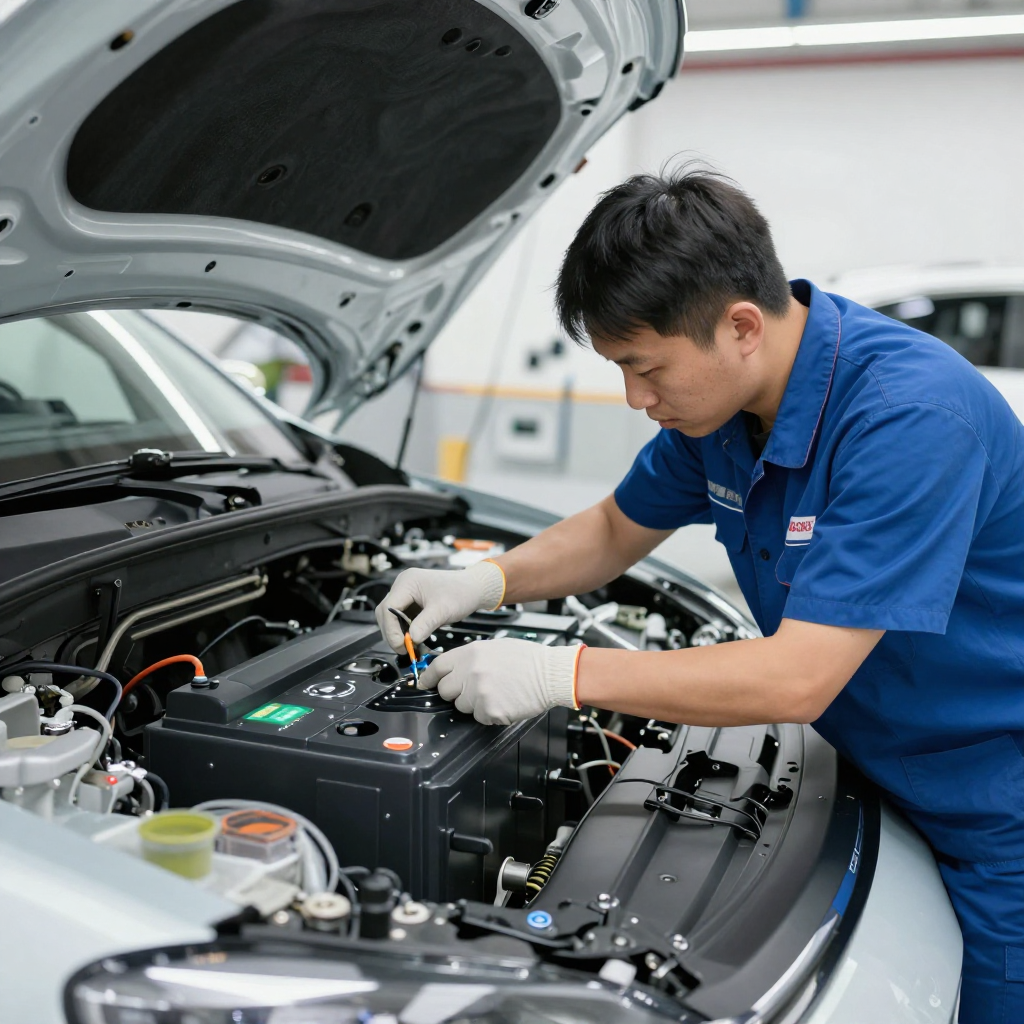
High-voltage batteries operate most efficiently within a controlled temperature range.
Most modern EVs use liquid-cooled battery systems to regulate temperature during:
- Fast charging
- Highway driving
- Hot weather
- Cold weather
Owners should periodically inspect:
- Coolant levels (where applicable)
- Cooling hoses
- Cooling pumps
- Radiators
- Cooling fans
Ignoring thermal management can negatively affect charging performance and battery longevity.
5. Cabin Air Filter Replacement
Although EVs don’t have engine air filters, they still use cabin air filters.
The cabin filter removes:
- Dust
- Pollen
- Road debris
- Airborne contaminants
A dirty filter can reduce HVAC efficiency and create unpleasant cabin odors.
Replacing the cabin filter according to the manufacturer’s schedule keeps interior air clean while helping climate control systems operate efficiently.
6. Brake Fluid Checks
Brake fluid absorbs moisture over time regardless of whether the vehicle is electric or petrol-powered.
Old brake fluid may reduce braking performance during emergency situations.
Routine inspections ensure:
- Proper fluid quality
- Correct fluid level
- Safe braking response
Replacing brake fluid when recommended helps maintain consistent braking performance.
7. Suspension and Steering Components
Electric vehicles still encounter:
- Speed bumps
- Rough roads
- Potholes
- Uneven pavement
These conditions gradually wear:
- Shock absorbers
- Bushings
- Ball joints
- Steering components
Regular suspension inspections improve ride quality and prevent unnecessary tyre wear.
8. Software Updates
Unlike traditional vehicles, software is an important maintenance item for modern EVs.
Manufacturers regularly release updates that improve:
- Charging efficiency
- Battery management
- Safety systems
- Driver assistance features
- Infotainment performance
- Energy optimization
Installing software updates ensures the vehicle continues operating with the latest improvements.
9. 12-Volt Battery Maintenance
Every EV still contains a conventional 12-volt battery.
This battery powers:
- Interior lighting
- Security systems
- Vehicle startup electronics
- Displays
- Accessories
Even though the high-voltage battery receives most attention, a weak 12-volt battery can prevent the vehicle from operating properly.
Routine testing helps avoid unexpected failures.
10. Windshield Wipers and Washer Fluid
Simple maintenance items still matter.
Owners should regularly inspect:
- Wiper blades
- Washer fluid
- Windshield cleanliness
Clear visibility is essential for both safety and advanced driver assistance systems that rely on front-facing cameras.
EV Maintenance Habits That Save Money
Many expensive repairs can be avoided by following a few simple habits.
These include:
- Charging responsibly
- Avoiding repeated battery overheating
- Maintaining correct tyre pressure
- Scheduling regular inspections
- Keeping software current
- Cleaning charging ports
- Parking in shaded areas during extreme heat
Preventive maintenance always costs less than corrective repairs.
Common EV Maintenance Myths
Myth 1: EVs Need No Maintenance
Reality:
EVs require less maintenance not zero maintenance.
Myth 2: Regenerative Braking Eliminates Brake Servicing
Reality:
Brake components still require inspection because corrosion can develop even with limited use.
Myth 3: Batteries Never Need Attention
Reality:
Battery care directly affects driving range, charging speed, and long-term durability.
Myth 4: Software Updates Aren’t Important
Reality:
Software updates often improve battery efficiency, safety systems, and charging performance.
Suggested EV Maintenance Schedule
While every manufacturer provides specific recommendations, a practical maintenance routine includes:
- Monthly tyre pressure checks
- Regular brake inspections
- Cabin air filter replacement as recommended
- Brake fluid inspection
- Battery cooling system inspection
- Suspension evaluation
- Software updates whenever available
- Annual professional inspection
Following a proactive schedule helps prevent minor issues from becoming expensive repairs.
Why Preventive Maintenance Matters
One overlooked inspection today can become a costly repair tomorrow.
Preventive maintenance helps:
- Extend battery life
- Improve charging efficiency
- Maintain driving range
- Increase resale value
- Improve vehicle safety
- Reduce unexpected repair costs
Simply put, consistency is the key to dependable EV ownership.
Final Thoughts
Electric vehicles have transformed vehicle ownership by reducing many traditional maintenance requirements. Yet they still depend on regular care to deliver the efficiency, reliability, and performance owners expect.
At Engine Saga, we’ve seen that the happiest EV owners aren’t those who assume their vehicle requires no maintenance they’re the ones who understand which systems matter and give them the attention they deserve.
Looking after your tyres, brakes, battery cooling system, software, and electrical components doesn’t require complicated routines. Small maintenance habits performed consistently can protect your investment for years while helping your EV perform at its best in every season and on every journey.
An EV may have fewer moving parts, but it still rewards responsible ownership with lower running costs, greater reliability, and long-term peace of mind.
Frequently Asked Questions (FAQs)
1. What maintenance do EVs still need compared to petrol cars?
Electric vehicles eliminate many engine-related services but still require routine maintenance for tyres, brakes, battery cooling systems, suspension, cabin air filters, brake fluid, software updates, and electrical components. Following the manufacturer’s maintenance schedule ensures optimal efficiency, safety, and long-term battery performance.
2. How often should an electric vehicle be serviced?
Service intervals vary by manufacturer, but most EVs benefit from annual inspections or servicing based on mileage. Regular tyre checks, brake inspections, software updates, and battery system evaluations help detect minor issues before they develop into expensive repairs.
3. Do electric vehicle batteries require regular maintenance?
EV batteries generally don’t require physical servicing, but owners should maintain healthy charging habits, avoid excessive heat exposure, install software updates, and monitor battery performance. These practices help preserve battery capacity, improve charging efficiency, and maximize overall lifespan.
4. Are EV maintenance costs lower than traditional vehicles?
Yes. Electric vehicles usually cost less to maintain because they have fewer moving mechanical parts and don’t require oil changes, spark plug replacements, or exhaust repairs. However, tyres, brakes, cooling systems, suspension, and filters still require routine attention throughout ownership.
5. What is the most important maintenance task for long-term EV reliability?
Maintaining battery health is one of the most important priorities. Combining responsible charging habits with tyre care, brake inspections, cooling system maintenance, and timely software updates helps maximize efficiency, improve safety, preserve resale value, and extend the overall lifespan of the vehicle.
You might also like the following…
- 5 Proven Benefits of Electric Car Brake Service
 Electric car brake service is an important part of maintaining an electric vehicle, even though EVs often need brake pad replacements less frequently than gasoline-powered cars. Thanks to regenerative braking, electric cars can reduce friction-brake… Read more: 5 Proven Benefits of Electric Car Brake Service
 - 10 Essential Tips to Inspect Before a Long EV Road Trip Safely
 Planning a long electric vehicle road trip involves more than charging the battery to 100% and entering a destination into your navigation system. Before leaving home, it is worth checking your tires, brakes, charging equipment,… Read more: 10 Essential Tips to Inspect Before a Long EV Road Trip Safely
 - How to Avoid Wasting Money on Trendy EV Add-Ons
 How to Avoid Wasting Money on Trendy EV Add-Ons is becoming an important question for EV owners. Once you buy an electric vehicle, it is surprisingly easy to keep spending money on products that promise… Read more: How to Avoid Wasting Money on Trendy EV Add-Ons