
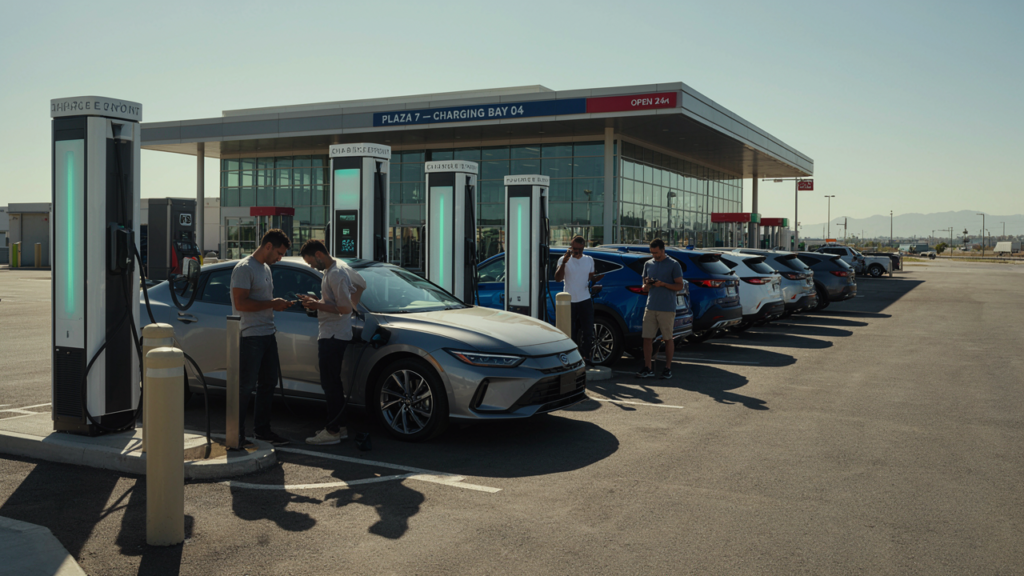
How to Avoid Delays at Busy EV Charging Stations is something every EV driver eventually needs to understand. Public charging can be convenient, but a busy station can quickly turn a simple charging stop into a frustrating wait.
We have seen this happen in real-world driving: a charger that looked available is occupied when we arrive, another stall has a vehicle charging slowly, and a third one may be temporarily unavailable. Add peak-hour traffic, holiday travel, limited charging bays, or drivers staying longer than necessary, and the delay can become much longer than expected.
The good news is that many charging delays can be reduced with better planning.
You cannot control how busy a station becomes, but you can control when you arrive, how much charging you actually need, which station you choose, and how you prepare for unexpected problems.
At Engine Saga, we look at public charging from the perspective of everyday EV drivers. The goal is not to make every charging stop perfectly predictable. It is to make your charging routine more practical, flexible, and less stressful.
Why Busy EV Charging Stations Cause Delays
Charging delays usually come from several factors working together rather than one single problem.
A station may have only a few usable connectors while several EVs need them at the same time. Some drivers may need only a short top-up, while others are preparing for a long highway trip.
Charging speed can also vary considerably. An EV does not necessarily maintain its maximum advertised charging rate throughout the entire session. Battery temperature, state of charge, vehicle limits, charger output, and charging conditions can all influence the actual rate.
There is also a simple human factor: drivers do not always leave immediately when charging is finished.
This means the number of vehicles at a charging location does not always tell you how long your wait will be.
Check Charger Availability Before You Leave
One of the easiest ways to reduce unnecessary waiting is to check the station before driving there.
Use your preferred charging app or navigation system to look at:
- Available charging stalls
- Connector types
- Charger power
- Recent station activity
- Reported faults
- Station operating status
- Reviews or recent driver comments
- Nearby alternative stations
Do not treat an app’s availability indicator as a guarantee. Information can become outdated, and a charger that appears available may be occupied by the time you arrive.
For that reason, we prefer checking the station shortly before departure and again when approaching the area.
A few seconds of preparation can prevent a frustrating detour.
Choose Charging Stations With Enough Backup Options
A station with two chargers may work perfectly when demand is low. During a busy period, however, having only two options leaves very little room for unexpected problems.
When possible, look for locations with multiple charging stalls or several nearby charging sites.
This gives you a backup if:
- One charger is broken.
- Another driver is already using the available stall.
- The station has a queue.
- Your connector is unavailable.
- The charging speed is lower than expected.
- A charger has been reserved or restricted.
A slightly longer drive to a larger charging location can sometimes save more time than waiting at a small station.
Avoid the Busiest Charging Times When Possible
Charging demand often follows normal travel patterns.
Busy periods may include:
- Morning and evening commuting hours
- Friday afternoon travel
- Weekend afternoons
- Holiday travel periods
- Major road-trip periods
- Events near shopping centers or entertainment areas
You do not always have the flexibility to avoid these periods, especially during a long trip. But when you do, shifting your charging stop by even 30–60 minutes can make a noticeable difference.
This is particularly useful for drivers who have flexible schedules.
Instead of automatically stopping at the most convenient time, think about charging demand as part of your route planning.
Do Not Arrive With an Almost Empty Battery
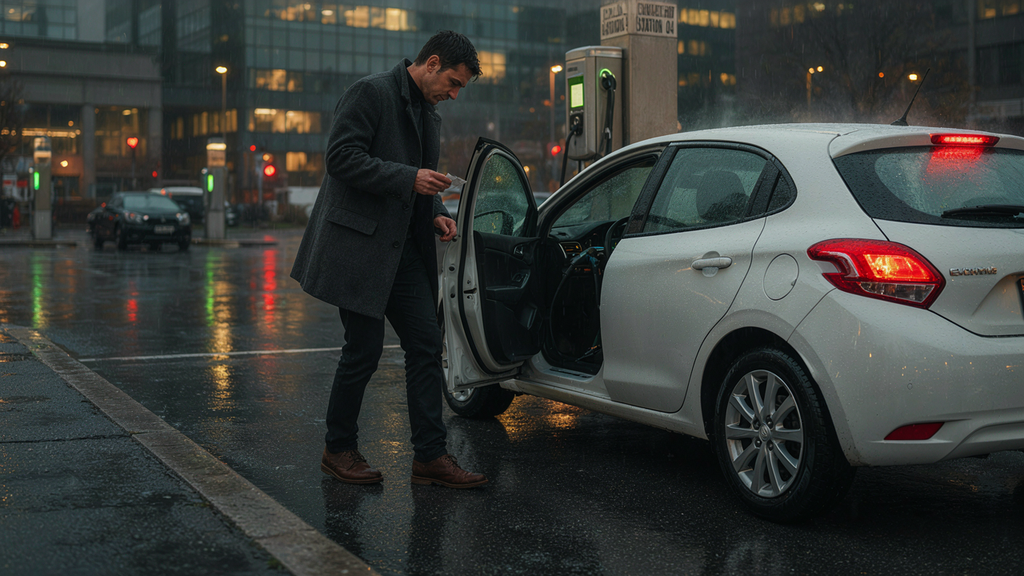
One of the biggest mistakes we see is waiting until the battery is extremely low before looking for a charger.
When your battery is already close to empty, you lose flexibility.
If your preferred station is busy, you may have to wait. If it is unavailable, you may need to drive farther to another station. If traffic increases, the situation becomes even more stressful.
A healthier approach is to keep a reasonable buffer.
You do not need to charge every time the battery drops slightly. Instead, consider your remaining range, route, weather, traffic, and available charging options.
Having enough energy to reach another station gives you choices.
Know How Much Energy You Actually Need
A charging stop does not always need to take the battery from a low percentage to nearly full.
For many road trips, a shorter charging session may be more practical than waiting for a very high state of charge.
Charging speed can also change as the battery fills. Depending on the vehicle and charger, the rate may decrease as the battery approaches a higher state of charge.
That means the final portion of a charging session can take disproportionately longer than the earlier portion.
Before plugging in, ask yourself:
How much energy do I actually need to continue the trip comfortably?
If you only need enough energy to reach your destination or the next reliable charger, a shorter stop may be enough.
Understand Your EV’s Charging Curve
The number printed on a charger does not necessarily equal the power your EV will receive throughout the session.
For example, a charger may advertise high maximum output, but your vehicle may accept less because of its own charging limit.
Even when the vehicle can accept high power, charging may slow as the battery percentage increases.
Understanding this can prevent unrealistic expectations.
Instead of thinking, “This is a 250-kW charger, so my EV will charge at 250 kW,” think of it as the charger’s maximum capability under suitable conditions.
Your vehicle, battery temperature, state of charge, and charging system determine what actually happens.
Precondition the Battery When Your EV Supports It
Some EVs can prepare the battery for charging before arrival, particularly when the charging station is entered as a destination in the vehicle’s navigation system.
Battery preconditioning can help the vehicle reach a more suitable battery temperature for faster charging under appropriate conditions.
This is especially relevant during very cold or very hot weather.
However, the exact process differs between EVs. Drivers should follow the vehicle manufacturer’s instructions rather than assuming every model handles battery preparation in the same way.
Keep a Backup Charging Location in Mind
One of our simplest road-trip habits is to know the next charging option before we need it.
You do not necessarily need to memorize several stations. Just identify one realistic backup along your route.
For example:
Primary station → backup station → destination
If the primary location is full, unavailable, or experiencing technical problems, you already have another option.
This is much easier than searching for a charger while your battery is getting low.
Look Beyond the First Charger You See
Convenience often makes drivers choose the first charging station that appears on the route.
But the closest station is not automatically the fastest overall option.
Consider the entire stop:
- How many chargers are there?
- Is the location frequently busy?
- How reliable is the site?
- Are there alternative chargers nearby?
- Is the charger compatible with your vehicle?
- How far is it from your route?
- Can you use another charging network if necessary?
A five-minute detour to a less crowded location may save twenty or thirty minutes of waiting.
The key is to compare total trip time, not simply driving distance.
Use Charging Apps as Planning Tools, Not Guarantees
Charging apps are extremely useful, but they should be treated as information tools rather than perfect live representations of reality.
Station information can change quickly.
A charger may become occupied shortly after another driver reports it as available. A technical fault may also appear before the network status updates.
When possible, combine information from your vehicle’s navigation system, charging-network app, and recent station activity.
For longer journeys, do not build a plan around one charger with no alternatives.
Avoid Unnecessary Long Charging Sessions
Busy stations work better when drivers use only the charging time they actually need.
If your vehicle reaches the energy level required for the next part of your journey, there may be little benefit in remaining connected for much longer.
This is particularly important at high-demand locations.
Think of public charging as a shared resource. A practical charging stop should balance your own needs with the reality that other drivers may also be waiting.
Be Ready Before You Reach the Charger
Preparation can remove several small delays.
Before arriving, know:
- Which connector your vehicle uses
- Which charging port to open
- Which charging network you are using
- How payment works
- Which app or account is required
- Whether your vehicle needs a specific charging setting
- Where the charging port is located
If you need to download an app, create an account, or enter payment information after arriving, the process can take longer than expected.
Having your preferred charging apps and payment methods ready can make the stop much smoother.
Watch for Queue Behavior
A charging station can become difficult to manage when drivers are unsure who is waiting for which charger.
If there is an obvious queue, follow the location’s posted system or local practice.
Avoid blocking charging bays while you are waiting unless the station specifically provides a waiting area for that purpose.
Once your charging session is complete, move the vehicle when practical so another driver can access the charger.
Good charging etiquette does not eliminate congestion, but it can prevent unnecessary additional delays.
Choose the Right Charging Speed for the Situation
Not every charging stop requires the fastest charger available.
If you are stopping for lunch, shopping, or several hours, Level 2 charging may be perfectly practical depending on your vehicle and destination.
If you are on a highway road trip and need to continue quickly, DC fast charging may make more sense.
The important point is to match the charging method with the length of your stop.
A charger is most useful when its speed fits your actual schedule.
Do Not Ignore Weather Conditions
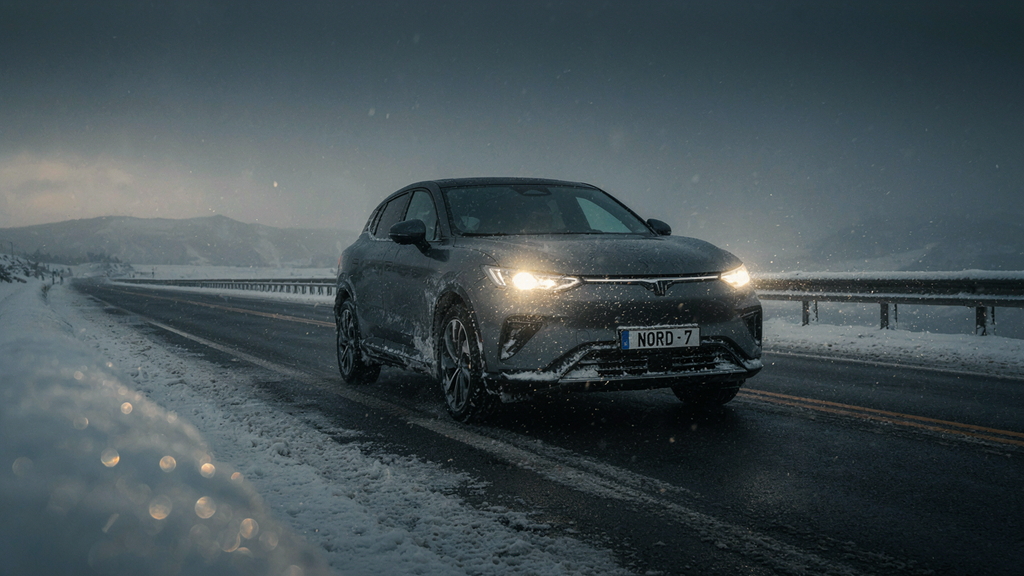
Weather can influence both driving range and charging behavior.
Cold temperatures can affect battery performance and may influence charging speed. Extremely hot conditions can also place additional thermal demands on the vehicle.
This is another reason not to plan your route around the absolute minimum battery range.
Leave enough margin for real-world conditions rather than relying entirely on an ideal range estimate.
What to Do When a Charging Station Is Already Full
If you arrive and every stall is occupied, avoid making an immediate decision based only on frustration.
First, check:
- How many vehicles are actually charging?
- Is anyone nearly finished?
- Is another charger nearby?
- Can you safely reach the alternative station?
- Do you have enough battery reserve?
- Would waiting be faster than driving elsewhere?
If your battery has plenty of range, another station may be the better choice.
If your battery is low and the next station is uncertain, waiting may be safer.
The correct decision depends on your remaining range and available alternatives.
A Simple Busy-Station Strategy
Here is the approach we recommend for everyday EV trips:
| Step | What to Do |
| 1 | Check charger availability before leaving |
| 2 | Choose a station with multiple stalls |
| 3 | Keep enough battery reserve for alternatives |
| 4 | Check connector compatibility |
| 5 | Know your vehicle’s charging limits |
| 6 | Avoid predictable peak periods when possible |
| 7 | Identify one backup station |
| 8 | Charge only what your trip requires |
| 9 | Monitor the session rather than forgetting it |
| 10 | Move promptly after charging is complete |
This routine is simple, but it removes many of the avoidable problems associated with public charging.
The Goal Is Not Perfect Charging; It Is Flexible Charging
Public charging will never be completely predictable.
Stations can become busy. Chargers can fail. Drivers can stay longer than expected. Weather can change. Traffic can alter your arrival time.
The most experienced EV drivers do not necessarily have access to perfect charging infrastructure. They simply build flexibility into their plans.
That means avoiding an almost-empty battery, checking station conditions, understanding charging speed, carrying a backup plan, and choosing charging stops based on the whole journey rather than one map pin.
After enough real-world driving, this becomes second nature.
Final Thoughts
Learning how to avoid delays at busy EV charging stations is less about finding a magic charging app and more about developing better habits.
Check availability before leaving. Give yourself a battery buffer. Understand how your EV actually charges. Choose stations with multiple options, avoid predictable congestion when possible, and keep a backup location in mind.
Most importantly, do not treat the nearest available charger as your only plan.
Public charging is becoming an increasingly important part of EV ownership, and a little preparation can make the experience considerably easier. Once you start planning charging around your actual route, battery needs, and available alternatives, busy stations become much less stressful.
Frequently Asked Questions(FAQs)
1. How can I avoid waiting at a busy EV charging station?
Check charger availability before leaving, travel outside predictable peak periods when possible, choose stations with multiple stalls, and keep enough battery range to reach a backup location. These steps give you more flexibility when demand is high.
2. What is the best battery level to have before reaching a public charger?
There is no universal percentage that works for every EV or journey. The important goal is maintaining enough reserve to reach an alternative charger if your first choice is busy, unavailable, or malfunctioning.
3. Does charging to 100% make EV charging delays worse?
It can increase your stop duration because charging rates may decrease at higher battery levels. If you do not need a full battery for the next part of your journey, a shorter charging session may be more time-efficient.
4. How do I know if a public EV charger will be available?
Charging apps and vehicle navigation systems can show reported availability, charger status, and sometimes recent activity. However, availability can change quickly, so use this information for planning while keeping a backup option available.
5. What should I do if every EV charger is occupied?
Check your remaining battery range and nearby alternatives before deciding whether to wait. If another reliable station is comfortably reachable, switching locations may save time; if your battery is low, waiting may be the safer option.
You might also like the following…
- 5 Proven Benefits of Electric Car Brake Service
 Electric car brake service is an important part of maintaining an electric vehicle, even though EVs often need brake pad replacements less frequently than gasoline-powered cars. Thanks to regenerative braking, electric cars can reduce friction-brake… Read more: 5 Proven Benefits of Electric Car Brake Service
 - 10 Essential Tips to Inspect Before a Long EV Road Trip Safely
 Planning a long electric vehicle road trip involves more than charging the battery to 100% and entering a destination into your navigation system. Before leaving home, it is worth checking your tires, brakes, charging equipment,… Read more: 10 Essential Tips to Inspect Before a Long EV Road Trip Safely
 - How to Avoid Wasting Money on Trendy EV Add-Ons
 How to Avoid Wasting Money on Trendy EV Add-Ons is becoming an important question for EV owners. Once you buy an electric vehicle, it is surprisingly easy to keep spending money on products that promise… Read more: How to Avoid Wasting Money on Trendy EV Add-Ons