
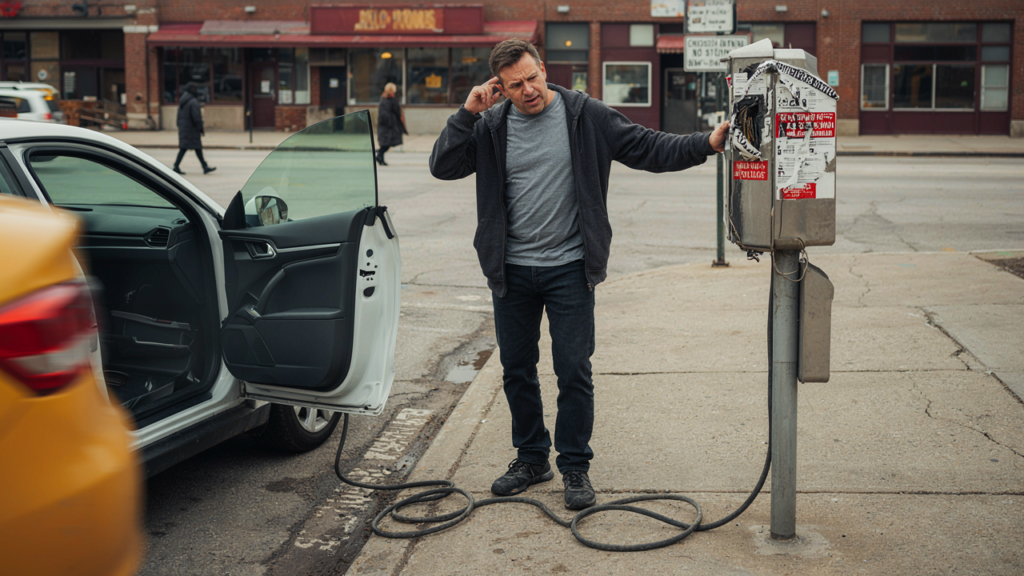
Why Public Charging Can Feel Unpredictable in Some Cities is a question many EV drivers eventually ask. One day, a charger works exactly as expected. The next day, the same location may have a queue, a failed connector, a payment problem, or a charger that appears available in an app but cannot actually deliver a session.
That inconsistency can make public charging feel more complicated than it needs to be.
The important thing is that public charging reliability is not simply about how many chargers a city has. Location, charger type, utilization, maintenance, payment systems, network communication, parking behavior, weather, and local EV demand can all influence the experience.
Recent U.S. data shows that the situation is improving, but it is still uneven. J.D. Power’s 2025 U.S. EVX Public Charging Study found that 14% of EV owners reported visiting a public charger without successfully charging, down from 19% in 2024. The study also found meaningful differences between regions and major cities.
For everyday drivers, understanding why this happens is more useful than simply assuming a particular city or charging network is unreliable.
Public Charging Is a System, Not Just a Plug
When you arrive at a charging station, several systems need to work together.
The physical charger has to be operational. The cable and connector must be usable. The vehicle needs to communicate correctly with the charger. The charging network needs to authorize the session. Payment needs to work. The parking space needs to be accessible.
Then there is the electricity supply itself.
If any part of that chain fails, your charging session can become difficult even though the charger appears to be installed and available.
This is why a city can have thousands of public charging points while drivers still encounter unpredictable experiences.
Charger Availability and Charger Reliability Are Different
These two terms are easy to confuse.
Availability means a charging point is accessible to you when you need it.
Reliability means the charger actually works when you arrive.
A city can have plenty of charging stations on a map but still create frustrating experiences if too many units are occupied or malfunctioning.
J.D. Power’s 2025 study found that the most common reason for a failed public-charging visit was the charger being out of service or not working properly, accounting for 60% of failed visits. The study also found that wait times varied significantly by location.
That distinction explains why simply counting plugs does not tell the whole story.
Some Cities Have Much Higher Charging Demand
EV adoption is not evenly distributed.
Certain metropolitan areas have large concentrations of EVs, which can put more pressure on public infrastructure.
A charger that handles a moderate number of users in one city may become heavily utilized in another.
Demand can also change throughout the day.
You may find an open charger at 10 a.m. and a queue during the evening commute.
Weekend travel can create another demand pattern, particularly around shopping centers, entertainment districts, airports, and highway corridors.
This makes public charging availability dynamic rather than fixed.
Location Makes a Huge Difference
Two chargers operated by the same network can provide completely different experiences simply because they are in different locations.
A charger at a busy shopping center may experience heavy turnover.
A charger near an office district may become busy during working hours.
A highway fast-charging site may see demand concentrated around travel periods.
A residential neighborhood with Level 2 chargers may have vehicles connected for several hours.
This is why local charging patterns matter.
The number of chargers in a city is less useful than understanding where those chargers are positioned relative to actual driving demand.
Level 2 and DC Fast Charging Behave Differently
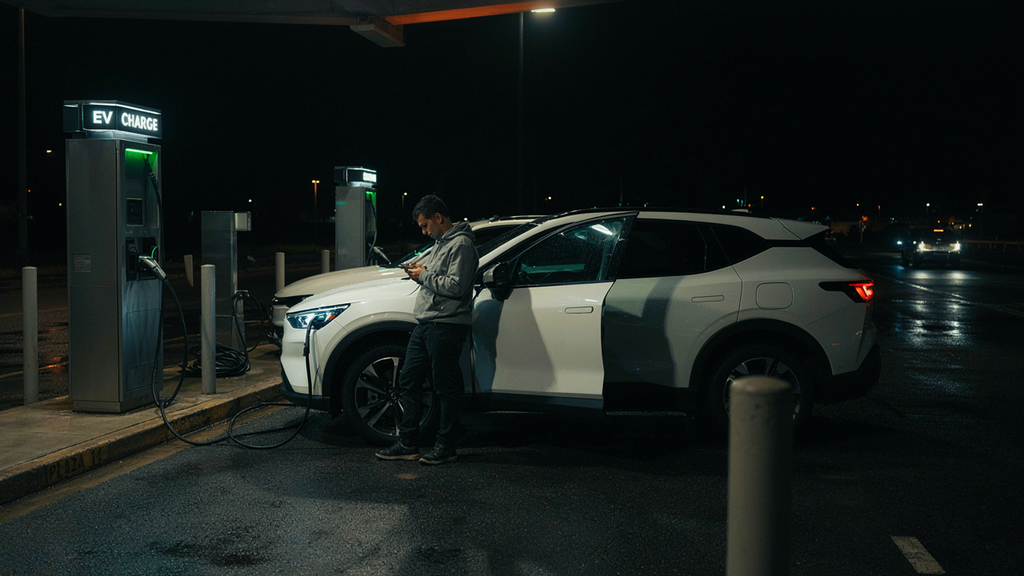
Public charging also becomes unpredictable when drivers treat all chargers as interchangeable.
Level 2 charging is generally designed around longer stays. It can make sense at workplaces, shopping centers, hotels, parking facilities, and other destinations where an EV can remain parked for a while.
DC fast charging is designed for substantially quicker charging and is more commonly associated with road trips and shorter stops.
Because these chargers serve different use cases, their availability can vary differently.
A city may have many Level 2 chargers but limited fast-charging capacity in a particular neighborhood.
Alternatively, a busy DC fast-charging location may have several stalls but still develop queues during peak travel periods.
Apps Do Not Always Tell the Whole Story
Charging apps are extremely useful, but drivers should understand that displayed information can change.
An app may show a charger as available while another vehicle is arriving, a connector is malfunctioning, or a communication update has not yet reached the network.
The reverse can also happen: a charger marked unavailable may become usable shortly afterward.
This does not mean charging apps are useless. They are one of the most valuable tools EV drivers have.
It simply means that app information should be treated as a current indication, not an absolute guarantee.
For important trips, checking multiple sources can provide additional confidence.
Payment Systems Can Add Another Layer of Uncertainty
A charging session may fail even when the physical equipment is working.
Payment authorization, network communication, membership requirements, app problems, or card-reader issues can interrupt the process.
J.D. Power’s research has repeatedly identified payment and ease-of-use as important parts of the public charging experience. Its 2025 study reported declining satisfaction with charging costs and noted that payment was among the factors influencing the overall experience.
This is why experienced EV drivers often keep more than one payment method available.
A network app, supported vehicle integration, RFID card where applicable, or direct payment option can provide alternatives when one method fails.
Broken Chargers Create a Bigger Problem Than Their Number Suggests
Imagine a charging location with six stalls.
If all six work, the location may handle demand reasonably well.
If two are offline, the effective capacity has already fallen by one-third.
If one more is occupied by a vehicle that has finished charging, the situation becomes even more frustrating.
This is one reason maintenance matters as much as infrastructure expansion.
J.D. Power’s 2024 research found that 61% of failed charging visits in its study were associated with chargers being out of service or not working. Its 2025 study showed improvement, but charger malfunction remained the most common reason for failed visits.
Charging Queues Can Be a Local Problem
A city does not necessarily have a charging shortage everywhere.
The problem may be concentrated around a few popular locations.
For example, a neighborhood may have several chargers, but only one site may offer the power level or connector compatibility that a particular group of drivers wants.
During peak periods, those sites can become bottlenecks.
This is particularly relevant for drivers planning around a specific fast charger rather than treating several nearby locations as alternatives.
Having a backup location within reasonable driving distance can dramatically reduce the stress of a queue.
Weather Can Change the Charging Experience
Weather affects both EVs and charging behavior.
Extreme temperatures can influence battery performance, while rain, snow, or ice can make outdoor charging less convenient.
Hot weather can also increase demand for climate control, while cold weather may influence charging speed and energy consumption.
These effects do not mean public chargers suddenly become unreliable whenever the weather changes.
They simply add another variable to the overall experience.
A driver who plans a long trip should therefore consider weather alongside battery state of charge, route distance, traffic, and charger availability.
Charger Power Ratings Are Not the Whole Story
A charger may advertise a high maximum power level without delivering that power continuously to every vehicle.
Actual charging speed depends on the vehicle, battery temperature, state of charge, charger capability, and other conditions.
That means two EVs can use the same station and experience different charging speeds.
It also means a charger that worked quickly during one visit may appear slower during another.
This is not necessarily a sign that the charger is malfunctioning.
Understanding your EV’s charging curve can help you set more realistic expectations.
City Infrastructure Can Age at Different Rates
Charging networks are expanding, but existing equipment also needs maintenance and upgrades.
Older stations may have worn cables, damaged connectors, outdated interfaces, or communication problems.
High-use locations can experience more physical wear simply because more drivers interact with the equipment.
That makes maintenance schedules and network support important parts of public charging quality.
Newer does not automatically mean perfect, and older does not automatically mean unreliable. The real-world condition of the equipment matters more than installation date alone.
How Experienced EV Drivers Reduce the Uncertainty
You cannot control whether a public charger will fail, but you can control how much that failure affects your trip.
We recommend a simple approach.
Check the Station Before Leaving
Look at current availability and recent user reports where the app provides them.
Keep a Backup Charger
For important journeys, identify another compatible location nearby or farther along the route.
Avoid Arriving Nearly Empty
Leaving yourself with a small energy buffer gives you more options if the first charger is unavailable.
Know Your Vehicle’s Connectors
Understand which connector types your EV can use and whether adapters are supported.
Carry the Necessary Payment Options
Do not depend entirely on one app or one payment method when traveling.
Learn Your EV’s Charging Curve
Knowing approximately when charging slows can help you plan stops more efficiently.
Home Charging Changes the Equation
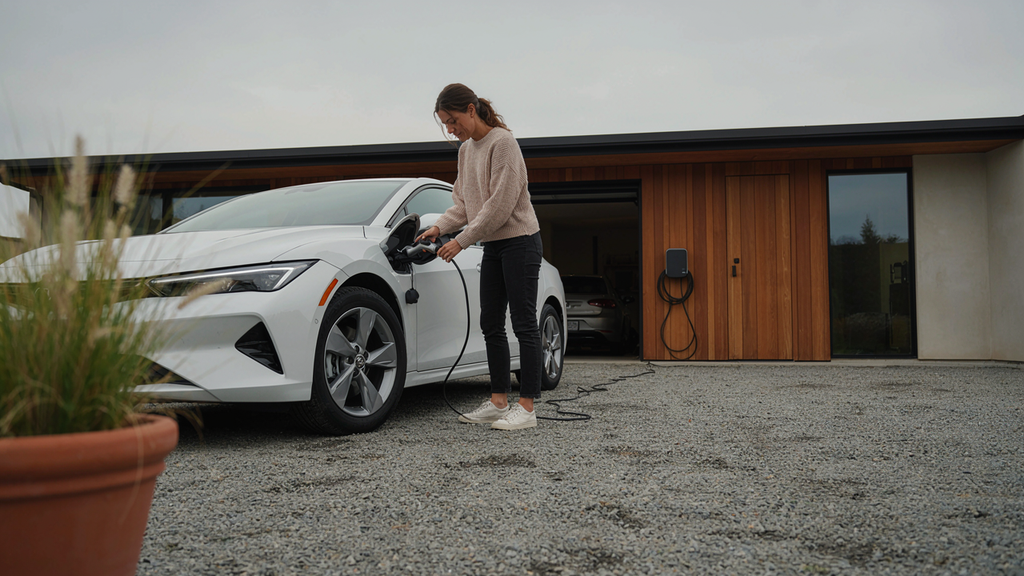
For drivers who can charge at home, public charging does not have to be a daily requirement.
Home charging can reduce dependence on public infrastructure because the vehicle can begin many mornings with the energy needed for normal driving.
J.D. Power’s 2025 U.S. EVX Home Charging Study continued to find high satisfaction with home Level 2 charging compared with the more variable public-charging experience.
This does not eliminate the importance of public charging.
It simply changes its role.
Instead of depending on public chargers every day, many drivers can reserve them for longer trips, unusual driving days, or situations when home charging is unavailable.
What Drivers Should Look For in a Reliable Charging Location
When comparing public charging options, consider more than stall count.
Look at:
| Factor | Why It Matters |
| Number of working stalls | Reduces the effect of one failure |
| Recent availability | Shows current demand |
| Charger power | Helps estimate charging time |
| Connector compatibility | Prevents unusable stops |
| Location | Determines convenience and safety |
| Payment options | Provides flexibility |
| Recent user reports | Can reveal recurring problems |
| Nearby alternatives | Provides a backup |
| Amenities | Makes longer stops easier |
This approach gives you a more realistic picture than simply searching for the nearest charger.
The Public Charging Experience Is Improving, But It Is Uneven
The data does not support a simple “public charging is broken” conclusion.
The U.S. public charging experience has shown measurable improvement in charging success. In J.D. Power’s 2025 study, 14% of surveyed EV owners reported a visit without successfully charging, down from 19% in the 2024 study. At the same time, the 2025 results showed significant differences among regions and cities, demonstrating that the experience can remain highly location-dependent.
That distinction matters.
Infrastructure can improve nationally while individual drivers still encounter frustrating local conditions.
Final Thoughts
Why Public Charging Can Feel Unpredictable in Some Cities comes down to more than charger numbers.
Public charging is an ecosystem involving physical equipment, software, payment systems, electricity supply, vehicle compatibility, local demand, parking behavior, maintenance, and location.
Some stations will be excellent. Others may be crowded, temporarily unavailable, or affected by equipment problems.
The smartest approach is not to assume every charger will fail. It is to avoid making your trip depend on one charger behaving perfectly.
Check availability before important stops, understand your vehicle’s charging capabilities, maintain a reasonable battery buffer, keep payment options available, and know at least one backup location when the journey matters.
Public charging networks are developing, and recent U.S. data shows improvement in successful charging visits. But EV drivers still benefit from treating charging as part of trip planning rather than assuming every station will work exactly when needed.
That small change in mindset can make the difference between a stressful charging stop and a routine one.
Frequently Asked Questions(FAQs)
1. Why does public EV charging seem unreliable in some cities?
Public charging can feel unreliable because several factors interact, including broken equipment, high demand, queues, payment problems, connector issues, network communication, and differences between locations. A charger shown on a map is not necessarily guaranteed to be usable when you arrive.
2. How can I tell if an EV charger is likely to be available?
Check the charging network’s app shortly before arriving and review recent availability or user reports when available. For important trips, identify a second compatible charger nearby so one occupied or malfunctioning station does not disrupt your plans.
3. Why can a charger show as available but not work?
Charging apps depend on communication between the station, network, and software systems. Information can sometimes become outdated, while a connector may also develop a fault between status updates. Availability therefore provides useful guidance but should not be treated as an absolute guarantee.
4. Does public charging reliability vary from city to city?
Yes. Charging experiences can vary by region, city, provider, station location, utilization, maintenance, and local EV demand. J.D. Power’s 2025 U.S. study found notable differences in failed charging visits and wait times across regions and major cities.
5. How can EV owners reduce problems with unpredictable public charging?
Plan charging before the battery becomes critically low, check station status, understand compatible connectors, carry appropriate payment options, and identify backup locations. Drivers with home charging can also reduce their dependence on public stations for routine daily charging.
You might also like the following…
- 5 Proven Benefits of Electric Car Brake Service
 Electric car brake service is an important part of maintaining an electric vehicle, even though EVs often need brake pad replacements less frequently than gasoline-powered cars. Thanks to regenerative braking, electric cars can reduce friction-brake… Read more: 5 Proven Benefits of Electric Car Brake Service
 - 10 Essential Tips to Inspect Before a Long EV Road Trip Safely
 Planning a long electric vehicle road trip involves more than charging the battery to 100% and entering a destination into your navigation system. Before leaving home, it is worth checking your tires, brakes, charging equipment,… Read more: 10 Essential Tips to Inspect Before a Long EV Road Trip Safely
 - How to Avoid Wasting Money on Trendy EV Add-Ons
 How to Avoid Wasting Money on Trendy EV Add-Ons is becoming an important question for EV owners. Once you buy an electric vehicle, it is surprisingly easy to keep spending money on products that promise… Read more: How to Avoid Wasting Money on Trendy EV Add-Ons