
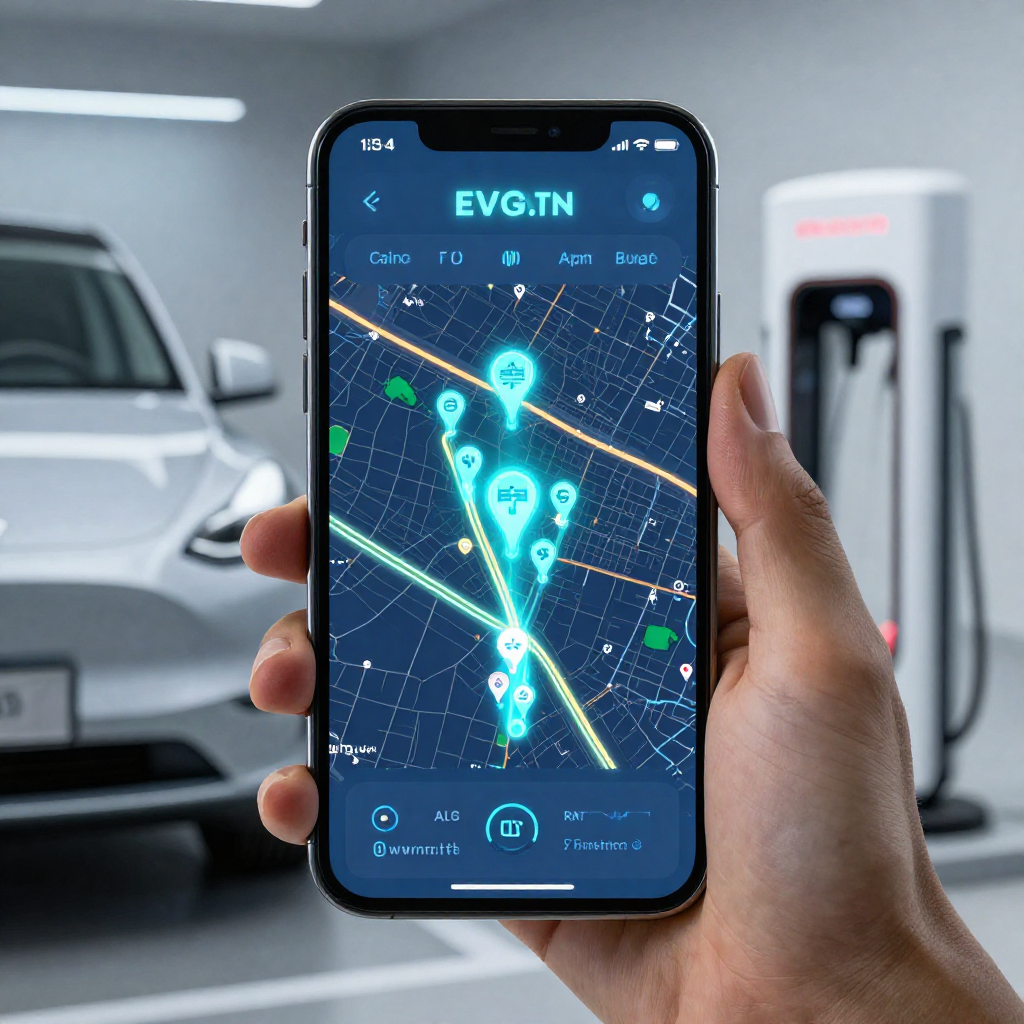
Electric vehicles have made daily commuting, weekend adventures, and long-distance travel more enjoyable than ever. However, one challenge still affects many EV owners: finding a reliable charging station exactly when they need one.
Even with thousands of public chargers being installed every year, knowing where to charge and whether a charger is available can make a significant difference in your driving experience.
At Engine Saga, we’ve spent years testing EVs in real-world conditions rather than relying solely on manufacturer claims. Throughout countless city drives, highway trips, and cross-country journeys, one lesson has remained consistent: the right charging app is just as important as carrying the right charging cable.
Whether you’re a first-time EV owner or an experienced electric vehicle driver, choosing the right charging station app can reduce range anxiety, save time, and even lower charging costs.
In this guide, we’ll explain the best apps to locate EV charging stations faster, what features matter most, and how to choose the right app for your driving habits.
Why the Best Apps to Locate EV Charging Stations Faster Matter for Every EV Driver
Owning an electric vehicle is different from driving a gasoline-powered car. Gas stations are easy to recognize and usually available every few miles. Public EV chargers, on the other hand, vary by charging network, charging speed, connector type, and availability.
Without a dedicated charging app, you may encounter situations such as:
- Driving to a charger that’s currently occupied
- Arriving at a station that’s temporarily offline
- Finding a charger incompatible with your EV
- Paying higher charging rates than necessary
- Taking unnecessary detours
Modern charging apps solve these problems by providing live information before you even leave home.
What Makes a Great EV Charging App?
Not every charging app offers the same experience. During our testing at Engine Saga, we’ve found that the best apps combine accurate information with real-time updates and an intuitive interface.
The most useful charging apps typically provide:
| Feature | Why It Matters |
| Live charger availability | Avoid waiting for occupied stations |
| Route planning | Automatically adds charging stops |
| Connector compatibility | Ensures your EV can charge |
| Charging speed information | Helps estimate charging time |
| User reviews | Identifies reliable locations |
| Pricing details | Helps compare charging costs |
| Navigation integration | Opens directly in Google Maps or Apple Maps |
| Charging session management | Start and stop charging from the app |
These features turn a simple map into a practical travel companion.
Best Apps to Locate EV Charging Stations Faster
1. PlugShare
PlugShare remains one of the most trusted apps among EV owners worldwide.
Its greatest advantage is its massive community of drivers who continuously update charging locations with reviews, photos, and real-time comments.
Why we recommend it
- Extensive charger database
- Community-driven updates
- Multiple charging network support
- Filter by charging speed
- Route planning tools
- Trip history
Instead of relying solely on automated information, PlugShare benefits from thousands of drivers sharing their actual charging experiences.
For new EV owners, this community feedback is incredibly valuable.
2. ChargePoint
ChargePoint operates one of the largest EV charging networks while also helping users locate compatible chargers across multiple providers.
The app allows drivers to:
- Start charging remotely
- Monitor charging progress
- Receive charging notifications
- View charging costs
- Reserve eligible charging stations
One feature we particularly appreciate is its clean interface, making it easy for first-time EV owners to navigate.
3. Electrify America
For highway travel, Electrify America is often one of the fastest charging options available.
Its app offers:
- Ultra-fast DC charging locations
- Live charger status
- Membership pricing
- Payment integration
- Route support
Drivers covering long interstate distances can significantly reduce charging times using high-power charging stations available through this network.
4. EVgo
EVgo focuses heavily on fast charging throughout urban and suburban areas.
Its application provides:
- Real-time charger availability
- Charging history
- Mobile payments
- Charging session tracking
- Rewards programs
If your driving mostly involves commuting around busy cities, EVgo can become one of your primary charging resources.
5. Tesla App
Tesla owners enjoy one of the most seamless charging experiences available today.
The Tesla mobile app automatically communicates with the vehicle and displays:
- Nearby Superchargers
- Stall availability
- Estimated waiting time
- Charging progress
- Navigation integration
Because the vehicle and charging network work together, drivers spend less time planning and more time driving.
6. Google Maps
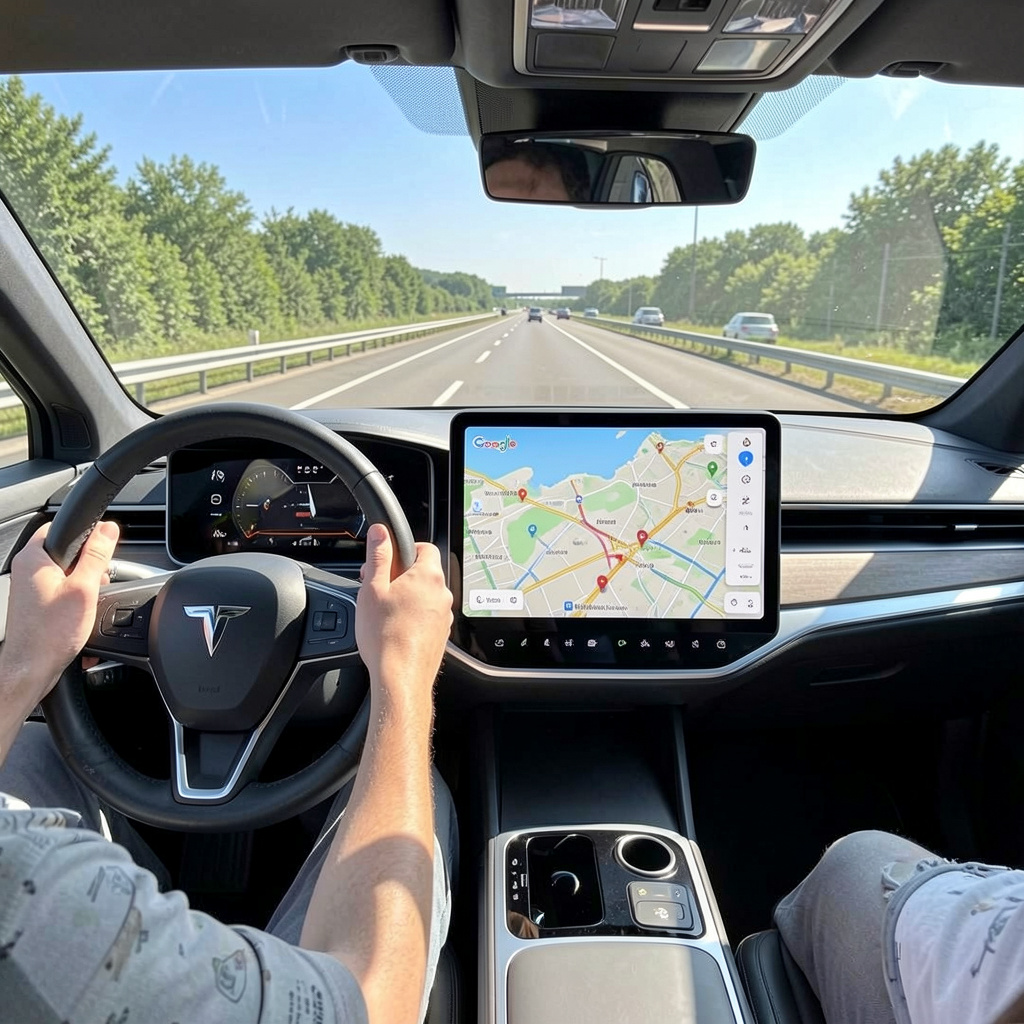
Many drivers overlook Google Maps as an EV charging resource.
While it isn’t dedicated solely to EV charging, it has improved dramatically by displaying:
- Nearby chargers
- Business ratings
- Operating hours
- Navigation
- Photos
- User reviews
For quick searches during everyday driving, Google Maps often provides the fastest solution.
7. Apple Maps
Apple Maps has introduced impressive EV-friendly features, especially for iPhone users.
Some vehicles automatically integrate with Apple Maps to estimate battery usage and recommend charging stops during navigation.
This creates a smoother travel experience without constantly switching between multiple apps.
Comparing the Most Popular Charging Apps
| App | Best For | Real-Time Availability | Route Planning | User Reviews |
| PlugShare | All EV drivers | ✅ | ✅ | ✅ |
| ChargePoint | Everyday charging | ✅ | Limited | Limited |
| Electrify America | Road trips | ✅ | ✅ | Limited |
| EVgo | Urban drivers | ✅ | Limited | Limited |
| Tesla App | Tesla owners | ✅ | Excellent | Internal |
| Google Maps | Quick searches | Limited | Excellent | ✅ |
| Apple Maps | iPhone users | Limited | Excellent | Limited |
Features That Save the Most Time
After testing numerous charging solutions over the years, we’ve noticed that certain features consistently make the biggest difference.
Live Charger Availability
Driving ten miles only to discover every charger is occupied wastes both battery and time.
Real-time availability helps eliminate unnecessary stops.
User Check-ins
Many charging apps allow drivers to report:
- Broken chargers
- Waiting times
- Parking issues
- Charging speed
- Successful sessions
These updates often prove more valuable than official network information.
Smart Filters
Good charging apps let you search by:
- Connector type
- Charging speed
- Charging network
- Free chargers
- Public chargers
- Nearby amenities
This allows drivers to find exactly what fits their current needs instead of scrolling through hundreds of irrelevant locations.
Trip Planning
One of the most useful modern features is automatic route planning.
Instead of manually searching for charging stations every few hours, the app calculates:
- Battery consumption
- Distance remaining
- Recommended charging stops
- Estimated arrival battery level
- Charging duration
This significantly reduces planning time while improving confidence during longer trips.
How We Use Charging Apps During Engine Saga Testing
At Engine Saga, we never rely on a single charging application during our evaluations.
For every long-distance EV test, we compare information across multiple platforms to verify charger availability, pricing, charging speed, and user-reported reliability. This approach reflects how experienced EV owners often travel in the real world.
Before setting out, we identify primary charging locations along the route and also mark backup stations within a reasonable distance.
During the journey, we monitor live updates to see if chargers become occupied or temporarily unavailable. This simple habit has helped us avoid unnecessary detours and long waits on numerous occasions.
We also pay close attention to user reviews. Drivers frequently report details that official charging networks may not show immediately, such as reduced charging speeds, parking access issues, or maintenance work.
These real-world updates can make the difference between a smooth charging stop and an unexpected delay.
By combining route planning, live availability, and community feedback, we consistently reduce charging stress and make every trip more predictable.
Common Mistakes EV Drivers Make When Using Charging Apps
Even the best EV charging app can’t prevent every problem if it’s used incorrectly. Over the years, we’ve noticed several common mistakes that can turn a simple charging stop into a frustrating experience.
Relying on a Single App
No single charging app lists every public charger or updates every station instantly. Different charging networks maintain their own databases, and occasional delays can occur.
Engine Saga Tip: Keep at least two trusted charging apps installed. If one app doesn’t show a nearby charger or reports outdated information, the other can often fill the gap.
Ignoring User Reviews
Charging station listings may indicate that a charger is operational, but recent user reviews can reveal important details such as slower charging speeds, blocked parking spaces, or temporary outages.
Checking comments from other EV drivers takes only a few seconds and can save valuable time.
Not Checking Connector Compatibility
Not every charging station supports every electric vehicle.
Before driving to a charger, always confirm that it offers the connector your vehicle requires. Most apps let you filter results by connector type, helping you avoid unnecessary trips.
Waiting Until the Battery Is Nearly Empty
Many new EV owners delay charging until their battery level becomes critically low. This limits your options if the nearest charger is occupied or out of service.
For everyday driving, planning to recharge before the battery drops too far provides greater flexibility and peace of mind.
Tips to Locate EV Charging Stations Faster
Finding chargers quickly isn’t just about having the right app. it also depends on how you use it.
Save Favorite Charging Locations
If you regularly charge at certain locations, save them within the app. This makes future visits quicker and simplifies route planning.
Enable Location Services
Real-time location access allows charging apps to display nearby stations instantly and provide accurate navigation.
Download Offline Maps
Some charging apps and navigation platforms allow offline maps, which can be invaluable in areas with limited mobile coverage.
Filter by Fast Chargers
When you’re in a hurry, filter results to display only DC fast chargers. This helps reduce charging time significantly compared to slower Level 2 stations.
Plan Before You Leave
Checking your route before departure helps you identify charging stops in advance instead of making decisions while driving.
This is especially useful for unfamiliar routes or long-distance trips.
Which Charging App Is Best for Different Drivers?
Different EV owners have different priorities. Here’s a quick comparison based on driving style.
| Driver Type | Recommended App |
| First-time EV owner | PlugShare |
| Daily commuter | ChargePoint |
| Road trip traveler | Electrify America |
| Urban driver | EVgo |
| Tesla owner | Tesla App |
| Android user | Google Maps |
| iPhone user | Apple Maps |
Choosing the right app depends on how and where you drive most often.
How Charging Apps Continue to Improve
The EV ecosystem is evolving rapidly, and charging apps are becoming more intelligent every year.
Many now use real-time traffic information, battery data, and navigation systems to provide more accurate charging recommendations.
Future improvements are expected to include:
- AI-powered charging suggestions
- More accurate battery consumption predictions
- Automatic charger reservations
- Predictive charger availability
- Dynamic pricing comparisons
- Smarter trip optimization
- Integration with smart home charging systems
As public charging networks expand, these technologies will make EV ownership even more convenient.
Why We Trust Multiple Charging Apps
One lesson we’ve learned through years of real-world EV testing is that flexibility matters.
Instead of depending on one platform, experienced EV drivers often combine several apps to gain a complete picture of charging availability.
For example:
- One app may provide the fastest navigation.
- Another may have better community reviews.
- A third may display more accurate pricing.
- Another may specialize in highway charging.
Using multiple sources gives drivers greater confidence, particularly during long journeys.
Final Thoughts
Finding reliable EV charging stations no longer needs to be stressful. With the right charging app, drivers can locate compatible chargers, monitor availability, compare charging speeds, and plan efficient routes with just a few taps.
At Engine Saga, our real-world experience has shown that successful EV travel isn’t only about battery capacity or driving range.
Preparation plays an equally important role. A dependable charging app helps reduce uncertainty, minimizes waiting time, and allows you to focus on enjoying the journey rather than searching for your next charge.
Whether you’re commuting through busy city streets or setting off on a cross-country adventure, combining smart route planning with reliable charging apps can make every trip smoother and more predictable.
As charging infrastructure continues to grow and technology becomes more advanced, finding your next charging station will only become faster and easier.
Frequently Asked Questions
1. Which app is best for locating EV charging stations quickly?
PlugShare is widely regarded as one of the best options because it combines a comprehensive charger database with community-generated updates. However, many drivers also use ChargePoint, Electrify America, or Google Maps alongside it to compare charger availability and route options.
2. Can I rely on just one EV charging app during long road trips?
It’s generally better to use at least two charging apps. Different networks update their data independently, and comparing information helps verify charger availability, compatibility, pricing, and recent user experiences before you arrive.
3. Are EV charging apps free to download and use?
Most charging station apps are free to install and use. Some charging networks offer optional memberships that provide discounted charging rates, faster payments, or additional travel features, but basic station searching usually remains free.
4. How do charging apps know whether a charger is available?
Charging apps receive information directly from charging networks and, in many cases, combine it with live reports submitted by EV drivers. This combination helps provide more accurate updates about occupied chargers, maintenance issues, and charging speeds.
5. Do charging apps work with every electric vehicle?
Most leading charging apps support a wide range of electric vehicles and allow users to filter stations based on connector type and charging speed. Checking compatibility before traveling helps ensure a smoother and more efficient charging experience.
You might also like the following…
- 5 Proven Benefits of Electric Car Brake Service
 Electric car brake service is an important part of maintaining an electric vehicle, even though EVs often need brake pad replacements less frequently than gasoline-powered cars. Thanks to regenerative braking, electric cars can reduce friction-brake… Read more: 5 Proven Benefits of Electric Car Brake Service
 - 10 Essential Tips to Inspect Before a Long EV Road Trip Safely
 Planning a long electric vehicle road trip involves more than charging the battery to 100% and entering a destination into your navigation system. Before leaving home, it is worth checking your tires, brakes, charging equipment,… Read more: 10 Essential Tips to Inspect Before a Long EV Road Trip Safely
 - How to Avoid Wasting Money on Trendy EV Add-Ons
 How to Avoid Wasting Money on Trendy EV Add-Ons is becoming an important question for EV owners. Once you buy an electric vehicle, it is surprisingly easy to keep spending money on products that promise… Read more: How to Avoid Wasting Money on Trendy EV Add-Ons